Combine Kagan & Math!

When I was a student, one of the things I loved most about school was the fact that it was fun! Now that I’m a teacher, I know how difficult it can be to make things “fun” while also trying to keep up with the rigorous pacing, especially in math. One of the easiest ways to spice up content is to try a Kagan cooperative learning structure or two!
Using cooperative learning structures in your class will not only make the content more exciting, it will also get your kids to become more engaged. Why is this, you may ask? Well, your students don’t really have a choice because one hundred percent of your students will be participating!
Because my students have been practicing certain Kagan structures for so long, they are very well versed in how to work with teams or partners. They know how to mix around the room without being disrespectful, and they know how to form groups quickly without wasting precious time. I’ve heard many teachers say things like, “My classroom gets too loud using cooperative learning structures” or, “My students can’t handle it.” As much as I understand what it’s like to have a rough class (I’ve been there before), I sincerely believe that any class can handle using the structures as long as you are very deliberate in teaching the do’s and don’ts of each one.
“Practice does not make perfect. Only perfect practice makes perfect.”
--Vince Lombardi
Modeling how a certain structure should look and how it should not look is a great place to start when teaching a new Kagan structure. I start teaching new structures on the first day of school, and I never really stop throughout the year. Ask for a volunteer in the class to be your partner and model the wrong way, (I do this in a funny, obvious way) and then model the right way.
During math time, I definitely have my go-to structures. When you have go-to’s that are easy and quick to use, they’ll be a lot easier to throw into your lessons. One way to make things less overwhelming is to categorize your favorite structures. For me, I like to separate structures which involve getting up, from structures in which kids remain seated. Then, I also separate structures which ask for partners, from structures which involve group work. Of course, there are even some structures which are considered whole group. Here are my favorites to use during math time, separated by category:
Seated Structures:
Partner- RallyRobin, RallyCoach, Timed-Pair-Share, Think-Pair-Share
Group- RoundRobin/All-Write-RoundRobin, Talking Chips, Numbered Heads Together (involves standing at the end), Jot Thoughts
Whole Group- Showdown
My go-to’s for seated partner structures:
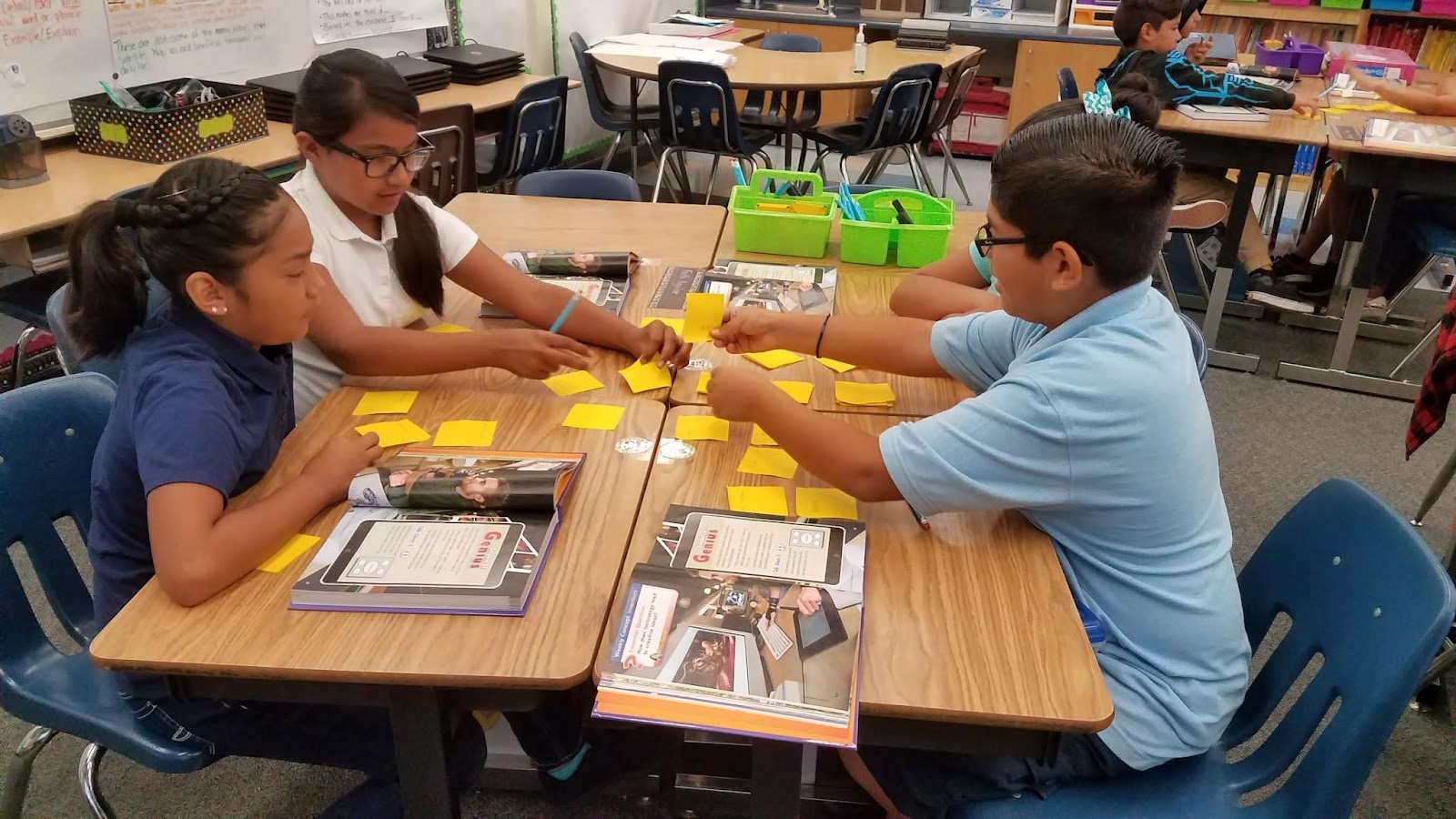
When solving math problems which involve a process, or several steps, I love to use RallyRobin and RallyCoach. I usually give partnerships a choice of which strategy they’d like to use. With RallyRobin, partners ping-pong back and forth each solving a step in the math process. With RallyCoach, one student coaches the other student through the process of solving a problem. Then, when finished, they switch roles, and the other student now gets to be the coach/teacher. To involve more verbalization of the steps, I have either the “student” or “coach” explain every single step they’re performing, focusing on academic vocabulary.
Another fun add-on to RallyRobin is teacher vs students RallyRobin. Let’s say I ask students to name prime numbers. I might name a prime number first, and then call on a student with a hand raised to name a different prime. This back and forth game goes on as long as you’d like as you call on different students to compete against you. The kids have a lot of fun with it because it becomes a challenge as they try to stump the teacher.
My go-to seated structures:
Roundrobin is such an easy structure to use in any subject. It’s great for discussions or to discuss processes because every student in the group gets a chance to share something. Each student in the class is held accountable for participating. It’s as easy as putting kids in groups, giving them a discussion starter or problem to discuss, and then saying, “Person 2, please begin.” All-Write-RoundRobin is the same structure except all students are jotting down whatever they're working on. For example, if students are finding the area of a triangle, the first student might share that all students should write down the formula. Therefore, all students write down the formula on their papers.
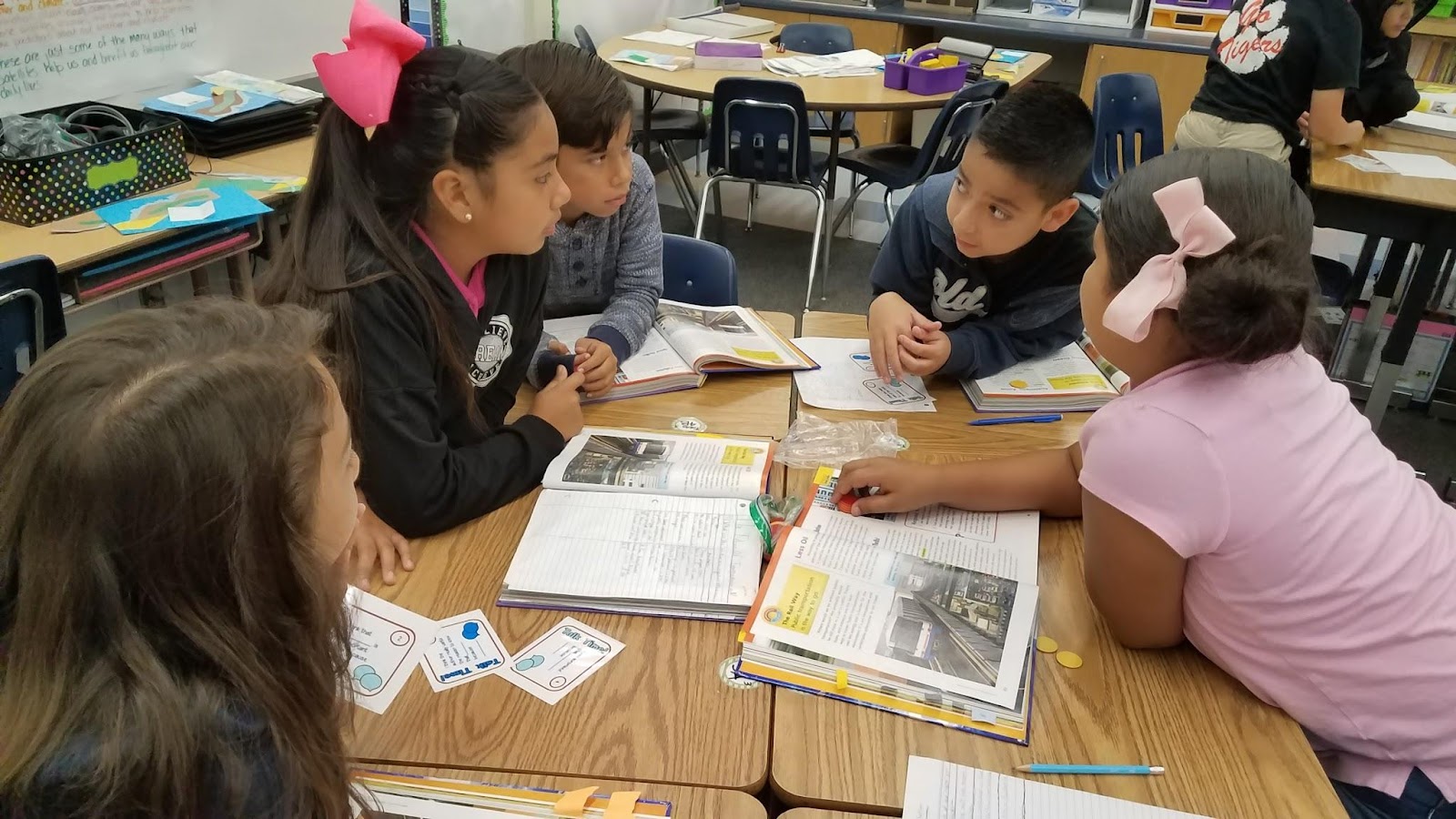
Talking Chips does the same thing as RoundRobin, but it doesn’t put students on the spot as much since they must put a “chip” in, in order to speak. However, students must share at some point since the other kids can’t share again until all chips have been put in the middle.
Talking Chips does the same thing as RoundRobin, but it doesn’t put students on the spot as much since they must put a “chip” in, in order to speak. However, students must share at some point since the other kids can’t share again until all chips have been put in the middle.
Numbered Heads Together is fun because students share in a group either via RoundRobin or Talking Chips, but then one member of a group is called on to share what was discussed. For example, you can pull up the Smartboard dice, and if it lands on 3, then person 3 from each group must stand up. Then, you roll the dice again, and this will determine which table group will share. For example, person 3, table 4. The kids love this structure because it feels like a game, and it’s totally random, so all must pay attention. What’s not to love? :)
Whole Group:
Showdown is appealing to the kids because they get to use whiteboards (you can also use paper). We use Showdown in conjunction with Eureka's Rapid White Board Exchanges. All you do is list something on the board for students to solve. Students solve on whiteboards and then turn boards over to let you know they’ve finished. Once you see most students have finished, you count out loud “1,2,3, SHOWDOWN!” The students also yell out “Showdown” at the same time as they show you their answers. It’s fun and fast at the same time.
Structures Which Involve Movement:
Partner-Mix-Pair Share, Stand-Up, Hand-Up, Pair-Up, Find Someone Who, Quiz-Quiz-Trade
Group-Circle the Sage
My go-to’s for partner structures with movement:
Mix-Pair-Share is really fun for the kids because they get to walk around the room and listen to music (although you don’t have to play music). It gives them a chance to stretch and converse with different kids. One of its cons is that partnering is at random since you tell them when to pair. Even though partnering is random, you can still facilitate by walking around the room to listen to as many conversations as you can. I like to use this structure when my students are looking sleepy and could use a stretch break.
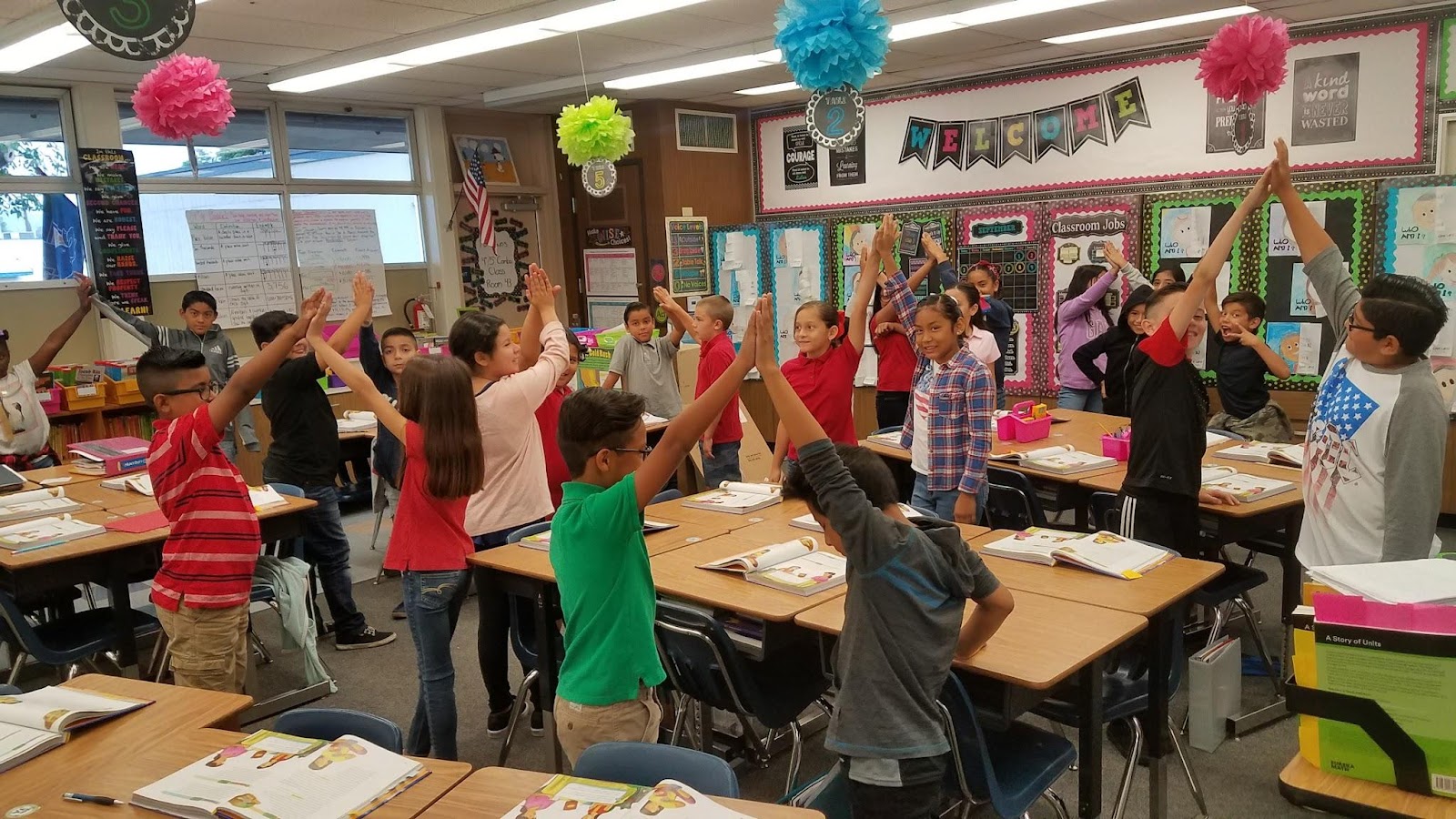
StandUp-HandUp-PairUp is another fun and easy to use structure. It gets kids out of their seats but is not time-consuming whatsoever. All you have to say is, “Stand Up, Hand Up, Pair Up with someone who is not from your table group.” You’ll also want to make sure that you explain that this structure should be performed quicker than Mix-Pair-Share and that students should not have to walk very far to find a partner.
Circle the Sage can come in handy when introducing new content. To find out more about Circle the Sage, please click here: Circle the Sage Info
Need to make your students move faster? Simply countdown while students are finding a partner--especially for your stragglers. “Okay, 10 more seconds to find your partner. 10-9-8-7…” This usually does the trick.Circle the Sage can come in handy when introducing new content. To find out more about Circle the Sage, please click here: Circle the Sage Info
Educating together,
Kimberly Smith Loya