Showing posts with label social studies. Show all posts

Monday, November 12, 2018

All Things Quests

7th grade- Topic 4 Growth of Muslim Empires

As I become more familiar with the new HSS adoption, My World, the more comfortable I am trying out some of the suggestions I was given on the adoption training day. One suggestion from the Pearson's trainer was to assign the Quest free from all the lessons when you're short on time. So with parent-teacher conferences, minimum days, report cards, and holiday breaks around every corner, I decided to try that idea out.

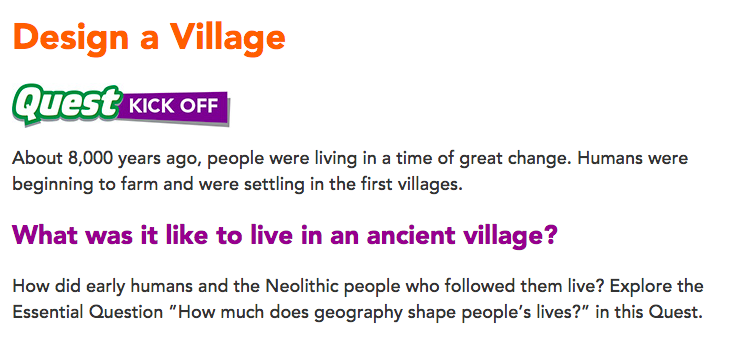
The Quests are explained in the front matter of the textbook as: "Quest Inquiry Activity is an inquiry project that takes place throughout the entire topic. Students are presented with a question or problem, and throughout the chapter, they conduct research, read the text, analyze primary sources, and answer the question or problem. The Quest culminates at the end of the topic, where students apply their knowledge and demonstrate their understanding in a final project: essay, discussion, presentation, or informed action activity. Quests may be assigned as an individual activity or as group work."

The Quests in the 6th-8th-grade textbooks fall under three categories: project-based learning, civic discussions, and document-based writing. I associate each of those learning activities with performance tasks. These performance task learning activities are authentic and scaffolded for student achievement. I looked over each Quest for my grade level earlier in the school year. I was excited about the creative project ideas and the thinking that would be demonstrated by my students while working on the Quests. After mapping out what my students would be expected to do throughout the school year, I became curious about what they would be asked to do when they went to middle school. I noticed that the Quests are not as scaffolded as they are for 6th grade and the steps are similar. Then, I imagined the implications of students completing these Quests from 6th-8th grade. At the end of middle school, a student who participated in all of the Quests 6th-8th would complete, 11 project-based learning tasks, six civic discussions, and nine document-based writing tasks. Consider the implications and abilities of a student who has completed all of those performance tasks before entering high school. I imagine that their literacy skills and history content knowledge would be considerably strong.

*Attached is a chart I created to map out the Quests in 6th-8th grade.

Below is the progress a student or small group of students goes through to complete a Quest:

6th grade Topic 3- Ancient Egypt and Kush-
Becoming a Pharaoh-in-Training
1) Ask questions: I first introduced the Quest by having the students work in small groups to generate questions they will need to ask in order to answer the guiding and essential question. This step was difficult for my 6th graders at first because they are used to answering questions, not creating their own. This task alone showed me a great deal about my students. I was able to see which vocabulary words we needed to spend more time discussing and if they understood how to break down the task. * For the first couple Quests, we did this step whole group, and I would model how to ask the questions through the "think aloud" strategy.

2) Investigate: As the class is reading through the lessons, they will see the Quest connections. When conducting the Quest independent from the whole Topic (chapter), you will want to read some of that lesson with the class in order for them to make a solid connection. These connections are not just readings they are: images, infographics, primary sources, maps, or charts. Analyzing the previously listed types of resources can be very powerful and covers important informational reading standards (i.e.: CCSS.ELA-LITERACY.RH.6-8.7 Integrate visual information (e.g., in charts, graphs, photographs, videos, or maps) with other information in print and digital texts.) While making these connections, students are gathering evidence for their end product.

3) Research: This step in different in each Quest. In some Quests, students are asked to conduct research using Primary Sources. In others, they are given certain places or people to research. This step is meant to be more independent, and where students take what they have learned and tailor it to the assignment's task.

4) Present/ Discuss/ Write: Finally, students will take everything they have learned and present it according to the project's guidelines. I chose to have my students work in a small group for the first Quest and in pairs for the second.

Happy Questing, 
Jenni Merry 


Thursday, October 11, 2018

Hands On and Interactive History

Hunter-gatherers "fighting" over scarce resources  
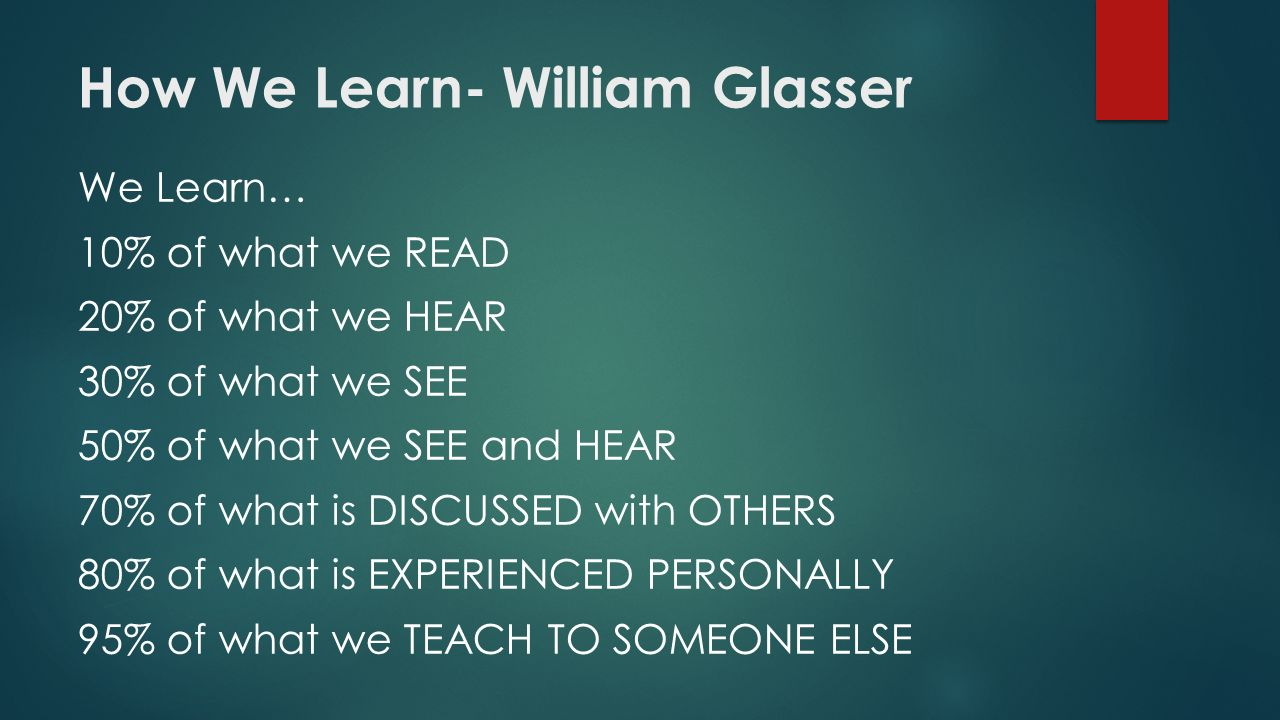
To this day, I learn by doing. I need the opportunity to create, move, build, and engage in my learning, and I know most of my students need these opportunities also. During the first week of school, I gave my students two learning style quizzes. One online and another paper quiz. I give them two to confirm results and record trends. This year, around 75% of my sixty-two 6th graders' test results showed that 1 of their 2 top learning styles was kinesthetic (hands-on) learning. This information spoke volumes to me. I needed to make sure to create lessons where my students could do, create, move, build, and engage in their learning. 


My students and I have been reading, discussing, and researching all things early humans and the origins of ancient civilizations. These kids have shown an interest in learning about civilizations, but during discussions, I could tell many students were having a difficult time with the idea of the jump from hunter-gatherer life to working together to create a civilization. They understood the why behind this jump- it was easier. These early people were working smarter not harder; however, it was hard for them to grasp the time frames. We created a timeline as a class (using their active journals and dates in the textbook) but those were just dates, and I could see that they weren't connecting the concepts.

I decided to use an activity that I found years ago and make some tweaks to create an inquiry lesson.  First, I wanted to create a simulation was they were hunter-gatherers. I hide paper slips all over the room with different animals, and food unit amounts on each (ex: Deer- 9 units, fish-4 units). I also had a bin of water in the front of the room which was label "River Merry." Their mission in "Life 1" was to work with their table partner to gatherer a Dixie cup of water and hunt for 30 units of food. This task sounded easy to some students until I showed them the spoon that they'd used to be gathering the water (haha). I explained that their life would last 7 minutes and that if they had one cup of water and 30 food units than they'd survive life as a hunter-gatherer. The next 7 minutes in my classroom was chaotic, but when the 7 minutes was up I polled the class for survivors and only two groups were able to complete the task! We recorded our results and reflected on the task before moving onto our next life. As a class, we decided that the hunter-gatherer life was a difficult one.

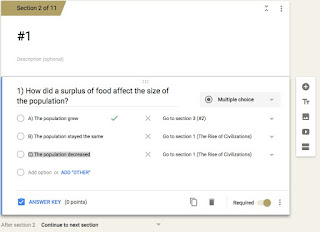
In "Life 2", partner groups worked with their table groups (4-6 students) to run a successful civilization. To do this, students needed to collect information about the origins of the first civilizations together and check their answers using a Google Forms "quiz" I put together. The questions were focused on a surplus of food, trade, and specialization of jobs, and I got most of the questions from the lesson checks in the textbook. The students were told that the first group to successfully work together would earn a surplus of food and water for their whole civilization. The next 10-15 minutes were full of my students working together to beat the other civilizations. Chaotic learning at its finest! In the end, each team found their way (a.k.a the correct answers) to the surplus of food and water. And after reflecting on the task, we came to two conclusions: 1) When people started working together, civilizations thrived and innovations were created. 2) Working as a group and moving around the classroom is more fun.

"Today was fun, Mrs. Merry!"- a quote from multiple students on their way out the door #teacherwin


Here are three fun, simple ways to take the learning out of the textbook in a meaningful way:
  1. Create an interactive lesson check using Google Forms. To do this, review the lesson's hot topics (main ideas) and type out the questions on the form. Make sure you use the 'Blank Quiz' template. You can play with the question types to include multiple choice, checklist, short answer, scale answer, date, and essay question by selecting the plus sign on the top of the flowing bar (on the right hand side). If you'd like to have each question on a separate page, select the equal sign on the bottom of the flowing bar, and use the drop-down menu to select which slide the students will be taken to depending on their answer. You also need to select the correct answer for each question, so students can move on if they get the answer correct. 
  2. Act it out! Engage students by having them simulate the concepts or important people in the lesson. If students are learning about the social classes of civilization or era, put them in small groups and assign them different classes to act out for the rest of their classmates. Students may also enjoy creating an interview where they take what they have learned while reading and demonstrate it through the questions and answers.  
  3. Hold a live debate to discuss new controversial topics and current events. How harsh should punishments be to hold power over people? Should Christopher Columbus and Thanksgiving be celebrated? What are the pros and cons of trading with other civilizations?  

Getting my hands dirty, 
Jenni Merry

Thursday, September 13, 2018

Diving into a New Adoption…The Start of a Journey


        Diving into a New Adoption


Photo by Vlad Bagacian on Unsplash
Here I am a month into my 9th year of teaching 6th grade, and I’m still learning new things every day. This year my ‘learn something new’ is the district’s new History-Social Studies (HSS) adoption- MyWorld. Full disclosure, I didn’t love everything about the McGraw Hill adoption, but it was familiar. I had learned what to use from the textbook and what needed to be supplemented with outside resources. The previous adoption was old but it was familiar. However, I did discover that I wasn’t growing as an educator by using the same old lessons. 


“The journey is never-ending. There's always gonna be growth, improvement, adversity; you just gotta take it all in and do what's right, continue to grow, continue to live in the moment.” Antonio Brown

In May of 2018, an email came out about signing up for the new HSS adoption training. I noticed right away the first training date was on the last day of our summer
break. Quickly, I decided that I would be enjoying my last days without an alarm clock
and would sign up for a later date. Flash forward to the middle of July when I finally
decided I should retrieve my work bag from the back of my closet and get to planning.
And then the panic set it. I didn’t have any idea of where to start with social studies.
So even though I was enjoying my life without an alarm clock, I knew I’d feel better
if I had an idea of what the new book had in store for my students and me, and I signed
up for the first training.

The training was informative, but I noticed right away that this adoption was SO
different than the previous adoption. First and foremost, this adoption offered videos
to show to students at the beginning of most lessons as a way to build prior knowledge
and vocabulary before reading. I was excited about these videos, to say the least. My
second observation was that this textbook was much more complex and rigorous. Of
course this is positive thing because my students need to be able to read at this academic
level, but I was worried about time. Another interesting observation I made, were the
Quests in each topic (chapter). These Quests can act as performance tasks/investigations
that my students can conduct while we \read and learn together! So now the question is,
how will I implement all of this in the time allotted for social studies instruction?


“I'm not saying it's going to be easy; I'm saying it's going to be worth it.”
― B. Dave Walters


Here are three steps to diving into the new adoption:

1) Take some time to look through the student's Active Journal practice book. Surprisingly,
the Active Journal has some excellent vocabulary building practice, and each lesson has a
reading strategy focus.

2) Log into Pearson Easy Bridge (the MyWorld Inactive website which can be found on
the teacher page of the district Symbaloo) and look over the Topic you're studying with your
students. If you're worried about the complexity of the length of the lesson, try printing out
the lesson summaries. These summaries could even be a pre-reading assignment that you assign
your students beforehand.

3) Try the Quest projects! The Quests would be a good idea for students to practice for the
performance task ina meaningful, engaging way. *Note: The Pearson's trainer mentioned
that some teachers only assign the Quest for some topics.


Diving in with you,
Jenni Merry

Most Viewed Posts