Showing posts with label Science. Show all posts

Wednesday, March 20, 2019

For the Love of Science by Alina

For the Love of Science

Two weeks ago, a group of about thirty-five 4th, 5th, and 6th graders from my school competed at the Inland Empire Science Olympiad Regional Tournament held at Ramona High School in Riverside.  According to their website, "Science Olympiad is a nationwide competition . . . designed to increase a student's interest in STEM fields and provide recognition for outstanding achievements in team events. As their head coach, I was so inspired by the students’ hard work and level of dedication. Since September, students met two to three times a month with a dedicated group of five exceptional teachers to help prepare them for the competition held on March 2nd. The Olympiads from my school were grouped into three different teams. Each of those teams competed for medals in events that tested their knowledge on topics like weather, fossils, ecosystems, circuits and energy, body systems, the solar system, and chemical reactions.  Other events required students to use engineering skills to build glider airplanes, Rube Goldberg like contraptions, rubber band launchers, and cars made out of pasta!

"The most important thing in the Olympic Games is not winning but taking part; the essential thing in life is not conquering but fighting well." -Pierre de Coubertin

Want to start your own Science Olympiad team? Here are a few tips to get you started. First, head over to Inland Empire Regional Science Olympiad website at https://statescioly.org/ierso to learn more about the program and how it works. Depending on the grade level of students on your team, they will compete in different divisions. Since I teach a group of elementary students, we compete in Division A. Once you know what division your students will be competing in, you will need to purchase a Competition Tournament Rules Manual. Inside you will find the official rules for all of the possible events that could be held at the yearly tournament. Registration for teams usually opens in the fall and a list of tournament events will also be posted on the website listed above around the same time so be sure to check back often for updated information.

Create a team of about 15 students. If you are having trouble finding students to sign up, consider holding a Science Fun Night at your school and try a few of the STEM challenges for the rules manual to generate a buzz. Once you have your team, you will want to divide students into smaller group to focus on particular events. Most events are designed for two students. I like to have the whole team to work on the build activities at the beginning of the year to see which students excel at which event.s You can then have students compete within the team for certain events; create an interest survey for students to fill out or you can just choose who gets to work on each event. A little tip I learned is that the schedule of events goes out later in the year, so I have students work on different events just in case there is a scheduling conflict on the day of the tournament. After students know which events they are competing in, they will need to either practice that event, study for the event or build something for the event. Give yourself plenty of time for students to build. It takes us most of the year to build and test our pasta cars.

Don't be afraid to ask for help. You will need a variety of materials to get started. I must have hundreds upon hundreds of straws in my room. Not to mention cardboard tubes, marbles, golf balls, wooden blocks, glue sticks, and uncooked pasta. I usually ask the kids to bring unwanted toys and other supplies that we might need for the events.

This is our 5th year participating in this tournament. When I started the process I really had no idea how or where to begin. Watching the Science Olympiad group grow has been an amazing experience. I am not a science expert by any means. Events vary from year to year, so I find myself doing a lot of reading on new content before I introduce it to students. This experience has allowed me to learn a lot along the way from my colleagues who fearlessly volunteered to join me in this adventure, from parents that cheerfully offer their help and support both after-school and on the day of the event, and, most importantly I have learned the most from my students who eagerly come to meetings excited to learn about science.

I hope that I have inspired you to think more about the impact of learning about science and maybe to even start a Science Olympiad Team of your own.

"I don't run away from a challenge because I am afraid.  Instead, I run toward it because the only way to escape fear is to trample it beneath your feet."  -Nadia Comaneci 


Learning and Teaching with Grace,

Alina

Monday, February 11, 2019

Science Pilot, Round 1

     In my last blog, I discussed how I incorporate science into my kindergarten classroom by doing rotations with my whole team.  And a few blogs before that, I discussed my experiences being a content reviewer for the 2018 Science Adoption for the State of California (link here).  This lead me to pilot the new science materials for the district.
    For the first round, I piloted the National Geographic materials.   I chose the unit on physical science (force and motion)  since this is a new standard for kindergarten. The students explored pushes and pulls, starting and stopping, changing direction, changing speed, and collisions.
    The final task was for students to combine those concepts to complete a challenge: start the ball rolling, make it change direction, and knock over some cups (the students could only touch the ball to put it in motion from the start). Each group was given the same set of materials: a marble, a block, a tube, a big board, two narrow boards, and three cups.


         According to the Engineering Design Process, students are to plan solutions by way of drawing.  However, I feel in kindergarten, students exploring with the materials is part of the planning stage.  We push young learners to use concrete objects first, then move into pictorial in math,  so it makes sense to use that same concept in this process. I had my students draw their designs afterward.  See way below...
    The students got the idea down quickly about knocking over the cups,  but the added challenge of making the ball change direction first caused much struggle.   It took 2  rounds of rotations, but most groups succeeded completing the task.


     The students and I enjoyed this unit very much.  These activities were new to me, as this was my first time teaching any sort of physical science.

      I look forward to the second round of the pilot process (McGraw Hill up next!).  I'll be teaching the life science unit,  one that is very familiar to me.


                  Happy (Science) Teaching!
     
                           Erin Grebel


Friday, January 25, 2019

STEM/Science in Kindergarten?

My daily schedule is one the most asked questions I get from my fellow kindergarten teachers.  Many wonder how I how I get it all in. The short answer is: I don't usually.  Time with my students is not the issue (5-year-olds in a classroom for 5 hours daily is PLENTY for them, however, if they could manage successfully without the big behavior issues we are more commonly facing each year, extended time COULD be a positive thing... but that's a whole other blog post!). More flexibility with our time is key.

As teachers, we are faced with mandatory minutes per subject per day and/or week in all subjects. This is where we have to get creative by using cross-curricular concepts (the CCC's) to try to even attempt to meet the demands that are placed on us for the classroom time we do spend with our students.  Unfortunately, one of the subjects that gets pushed to the side in elementary school is science.

Back in my early days, we had a 20:1 ratio in kindergarten. We also shared a classroom with another teacher, with some overlap time.  And on early-release Tuesdays, both AM and PM classes would attend at the same time (40 kids/2 teachers in one room for 4 hours...ack!). This was when my kindergarten team had to get creative to manage all of those kids AND get to those subjects that we found difficult to cover (2 birds/1 stone).  We decided to do rotations: science, P.E., art, and social studies (currently morphed into social skills...also another blog post!).  Four teachers, four subjects. P.E. would be outside and art would be in a shared pod.

Each year, our rotation schedule changes according to number of teachers or other factors, but four is ideal for us.  We have also done many configurations of groups over the years.  Since we all teach in our own classrooms, extra space is not necessary any more.  I have been in charge of science instruction for our kindergarten classes for most of the years we have implemented rotations.


This is our current rotation schedule, now on Thursdays:

7:30 - School Begins
8:15-9:00 - Rotation #1
9:45-10:30 - Rotation #2
11:30-12:15 - Rotation #3
12:15-1:00 - Rotation #4
1:10 - Dismissal

If you would like to learn more about how you can manage this type of program, please reach out!

Happy and Positive SCIENCE Teaching!
Erin Grebel
Photo Captions: Building a bridge for the Gingerbread Man (top right); Building hideouts for the Gingerbread Man (1st left, 2nd right); Making an object change direction without touching it (bottom left); Exploring strong and weak pushes (bottom right); Exploring motion with starting and stopping an object in motion (video).


Friday, September 7, 2018

What Did I Sign Up For? Part Two

What Did I Sign Up For? Part Two


In May, I blogged about my beginning experience as an Instructional Materials Reviewer for the State Board of Education's 2018 Science Adoption. This involved a 4-day training in Sacramento and then a 2-month independent review of the science materials to which I was assigned. Here is my first blog post about that experience:
What Did I Sign Up For? Part One

The best-laid plans of mice and men often go awry. 
-Robert Burns

To get started on my independent review, I set up a schedule.  I had three programs to review (which I am told by colleagues who have done this process before, is A LOT).  Two of the programs were K-5, and the third one was 4th grade only. So I broke it down into 13 parts.  My plan was to get through two grades levels a week in order to be finished before deliberations in July. Fortunately, the publishers must follow a template with citations for reviewers to use, which helped me find evidence of the criteria required by the State.  My materials arrived at my school site in May.  One program involved a pallet! My first task was to inventory everything.  Then I took it all home and stored it in my garage until school was over.  The first day of vacation, I started.  I finished one program in one week! I was exhausted but felt accomplished. Then my kids and husband started their summer vacation, and that's where my momentum slowed way down. I got overwhelmed thinking about starting all over with another program.  I procrastinated.  The end of June came, and I forced myself to complete the second program.  It took over three weeks.  And I still had one more program to go (luckily, it was only one grade level).  I finished my notes on that last program in a Sacramento hotel room the morning of deliberations.

The democratic process is only as great as the people who participate in it.  -Jeff Miller

When my panel and I reconvened in July to deliberate our findings, we learned that many other panels lost some reviewers. I suspect some of those losses were due to unforeseen circumstances, but my guess is that most of them lost their momentum and quit.  This task was huge so I can understand, but I was still disappointed that many of the others who did fulfill their duties had more responsibility placed on their shoulders. I felt so fortunate that those on my panel persevered and made it to the end with me. It was amazing to see the commitment materialized in that room.  Much like jury deliberations, we first went through each category and criteria and voted. In our favor, there were only a few items that needed discussion.  My panel was professional, passionate, and respectful. We wrote our Report of Findings (ROF) for each program and submitted them to the IQC (Instructional Quality Commission) for acceptance.  They were, and we were done!  The next step is for the IQC to complete the second layer of review from our ROFs, and then they will submit their recommendations to the State Board of Education (SBE) for adoption.  The SBE will officially adopt recommended programs in November, and then school districts can invite publishers to present for pilot review.

All in all, I am happy that I participated in this process.  It was intriguing to see this process unfold and the commitment exuded from passionate educators.  I am unsure if I would participate again, yet I DO recommend it!  There are some adoptions coming up for Visual and Performing Arts (VAPA), Health Education, and Computer Science in the next couple of years if you are interested in applying in the future.  Check out the California Department of Education website for opportunities!

CDE


Happy and Positive Teaching!
Erin Grebel

Monday, April 23, 2018

What Did I Sign Up For?

What Did I Sign Up For?

Last  Spring, teachers received an email about becoming a materials reviewer for the 2018 California Science Adoption.  I  read through the email and it peaked my interest, as I teach science concepts to the kindergartners at my school.  I filled out the online application, which included submitting a science lesson, and waited.   Then, in November, I received a packet that informed me that I had been appointed by the State Board of Education to serve as an Instructional Materials Reviewer.  My  duties include  4 days of training and 4 days of deliberations in  Sacramento.  Oh  yeah,  and between May 4 and  July 16, I  will  be  conducting an independent review of science  materials from 3 different publishers. Two  other colleagues from OMSD were also  appointed,  and another serves on the IQC (the Instructional Quality Commission), which will take all of  the panels' reports and actually submit the programs that have met all  of the requirements to the State Board of Education for adoption.  My part is essentially the first round of review.  The IQC's part is the second round of review, and  the school  districts have the third round of review  (selecting which approved programs to  pilot).

The democratic process is only as great as the people who participate in it.  -Jeff Miller

I  was bit  overwhelmed on that first day of training; I had to take an Oath of Office (my term expires in November, after the SBE  approves materials). I had to learn about the Bagley-Keene Opening Meeting Act of 2004,  which essentially states that all state boards and commissions conduct their meetings in public with 10 days notice, agendas, and  time for public comment.  I had to complete an ethics training course and submit a statement of economics interest form (to prove that I  do not  have any economic ties to any publishers).  My panel consists of classroom teachers and a content expert, and we are facilitated by an  employee of the California Department of Education. There are 16 panels total. I had no idea what it took for a program to get approved  for adoption!

SEPs and DCIs and CCCs...oh my!

These are some of the new acronyms I have learned while being  trained  in  NGSS (Next Generation  Science Standards).  I will be reviewing the programs to which I was assigned first for content standards (PEs-or Performance Expectations;  SEPs-Science and Engineering Practices; DCI-Disciplinary Core Ideas; and CCCs-Crosscutting Concepts). Then, I will review the programs using the Criteria for Instructional Resources Aligned to  the CA NGSS with Three-Dimensional Learning and the CA Science Framework.  During my review,  I also have to  be  cognizant of the Social  Content Standards.  I must take  copious notes  during my independent review as I will be deliberating with my panel in July.   I have  to  prove that I found  or didn't find evidence of ALL of the PEs with 3D Learning and ALL of the  Criteria in each of the programs, for  each of the  grade  levels (K-5  for  my panel).

All in all, I am excited to be a part of this democratic process.  I know this  will  also help me to improve  my  practice in the classroom as  well, as I am knee-deep  now in the CA NGSS!  Here are links  to the CA NGSS and  the California Science Framework (a 2000  page document!) if  you would like to  further your learning in science:

CA NGSS
Science Framework for California Public Schools

Happy and Positive Teaching!
Erin Grebel


Friday, February 23, 2018

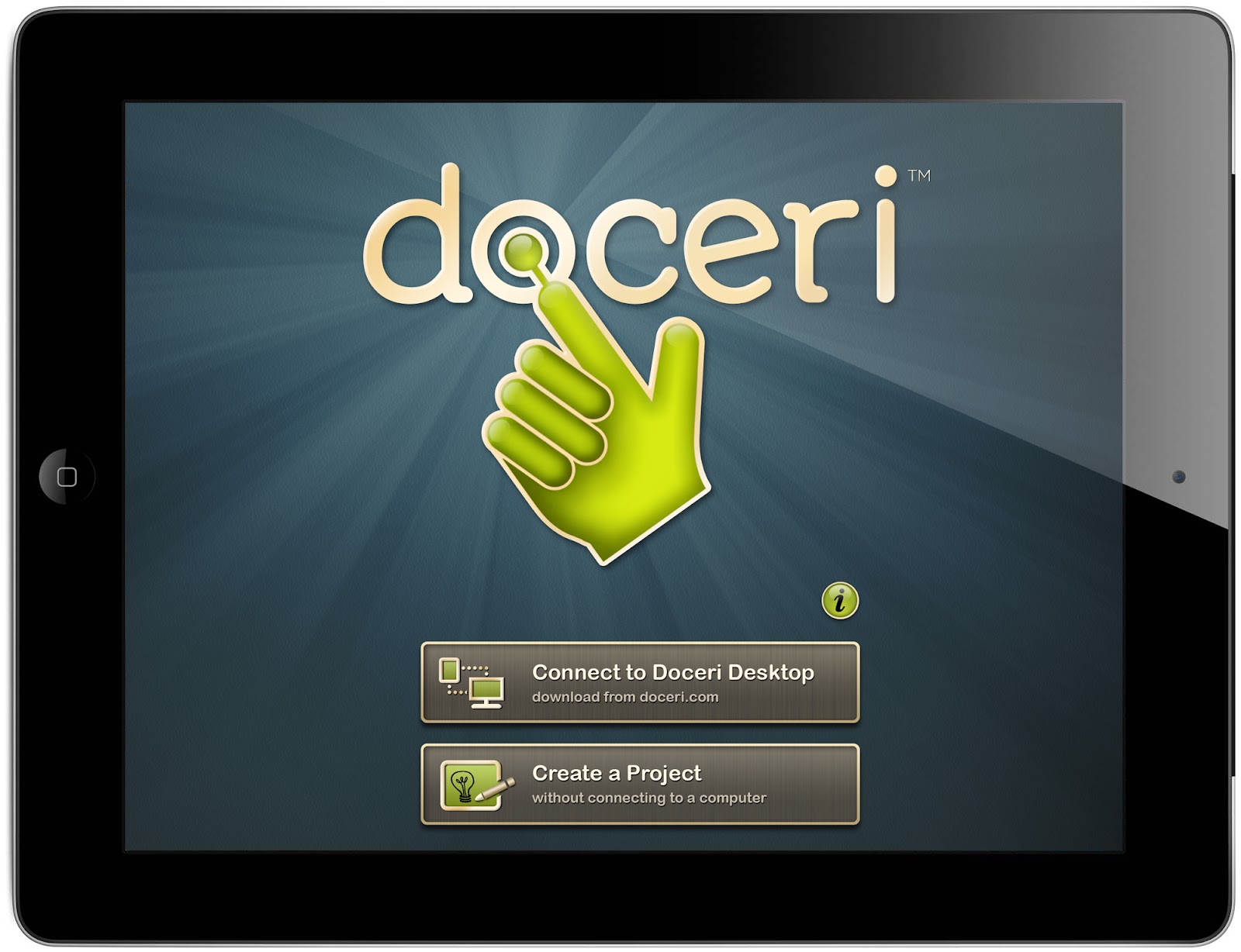
Doceri and iPads (Technology)


Don’t be tethered to your computer all day! Use Doceri!


Do you often feel stuck to your little desk sitting next to your SMART Board?  Do you get frustrated when you need to use the document camera, but notice the kids in the back messing around or not as focused as you like?  Do you wish you can show your students what they need to see without always having to be right at the front?  Well, try Doceri- The interactive whiteboard for your teacher iPad!


Doceri “gives you the freedom to teach.”


There have been so many days especially related to Eureka math when I wanted to show students how to work something out, but I had to be glued to the document camera or SMART board..it would drive me crazy.  Then I decided to play with the apps that are available on our iPads and discovered Doceri.  It allows you to take a picture of the document you want and then write directly on it!  If you project your iPad using “Reflector” which is on our computers, then everything can be seen on the SMART Board without actually having to stand at the Whiteboard.  Doceri has become a significant game changer when I want to navigate the room while working.    
See Doceri in action...https://youtu.be/GCyZXw3v4F4

Use Doceri with any subject

Anytime you want show and write on a document for students to see on the SMART board, just take a picture of it within the app and then use the “pen tools” to write directly on it.  This app is even great if you want your students to show their work to the class.  This app offers a lot of options for you to use and learn, but I just use it for writing and displaying.  I also love it because it keeps my students more on track knowing I’m not always stuck in the front.  No matter your tech ability you can use this app smoothly and seamlessly.  If you try it out, please let me know!  If you have questions about how to access this app or Reflector let me know!  I can refer you to the right people.
T.Bossieux.jpg
Tech-ing with a purpose,  
Tiffani Bossieux

Tuesday, October 24, 2017

They Did the Lab. Now What?


They Did the Lab. Now What?
This month we look at how to teach our scientists to construct scientific explanations, just in time for Science and Engineering Fair season! This is one of the 8 Science and Engineering Practices. The full text of this practice is “constructing explanations and designing solutions in 6-8 builds on K-5 experiences and progresses to include constructing explanations and designing solutions supported by multiple sources of evidence consistent with scientific knowledge, principles and theories”.  


How often do students fail to connect the lab with the science behind it?
Constructing scientific explanations will reduce the size of this speed bump in our science classes.


If we want to mold scientifically literate, critical thinkers, this is the key. For students to construct evidence based explanations, they must understand how to distinguish between evidence that supports their claim and evidence that does not. They have to determine validity and reliability of evidence. Are these not skills we want in our voting citizens?

If we want to show how science supports all the other disciplines, again, this is the key. In order to construct their conclusions, students must use mathematical computations to analyze and interpret their data. They must understand the components of a strong explanation, including a claim, evidence, reasoning, and possibly a rebuttal. They must know how to cite sources and make connections between scientific texts and their own experiences.

Our science classes should be places where students get to apply the skills they are learning in their other classes in order to explain their world.


There is A LOT out there on Claim, Evidence, Reasoning (CER) writing. You have probably seen the “My Dad is an Alien” and the Sham Wow activities already. These are great places to start, but if you are ready for a more in depth look, look no further than Drs. Joseph Krajcik and Katherine McNeill. They are the creators of the framework and have published books, websites, and articles on this very skill. The site, www.argumentationtoolkit.org has several strong activities including supportive and appropriate evidence sorts, reasoning sorts, videos both for teachers and for students on the components and an incredibly helpful reasoning tool to assist student in connecting their evidence to their claims. If you want more from Drs. Joseph Krajcik and Katherine McNeill, here is a Lab Out Loud podcast all on CER writing: https://laboutloud.com/2015/04/episode-127-claim-evidence-reasoning/

Here is a journal article published by Drs. Joseph Krajcik and Katherine McNeill that I found very helpful in understanding the framework when I was beginning to include it in my science students’ lab analyses.  http://www.katherinelmcneill.com/uploads/1/6/8/7/1687518/mcneillkrajcik_nsta_inquiry_2008.pdf

There are other helpful resources, such as the one linked below, that help students organize their thinking into a scientific explanation. http://georgiascienceteacher.org/Resources/Documents/eObservations/Linked%20Files/Evidence-Based%20Writing%20in%20Science.docx

Lately, in our 8th grade science classes at Wiltsey, we have been building students’ understanding of inheritance of traits. We are using Wisconsin fast plants, students own life experiences and data sets of human pedigrees in order for students to collect evidence from multiple sources to support their initial claims. This is from the IQWST curriculum and is well scaffolded in the curriculum to help students build an understanding of how to complete scientific explanations, even if they have never learned this skill before. For those who are familiar with the CER framework, they can look for the most appropriate evidence and ensure their writing reflects this work. File_000.jpeg

Explaining their results of labs, research, etc. is paramount to retaining scientific knowledge, but also gives students a voice to share their learning and their analysis. We can support students in building their awareness of their natural world, and in so doing, teach them to communicate and evaluate evidence based claims.

File_000.jpeg
Stay Curious,
Sara Yeh


Tuesday, September 26, 2017

Teach Them to be Scientists


Teach Them To Be Scientists
The road is before you. The destination is clear.  You know what stops to make on your journey, and you know where most of the speed bumps will lie. Your challenge is keeping your vehicle tuned up. You must take care that each part of your vehicle is in good working order, otherwise the whole trip may be affected.  

7-interesting-facts-about-stem-education_5729da4fd8c17_w1500.jpg

Each month, we will investigate one part of the vehicle that will help us reach our destination-- fostering scientific thinking.
The road is science education.
The stops are the Disciplinary Core Ideas.
The speed bumps are time, resources, students’ prior knowledge, etc.
The vehicle is the Science and Engineering Practices,
and the more equipped the vehicle, the better we can navigate the road.  

I remember a time when a science fair project was just one more thing to get done. It was a grade I needed to earn, and it was a lot of work my mom was going to have to help me with. This is not how I want my students to see the science investigations we do in class or, hopefully, the ones they do outside of class. I want students to see the value in asking scientific questions and investigating their world. I want them to develop ways to answer their questions. I want to give them the skills to design investigations. I want them to be confident in their ability to be scientists.  

This month we will learn how to teach students to plan and carry out investigations.


Last month we learned about a strategy called Inquiry Boards. Click here for more info: https://www.youtube.com/watch?v=2RuXjrGrggY

With Inquiry Boards, students brainstorm the variables, using a big question and lab materials as their starting point. They determine the variables they will investigate, and turn those into a question they can develop an experiment to answer.

But is that enough to require before giving 30 kids baking soda, vinegar and beakers? Probably not. There is much more planning left to do. This brings us to this month’s tool.

Last year, Dr. Harri spoke about something called Argument Driven Inquiry and it changed my classroom. (Thank you, Dr. Harri!) I would certainly recommend any science teacher puts at least one of the ADI books on their Amazon wishlist. Here is one for your viewing pleasure:  https://www.amazon.com/Argument-Driven-Inquiry-Biology-Investigations-PB349X1/dp/1938946200


Using the Laboratory Proposal tool, students learn to design the specifics of their investigations. We discuss how they will change and measure their independent variable, how they will measure their dependent variable and how they will maintain control over their control variables. We decide their procedures, discuss safety concerns specific to the lab, how they will analyze their data and create a rough draft of their data table. In order to get lab materials, each group member must have this filled out and have a neat data table copied into their notebooks. Students are then released to collect their data. And this is exactly what they do. Most groups now collect data in about 20 minutes!


If you would like to see this in action, please set up a Spotlight visit! I would love to share it with you!
Stay Curious,
Sara Yeh


Tuesday, August 29, 2017

Let Them Be Scientists! by Sara Yeh


Let Them Be Scientists!
Our science classes are transitioning to places where our students have the opportunity to be the scientists. We are grabbing hold of a new way of approaching science education. Let’s do this work together!

IMG_9189.JPG
We can learn from each other’s successes and struggles during this transition, and become better teachers in the process! My focus this year is on the Science and Engineering Practices for my students. Join me as we work to develop scientifically literate, critically thinking students.

I wonder, if we plan instruction around the practices, using our content as a necessary tool, will our students flourish as scientists?

Let’s transition our science classes to rooms where our students are the scientists!


How can we help our students improve their ability to be scientifically literate, critical thinkers? It starts with the Science and Engineering Practices! These are the vehicle to get us there and the DCIs are our map. We have certain stops along the way; places like “Contact Forces” and “Genetic Mutations”, but the Science and Engineering Practices are going to get us to these places. Here is the link to the CA NGSS Framework if you would like to check out your grade: http://www.cde.ca.gov/ci/sc/cf/scifwprepubversion.asp

One strategy that I have found particularly helpful in transitioning my students is called “Inquiry Boards”.
Here’s a video showing a teacher using them to introduce experimental design to her students:  https://www.youtube.com/watch?v=2RuXjrGrggY
These have really helped my kiddos understand how to design fair experiments and then how to analyze their data. In fact, our team changed our start to our year, using this strategy to introduce variables, collecting and analyzing data, adding in resources to our notebooks as we went through each step. This saved us time and materials since our introduction lab was part of our first instructional segment (unit) but allowed us to introduce these concepts and set up our notebooks.

NGSS has high expectations, but completely possible if we reflect on small changes we can make in our instruction that can have big impacts on the learning in our rooms.
Stay Curious,
Sara Yeh


Sara.JPG


Most Viewed Posts