Tuesday, October 15, 2019

The Clock is Ticking

   
I wasn't sure if I wanted to title this post "The Clock is Ticking" because it sounds so ominous and foreboding, but the seriousness and urgency of this particular subject prompted me to fight off any lingering second thoughts.

Colleagues, if you have not already accessed P4SS to note student concerns and input information, I encourage you to do so at your earliest convenience. As I write this, I am shuttling back and forth between writing my blog and entering student concerns and information into P4SS. It's a lot of work and I find myself needing to take frequent breaks. But the clock is ticking, Friends. And although I still feel like it's the beginning of the year and that these are my new students and I'm still trying to get to know them, the calendar says otherwise. (I realize now that I am way past the first 6-week cycle!)

With lesson planning, meetings, duties and all the other necessary demands on our time, it seems nearly impossible to find a free moment. If the thought of finding a chunk of time to start entering information seems impossible, I propose you write a check-off list and start s-l-o-w-l-y. I suggest that on the first day, you may want to refresh your memory as to how to access the site. Check. Perhaps the next day you can jot down the names of students you're concerned about. On yet another day, check to see whether their last teacher shared the same concern. Double Check. Now, it's time to add students you're concerned about, but who are not on the list. Triple check. It's time for caffeine!

At this point, you'll need to assemble your Intervention logs, search cums for necessary information and/or talk to the previous teacher for each student who resides in P4SS. Don't try to complete all of this in a single time slot or even on a single day. Pace yourself. What you ultimately want to do is get into a regular habit of updating information.

A word of caution: I know it's still waaay early in the school year, but I wanted to share this cautionary tale. A couple of years ago, as I was working my way through the end-of-year checklist, I thought I had all the time in the world to update P4SS information. It turns out I didn't. I discovered that once students left on that very last day of school, I wasn't able to access on P4SS the students I had just said goodbye to. Moral of the story:  Do as I say--not as I did...lol.


Lola Jollie
Euclid Elementary School
Proudly serving 3rd and 4th-grade students
 

Parent Communication and Building Parent Relationships

Parent Communication and Building Parent Relationships By Ashley Ewert


So we have built relationships and made connections with the students… What’s next?


A student's journey of learning begins the moment they are born. Their first teachers are their parents and families. Learning does not just happen in the classroom but also at home. Many parents are the best models for a child. The importance of active parent involvement in their child’s education promotes a positive impact on academic and social performance of a child. Parent involvement in education included communication between parent and teacher, and the relationship between parent and teacher. Parent teacher communication can be challenging at times due to working parents and language barriers. I have found a way to help keep a strong, positive and open communication system with the families of my students. Students show greater success in the classroom when teachers and parents are on the same page and parent and teachers respect each other’s environment. I always make it a priority to build relationships with the families from the beginning of the school year. As a teacher, knowing the environments students are coming from helps a great deal in making connections and building relationships, as I discussed in my August 2019 blog (Building Relationships and Making connections)


Effective Parent Communication

Families have busy lives; communicating with their children's teachers just adds one more thing to their plate. Technology has helped this barrier. Ever heard of the saying "there's an app for that." well let me tell you there are apps out there that promote parent teacher communication. I want to share with you one of my favorites.
ClassDojo is a communication app that connects parents, families and teachers to things going on in the classroom. ClassDojo has many features but for the sake of this blog let's focus solely focus on the communication aspect between the parents and the teacher. This app offers effective communication with parents and teachers. It allows the teacher to be in charge of when he/she will receive messages. The teacher may also post pictures of activities going on in the classroom so families have conservation starters they can use at home. The best thing about this app is that it will translate into most any language the parent sets up their profile to. The parents and message and comment in their native language and the teacher can see a translated version of the message or comment. What better way to start success in the classroom than building that effective parent communication through an app that promotes connecting families and teachers. 


Building Parent Relationships


Parent and teacher relationships have an advantage on student success. Parents spend a lot of time teaching and teachers spend a lot of time parenting. so lets face it there tends to be a lot of overlap. When teachers and parents are on the same page students achieve better in both settings. When teachers and parents build positive and strong relationship being on the same page tends to be more achievable. Here are three simple ideas to help build healthy parent and teacher relationships:
  1. Communicate Regularly: Open communication is essential on both sides. Email and classroom communication apps (ClassDojo) is a great way to maintain an open connection. Even students struggle with life situations (like a parent’s or sibling’s illness, pending divorce, parental stress) at home. Communicating with families will help to understand why students are performing in the way they are.  Students who are unhappy and kids who are excited are often distracted from school work.
  2.  Lead With Good and Positive News: Give positive praise first when calling parents or meeting with them to discuss a concern. Every student has something good about them. Find it. Share it. Then share your concern. Adhere strictly to this rule.
  3. Smile When You See Parents: Greet them with intention. Most parents only occasionally interact with teachers so be sure that encounters with them are positive, warm, and friendly. The impressions last a long time especially first impressions. :-)


"To teach is to touch a life forever." -Anonymous

Ashley Ewert


Thursday, October 10, 2019

Integrating Multiple Intelligences in Math


Every year we open our classrooms and welcome new faces complemented with a variety of personalities, interests, and multiple intelligences. I'm sure that this year is no different. Our plates are jam-packed with remembering names, focusing on classroom management, and becoming familiar with routines. The last thing on your mind is how you could effectively and efficiently incorporate different learning style techniques naturally into your daily math lesson. Is this even possible with Eureka Math? Can I do this without taking away countless instructional minutes? YES! And YES! Incorporating Gardner's Multiple intelligences into your daily lessons not only will get your students excited for math but you as well! 


I learn You learn, We all learn, DIFFERENTLY 
Have you ever had those days where you walk into your classroom proud to teach your well-designed lesson plan that you know your students will love? It's an exhilarating feeling! The only problem is your lesson went as planned, but your students responded with everything but excitement. This moment of failure-if you will- has happened to me on more than one occasion, and I think to myself, "What did I do wrong"? "Why weren't they excited"? If I were a kid, I would have LOVED this lesson. And that's when it hit me! I wasn't them, and they aren't me. Even though I might have an inkling of an idea of what they are interested in at the moment, I may not be presenting it in a way that is intriguing to them. When it took a step back and thought about this- it all made sense. I get the deer in the headlights look when I tell them to study for a test or assignment because they haven't pinpointed how they learn best. So I decided to change that by giving them a Multiple Intelligence Test that used a Likert scale of 1-5 for each of the areas:

  • Linguistic intelligence (“word smart”)
  • Logical-mathematical intelligence (“number/reasoning smart”)
  • Spatial intelligence (“picture smart”)
  • Bodily-Kinesthetic intelligence (“body smart”)
  • Musical intelligence (“music smart”)
  • Interpersonal intelligence (“people smart”)
  • Intrapersonal intelligence (“self smart”)
  • Naturalist intelligence (“nature smart”

The best part of this test is that it required them to use math! Students have to determine their score for each intelligence by adding and then utilize the data to graph and interpret their results. Sneaky, right? Both my students and I were intrigued by the results. Some were even shocked but gave clarity once it was finally on paper. So now what? Now it gets good! In this small task that you assigned you are helping students develop two very important intelligences- Logical-mathematical intelligence and  Intrapersonnal intelligence. Having students develop in their own personal ability 

MUSIC for the win! 
As we are already aware, music engulfs our student's attention. They can recite the lyrics to a song on the radio but somehow can't recall their multiplication facts. So why not use music to have them remember key concepts in math and without paying a dime? Youtube, which is our worst enemy on certain days, has just become our best friend. NUMBERROCK has videos on youtube like this one that includes a catchy tune and video clip while embedding math academic vocabulary. SCORE! It's a triple threat- you are now reaching those students who are musical, visual, and linguistic learners. 

In Eureka's K-5 curriculum: "A Story of Units" and 6-8: "A Story of Ratios," I embed it into the beginning of my lesson into the fluency section and pause the song to clarify or point out essential pieces of information presented in the video. Each song is approximately 2-3 minutes, so with a few times of playing the song and a catchy hook, your students should pick up on it in no time. What if you still don't have the time? I play it one-time during my lesson, and then from that day forward, I play it as a transition song when they come into the classroom. That way, students still have the opportunity to hear the song and sing along if they choose. These videos have made even the most challenging        modules easy (Grade 4 Module 2).

The Best Benefit of All
The greatest part of having students understand their own intelligence is reminding them that they are just that... intelligent. For many students they belive that they are just not "smart" or that they aren't a "math person", when in reality by making students aware of their own intelligence they begin to internalize the defintion differently. The meaning of the word, "intelligence" is no longer a stand alone defintion, but a defintion that has multiple criteria. Students also start to make sense of who they are as a learner, which speaks volumes, especially in the midst of middle school and freshman year when they are still finding what they do and don't enjoy. So how can I elevate the impact? After embedding the learning styles into your lesson close out your lesson with a question such as - What intelligence was used today that benefited your learning? What intelligence are you learning to enjoy that you didn't enjoy as much before? With this debrief, you have hit home! These questions have included them as people... and isn't that the real goal in learning? 


Lively Learning,


Jessica Magana


Wednesday, October 9, 2019

Together We Will Make A Difference

Empowering Our Next Generation 

 One of the greatest moments I've experienced in the classroom is when I've taught a lesson that pushes my students rigorously while teaching them to be great human beings. The novel Long Walk to Water by Linda Sue Park does exactly that. It is written at a 700 Lexile with the theme of perseverance and self-identity. For the past four years our 6th graders have read this novel and it is always the highlight of our year. The novel's suspense leaves the reader wanting more. It kick starts our school year on a beautiful note by building a desire to read. This novel sets the tone that reading isn't as bad as some students might think. Sometimes it's even better than a movie! It also motivates them to continue to read. However, last year we were able to take this novel to the next level. We discovered the Iron Giraffe Challenge!

Iron Giraffe Challenge

 One of the main characters, Salva, started this organization in 2005. His goal is to build water wells in South Sudan to help Sudanese people prosper. By having access to clean water, the people of Sudan are provided with the opportunity to receive an education, begin a craft that can bring in an income or the possibility to farm! Last year our 6th graders were able to raise about $500 for this organization. It was a student driven effort that taught our 6th graders how to take a leadership role while impacting our world. This year we've decided to continue our efforts. After finishing the novel my students felt the need to help once again.

 This year, Salva Dut visited California for the first time in many years. I had the opportunity to attend his seminar and meet none other than Salva himself! The best part was that he recorded a message to my students to recognize their efforts and to thank them! I love that he pointed out how their efforts are benefiting our world. Even thought they are only 11 or 12 years old they are already making a difference in our world. Their possibilities are endless! What a powerful way to wrap up our first unit. Here is Salva's message to our Wildcats.

 Iron Giraffe Challenge Link

Until next time, 

Nancy Vargas

Tuesday, October 8, 2019

Leader In Me Part 2


Leader In Me Part 2
In my previous blog post (https://spotlightclassrooms.blogspot.com/2019/09/leader-in-me.html), I introduced the Leader In Me program and the 7 habits of happy kids that my school adopted last year. I explained the 3 stages students go through during the program: Independence, interdependence, and developing the whole person. I explained the independence stage and the first 3 habits: Habit #1-Be proactive; Habit #2-Begin with the end in mind; and Habit #3-Put first things first. After these 3 habits have been taught and students apply them in their everyday life, they then learn about the next stage. The interdependence stage and its 3 habits: Habit #4-Think win-win; Habit #5-Seek first to understand, then to be understood; and Habit #6-Synergize. These habits are key in helping students learn how to work together, listen to each other, respect each other, and to solve problems where everyone can be successful.

Students can work together
              Many of our students have not learned how to communicate well with others and are still stuck in the ego-centric stage. At home, they are taught to stand up for themselves, to fight for what is theirs, and to only listen to their parents. They only think about themselves and how to win every fight. On the other hand, some are ignored and are told to be quiet. They learn to go along with what is happening around them. They don’t know how to form a thought or a complete sentence because they never had to. As teachers, it has become our responsibility to teach students how to communicate and how to work well with others. An essential skill I teach my kindergarteners on Day One is to, “Use your words.” When I tell them to use their words, I tap my chin so that my EL students have a visual for what I am asking them to do. If they cannot find the words, I guide them to what they are trying to say. The students are taught to use phrases such as, “Don’t touch me, I don’t like that,” “Please give me back my toy,” and “I don’t like that.” When students give me one-word responses, I ask them, “Did you make a complete sentence?” as I touch my chin with my hand and extend it out to a straight arm. This signal shows them that they need to use more words in their sentences. Communication skills are vital for collaboration with peers.

 
Habits #4-6
Habit # 4: Think Win-Win is showing students that there doesn’t have to be a winner or a loser in everyday life. Our society has taught them winners are successful and losers are not. Stephen Covey thoroughly explains that this is not how life should be, but that everyone can win in some aspect. When a student takes a toy or object away from another student, that student is thinking “win-lose.” If a student gives up something for someone else and has nothing in the end, they are thinking “lose-win.” When students share and/or take turns, they are thinking “win-win.” My kindergarteners are taught “win-win” when they are working together. When they encounter a problem, I ask them, “How can you solve your problem?” The students come up with solutions and I ask them, “Was that think win-lose? lose-win, or win-win?” The students then discuss which one it is. If it’s not win-win, they have to explain how to make it win-win. After a couple of tries, they can quickly identify win-lose, lose-win, and win-win situations. They identify them in small groups, centers, outside playtime, and read alouds.
              Habit # 5: Seek first to understand, then to be understood is all about developing listening skills. Stephen Covey explains, “Most people don’t listen with the intent to understand; they listen with the intent to reply.” This is 100% true! If you do not agree with this statement, please try to practice this the next time you are collaborating with your team or listening to someone venting to you. Just listen to the other person speak and not respond at all when they are speaking. Then ask yourself, did you listen with your eyes? Your mind? Your heart? Kindergarteners are ego-centric at this age and do not understand or know how important it is to listen to others. I use the Kagan Structure, “Think-Pair-Share,” to introduce this habit. We call it, “Peanut Butter/ Jelly Time!” I teach the strategy first, I model it with a student, then we do it in pairs. I stress the importance of listening to our partners and we are not allowed to speak when they are talking. Once the students master this strategy, I will hear students state, “They did not talk,” or “They weren’t listening with their eyes.”
Habit # 6: Synergize is how to work together as a team. Stephen Covey states, “Synergy is better than my way, or your way. It’s our way.” Students have a hard time learning how to work together. They just want to solve a problem their way and not listen to others’ solutions. To begin to teach them how to solve problems together, I model our routines and procedures. I then “pretend” I don’t know how to do something. I ask the students to help me “solve my problem”. When most of the students have the same response, I tell them they are “synergizing.” To put this habit into practice, I give them activities such as puzzles to build their problem-solving skills. At first, they argue on how to put the puzzles together, but once I remind them to solve their problem and to synergize, they work together. Over time,  students will develop problem-solving skills and identify them within themselves and their peers.


Sincerely,
Maricella Mesa

Monday, October 7, 2019

Paperback Writer


Paperback Writer


Last week started like any other week. I rushed out the door, coffee in one hand, keys in the other, and a bagel in between my teeth. I was probably going to be late, unless by some miracle the 10 freeway parted in half like Moses and the great sea, or even like the fancy door at the mall that opens and welcomes you whether you are coming or leaving. I decided to relax since there was nothing I could do about the traffic. I turned on the radio,  but my usual station was not on, instead I heard dialogue between radio commentators. Not the typical morning banter, but an odd monotone conversation. Oh no! I soon realized my husband had left his podcast on, and I was now sucked into a very complex discussion about wisdom.

The podcast was being hosted by a sports psychologist, Dr. Michael Gervais, who defined wisdom as the threading of concepts that allows the mind to connect ideas. He looks to books as the first component in achieving wisdom. This does not mean that wisdom can come over night with the consumption of books, but rather by combining reading with the remaining two components do we begin to see true wisdom from our students.


Composing Wisdom


The second component, then, suggests inspired conversations with knowledgeable people. This is a practice that goes back centuries from Socrates to Mr. Rogers. Students often forget that although the teacher does most of the talking, daily lectures are conversations aimed to inspire curiosity.

The final component requires being in the moment. For children this comes easy as they get lost in video games or are swept away by magical adventures. Unfortunately that attention and desire to be present gets lost in our classrooms. It is our job as educators to facilitate and encourage as many connections as possible. How can we take wisdom a little further? Personally, my philosophy has come to be, that the artifact of wisdom is writing.

Dear Sir or Madam, will you read my book?
It took me years to write, will you take a look?
-The Beatles “Paperback Writer”


In The Classroom


In the classroom it is common practice to use writing assessments as barometer of growth, and as means of proficiency. We display written example proudly, framed with colorful card stock. The importance of this ancient practice (writing) is not lost with the contemporary teacher, but we seldom execute this ancient practice ourselves within our daily lives.

Writing can be therapeutic, self-reflective, and a means of achieving wisdom. This does not require academic or professional writing, but rather the simple act of writing can unlock the benefits. Blogs, daily reflections, personal anecdotes, even journals can provide avenues of enlightenment.

I am not the first to think of this, but look towards thinkers which “wrote” with confidence and purpose. Minds such as John Lennon, Mark Twain, Albert Einstein, and Thomas Edison all kept a journal. They wrote ideas that would change the world. 

Driven by this idea, I was encouraged to write a children’s book . Not for fame, or glory…not for money, or accolades…but for personal growth. The result was One The Corner of Smith and Camelot, a poetry book filled with personal illuminations that will forever be available to my students and those in search of the first component of wisdom. 

I know writing is not fashionable in an age where Siri and Alexa run our lives, but perhaps it will benefit us to sit down and write. Write about our experiences as teachers, write about our roles as educators, write about wisdom. Simply write. 

In search of wisdom,
Yvonne Milian

Sunday, October 6, 2019

Help! I Need Somebody


Help! I Need Somebody

It is expected that on the first day of school, excitement surrounds the slightly cooler air as summer comes to an end. Anxiety makes our morning coffee a little less potent, while our daily commute seems less mundane and a bit more exciting. This anticipation begins weeks before our call to return to work, but it reaches unmatchable levels the night before. We carefully set our clothes out and pack our bags, making sure we do not forget anything that morning in our rush out the door. 

This experience is not unique to our students, or me; every year back to school is an event across the world. This year, however, marked a change in what I experienced when arriving on campus. My experience rattled me. Now two months into my new role, I am still attempting to make sense of my new responsibilities, all the while juggling the needs of the unique group of students I get to call my own for just a fraction of the day.


Little Fish, Big Pond


For the past 15 years, I have been a teacher, grade levels have varied, I was at home standing in front of a classroom on the first day of school, introducing myself as Miss Castorena, Mrs. Milian, Señora Milian…I was in my element, and I was in my routine. That all changed this year. For the first time in forever, I was no longer a full-time classroom teacher; I signed on and took the challenge of stepping into the role as our school Intervention Coach. The change was swift, unexpected, and overwhelming.

The first day of school seemed to be the most difficult. I no longer had a line of students waiting to greet me at the door. I walked into my empty classroom, closed the door, and realized that my world truly had changed. My responsibilities now included a plethora of duties outside of what my comfort zone had been for so long. As the days passed, I found myself reaching out to everyone and anyone willing to help me make sense of things. Questions came to me by the dozens, and time after time, the feeling of inadequacy would take over, and I wondered how many people I was letting down by not having the answers they needed from me. I mean, those that came before me seemed to have it all together. I felt as though I was walking around with a flashing red FAIL sign, and I no longer was the big fish, in my tiny classroom pond I once called home.  Where did I go from here? The answer, I soon realized, was right in front of me!


"The most valuable resource that all teachers have is each other. Without collaboration, our growth is limited to our own perspectives." 

–Robert John Meehan


How to Survive


First, realize that we are in a career where we are natural nurturers, and the desire to take care of one another is innate. Reach out to a trusting colleague and ask if they can listen while you share your feelings for just a few minutes. Sometimes saying things aloud can be therapeutic.

Also, be aware of your support system. On-site admin can be most helpful when you find yourself lost in the unknown; this here is why it is essential to build trusting relationships with your admin team. Their role is not only to protect the emotional well-being of our students but also of their staff. You will find that their knowledge and expertise in the field of education will come as a dependable resource when searching for answers.

Finally, accept help when offered to you. We often think that taking advice is somehow a sign of weakness on our behalf. It is quite the opposite. As teachers, we need to use our instructional practices to aid in the challenges we come across. Just as we ask that our students assist one another and collaborate as a learning strategy, why not put that strategy to use ourselves?

I now leave you with this. I can genuinely say that I would not have survived the last two months if it were not for the kind hearts of my peers who have helped me these last few weeks. They have offered a shoulder to cry on, a platform to stand on, and a non –judgmental ear to listen when I needed it most. I still have plenty more to learn this year, much to master, and mistakes to make, but it is good to know that as I travel on this new road that lies ahead, just as the ever so popular musical ensemble The Beatles had each other, I will have someone there when I shout Help! I Need Somebody! To all who have answered when I have cried out... Thank You! (((hugs)))

Forever learning,
Yvonne Milian


Friday, October 4, 2019

Greet Me Please

Greet Me Please

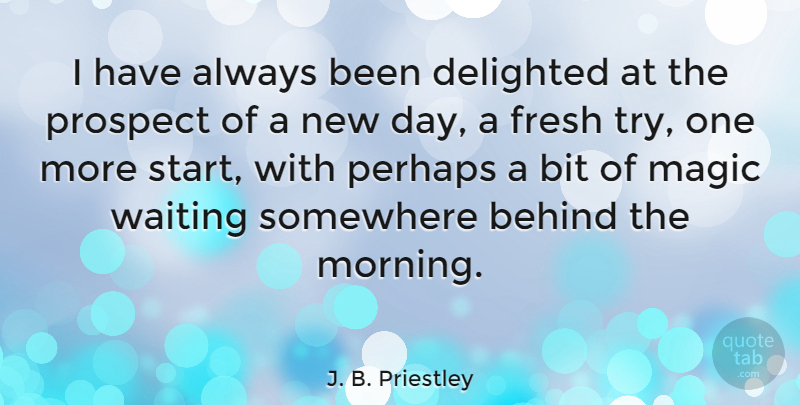
Image result for jb priestley quotes
One thing that I love about my job is that no matter how my morning starts at home (spilled coffee) or on the way to school (terrible traffic) or in the school building before students arrive (copier is broken), when my students arrive it feels like it's the start of something new and positive.  My hope for my students is that they feel that same sense of a fresh start when they walk into my class each morning. One way I've helped build this feeling is to implement a special morning greeting.  


Why not start each day with a greeting at the door?  
Mornings in the classroom can be chaotic at times. There are days it feels like quite an accomplishment to get attendance taken.  So then why would I propose adding one more thing to your busy morning? Because it's a simple thing that can have a tremendously positive impact on the rest of the day for you and your students.  A personal morning greeting begins the day in a positive way. I love the smiles that appear when students get to choose a greeting that allows their individual personality to shine through. It also serves as a chance to renew a day that may have started off rough. A welcome allows every student the opportunity to feel warmth and respect, maybe for the first time that day. Morning greetings are also an excellent way to create strong bonds with your students. They allow students to feel individually noticed by you. Giving every child a sense of belonging is key to ensuring they feel safe and are ready to learn.  


How can we start our mornings with a greeting?


Though the start of the year is probably ideal, I believe morning greetings can be put into effect at any point throughout the year, as long as it is introduced and made into a daily routine so that your students will embrace it with open arms.

  1. Create a variety of morning greeting options for students to choose from.
  2. Hang the greetings on the door and change them weekly.
  3. Every morning open the door and have students choose what greeting they want by pointing to it.  
  4. Greet students with that greeting.
  5. Watch them smile!
After I teach the teacher-student morning greeting, I then introduce procedures on how students can greet each other each morning. As with all new classroom routines, it takes time to learn.  I consistently model and practice many times over before I expect students to automatically do it each morning. Just as with the teacher greeting, I give students a choice of partner greetings.  

We then practice proper ways to greet a friend.  The kids practice each morning until it becomes part of their morning routine.  Here is the list I give to students:
  1. Stand up tall.
  2. Make eye contact and smile.
  3. Use a clear, friendly voice.
  4. Use friendly body language.
  5. Be safe.
  6. Wait for your turn.
  7. Listen while others greet you.

I hope the smiles on my students' faces will motivate you to try morning greetings with your class. It's a fun and straightforward routine that sets a positive mood for the rest of the day. It has the ability to brighten days, deepen relationships, and build our students' confidence and communication skills. That seems like a whole lot of good for one routine!


 Positively Teaching,  
Randi Muehlen


Thursday, October 3, 2019

Inspired by Science

Inspired by Science

Last year I was given the amazing opportunity to be a part of both the selection and pilot committee for our new science adoption. That was definitely a new experience for me. I have to say that I learned a lot. Now that we have our new materials and hopefully been able to attend the science training, it's time to jump into this new program. You may be asking yourself how to I begin.
There are 4 different units within the program. Since these units do not have to be taught in sequential order, I used the program guide to help me plan out which unit I wanted to start with. Under the section called Scope and Sequence, there is a list of all the units, modules, and lessons for grades k-5. After looking at all the units and modules with my fourth-grade team. We decided to start with Unit 3, Our Dynamic Earth. This unit lined up perfectly with the stories and essential questions that we are also teaching in the Wonders program for ELA. We also chose this unit because it lined up with our social studies content as well.
After we chose Unit 3 to start, I needed to figure out how much time I had each week to teach the lessons. If you are like me, then you probably want to teach science all day, every day. As much and I wish that was true, the reality is that there isn't as much time in a week to teach as much science as I would like. So the next place I looked at was the Lesson at a Glance. Here I was able to find 3 different options for me to teach: Full Track 45 min/day (full year), FlexTrack A 30 min/day (5 days per week), or FlexTrack B 30 min/day (3 days per week). 
I decided that FlexTrack B was the most realistic goal for me to start this program. I felt like choosing this option allowed me to give myself a lot of grace for teaching something new.  I didn’t feel like I was having to cram a whole bunch of information into a short about of time. I love that each lesson has the feature to chose a track. Some weeks we have more time than others to teach science so I can always look at what was omitted from FlexTrack B and add it back in when time allows.  
Despite the fact that I got to pilot this program last year, there is so much I still have to learn.  What I have learned so far, is how excited my students are when it’s time for science. I am inspired by their curiosity for the world around them.  What are somethings that you have learned about the program?  How are you inspiring your students to observe the world they live in?  I would love to hear all about what great things are happening in your classroom. 


Learning and Teaching with Grace,


Alina

Wednesday, October 2, 2019

Aim for the Target


Aim for the Target 

   
We are now into the third month of school with full aim of our targets. Have you ever wondered why we post learning targets for our students? Do you see it as one more thing to do, when you can just verbally inform the students what the learning will be? If so, I want to give you a different perspective today, bringing value to something you may see as insignificant. Keep in mind; lesson objectives are not necessarily student-friendly because they can be too broad and difficult to understand making the purpose confusing at times.

Learning Targets are the bull’s eye that keep our students focused and engaged in new learning.

Picture your lesson plan as a dartboard and the learning target is your bull’s eye. You begin to plan instruction with the center of the bull's eye in mind (planning from the student’s point of view) because you want your students to acquire new knowledge. Then you begin to think, “The target may be difficult to hit with mastery within the first throw, but the outer rings (the instructional support) will still provide points that will motivate my students to keep trying and, eventually, hit the bull’s eye (learning goal).” 

“Make the learning target live in a lesson so students experience it every moment of the lesson-that’s how you empower your students to really achieve that target.”  ~Susan M. Brookhart

You might be asking, “What’s the purpose of this visual?” Imagine the dartboard again, now someone hands you the dart with no explanation. You may throw the dart with no aim in mind or you may not want to throw it at all. We, as humans, are always searching for purpose, “Why am I doing this? Why do I have to do this?” If a purpose is not found and visualized, then there is a loss of interest leading to boredom, and the absence of explicit action. On the other hand, when we have a purpose in mind, it encourages us to learn the basics, be consistent, and aim for accuracy within our actions.  

I like to envision what learning was like for me and always aim to do better for my students. I post the targets as “I can…” statements to help students understand first off that there are NO “I can’t...” statements in my class. I let them know that these statements are directly connected to grade-level standards/goals to be achieved, but are simplified to help keep us on target. I want my students to realize we are capable of achieving goals, it may not be at the same pace, but we definitely have the potential to achieve if we believe. 

The target gives students the purpose for what’s being learned, it is the buy-in for focused interest within the instruction. Start with an objective, for instance in ELA, RL 4.1 objective states: Refer to details and examples in a text when explaining what the text says explicitly and when drawing inferences from the text. Now take the key words and write a simplified version of the objective, "I can explain a story/the narrative by referring to details and examples from the text." In regards to math, take the 4OA.2 objective: Multiply or divide to solve word problems involving multiplicative comparison, e.g., by using drawings and equations with a symbol for the unknown number to represent the problem, distinguishing multiplicative comparison from additive comparison.  Break the objective down depending on your focus for the day's lesson. For example, if you are focusing on multiplication, you can state, "I can solve word problems involving multiplication by using drawings." Targets will guide the learning to make connections, engaging minds and, hopefully, transforming practitioners into experts. 

If you are interested in reading to further your understanding within this topic, read reference: Brookhart, Susan M. and Moss, Connie M. Learning Targets, Helping Students Aim for Understanding in Today's Lesson. 2012, ASCD.  Happy Reading and remember to aim for the bull's eye! 


Live, Love, Teach!
Hilda Sanchez

Tuesday, October 1, 2019

Forever in the Middle: QR codes for routines


I have a Video Blog for you this month!
Play the video below to see how to use QR codes in your classroom.
Links are listed below the video.


My Spotlight page (links to the writing feedback forms under Resources)

Keep the magic alive,
Kandyce Valverde
See what my class is up to on Twitter: @valverderules


Most Viewed Posts