Showing posts with label Project Based Learning. Show all posts

Tuesday, March 6, 2018

"Road Trip" - Student Voice and Choice - Project Based Learning


Student Voice and Choice
Project Based Learning 


"I am going to Disneyland.  Not! Disney world, yes." - Deijohn Dixon

"Can I go to Mexico?" - Aaron Jurado

"What about a car that can drive on water?" - Edgar Gonzalez

"How many places can I go to?" - Robert Wenceslao

"$20,000 is a lot of money for a trip." - Angela Lugo


"CAASPP in 21 days"
"I still have a module to teach that I have not started yet."
"When am I going to review all the topics that were taught this year?"
"How do I keep the students engaged at such a critical time of the year?"
"High school registration has begun and I need my students to do well on the high stake test."


Are these some of the thoughts you are having right now?  Because I am having these thoughts.


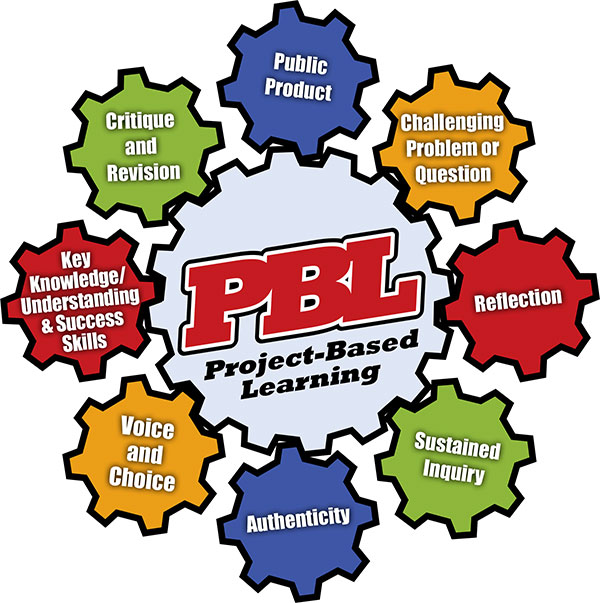
Project Based Learning (PBL) is a method of learning where students acquire knowledge through challenges and inquiry-based learning.  One of the project essential elements in PBL is student voice and choice.

     Student voice and choice can allow you as much input as you would want from your students.  Students deciding on the final public product, to the project requirements, to the actual project design are just a couple of the options for student voice and choice.  Allowing student voice and choice in a project can build more buy-in by students.  This essential element in PBL projects can be implemented at the planning stages of a project, beginning of the project, middle of the project or even the end of the project.  Getting students' ideas of what is of interest to them can start the planning of a new project for an upcoming unit of study.  After introducing a project, you could have students choose from what they want to study in the unit.  And in the middle or end of the project, you could have students start choosing what type of public product they want to create as a demonstration of their learning.


The goal of student voice and choice is to give students the opportunity to lend their ideas and thoughts to the project they are working on.

     I just started a project last Friday with my 8th graders on the unit of study with functions.  I decided that I would use the idea of a "Road Trip" to keep students' interest this close to CAASPP and as a 'vehicle' to teach an important topic.  As I was planning this project, I wanted to give as much student voice and choice as I could to my students.  So, the project allows students to choose anywhere they want to drive to - they use Google Maps to determine the total distance and the total time required for their trip - the only restriction being that you must be able to drive there.  They can bring anyone on the trip that they want to go with them - from friends to celebrities to pets.  Then students are allowed to choose the cost of food per day they want to spend, the quality of lodging they each night, and the amount of spending money per day.  A list of car options is given, but I added an extra 'your choice' where students can research their own vehicle - this has turned out to be a good option because students are researching motorhomes which I had never considered - great thinking on my students' part.  They then calculate the amount of gasoline and the cost to buy gas for their entire trip.  So many options for the students in this project that each and everyone of them is creating their own personalized "Road Trip."

    Where is the CA content?  Great question.  The "Road Trip" must cost between $19,000 and $20,000.  And each part described above must be represented four different ways - a story, an equation, a table, and a graph.  Students are so focused right now on their choices that only a couple have figured out that this is a very small margin - but those that have realized that are starting to go back and make changes to their choices.  And the final part of the project, students get to choose what public product they want to create to demonstrate their learnings through the project.  I keep telling the students, "I want you to get it wrong the first time, and the second time, and hopefully get it right the third time."  There are so many moving parts to this project but each moving part allows students to have their own voice and choice - in the hope that they are engaged for the entire project.


I encourage you to think about a project idea and ask how you can incorporate some "student voice and choice" in the project - whether it just be one part or multiple parts.

Still learning and loving it,
Kevin


Tuesday, October 10, 2017

"Go, Pack My Trunk!"


“Go, Pack My Trunk!”
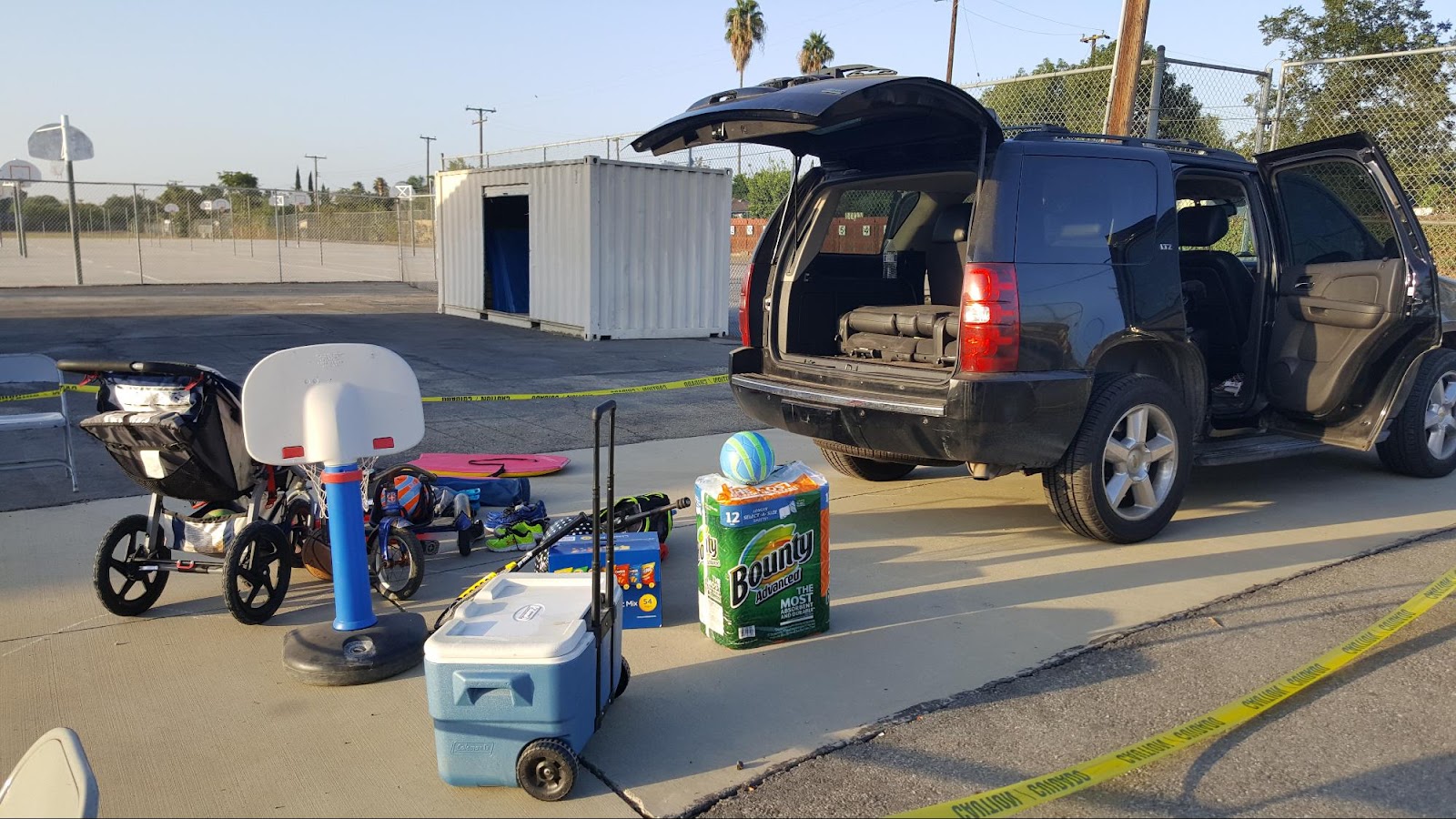
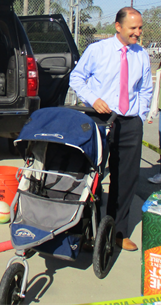
“Why did you bring a baby stroller and a tricycle?”
  • Jessie Virgin, 7th grader

“I thought it was a cool way to start but at first I thought it was weird.”
  • Fabian Jimenez, 7th grader

“I thought it was amazing to fit a lot of stuff into a tiny space.  I wonder if we could fit more things?”
  • Kevin Ayala, 7th grader

“I wonder if the way the object is stored affects how much space it takes?”
  • Emily Zamora, 7th grader

“I thought you’re using us to pack your car & have everything ready for your vacation.”
  • Pedro Flores, 7th grader

“Did we scratch your car?”
  • Alex Marquez, 7th grader


Being creative in how a new unit of study is introduced to your students can set the stage for some life long lessons for your students.  Grabbing students’ interest by challenging them with an activity, an interesting video about bungee jumping, a thought provoking question,  cooking your favorite dish, walking to the city museum,  designing a bridge online, introducing the Ninja Turtles, playing a round of miniature golf in the classroom, or something totally out of the ordinary will lead students to start asking questions and will capture their attention.

PBL (Project Based Learning) incorporates different elements into its design - one of those elements is inquiry.  The concept of an Entry Event is embedded in this element as a way to get students to start asking questions.  The concept of an Entry Event is not isolated to only PBL - it can be used in any classroom and with any content area or elective.

Last week, I completed the “What’s In My Bag?” unit of study with my 7th graders and the #MathInMyLIFE unit of study with my 8th graders.  This week it was time to introduce my next units of study.

My 7th graders were about to start a unit of study on geometry.  I was struggling with how to introduce the unit so that I could create some excitement or intrigue with my students.  I thought about contacting UPS and having them visit the school to talk about packing boxes for transport on planes or vans.  But it just did not fit exactly with the content that I needed to cover.  

Then last weekend I had a thought - what if I had the students pack the trunk of my car, literally!  So on Monday, Tuesday and Wednesday I took ‘stuff’ out of my garage and put it into the back of my car to drop off at school.  Wednesday I drove my car on campus and parked it outside my classroom - with all the ‘stuff’ outside my car.  My seventh grade class came around and I divided them into two groups - boys and girls. I told them that their task was to pack everything into the trunk of my car in the fastest time.  

“That’s your car out there?”, “Where did you get all that stuff?”, “Can we put it in the driver’s seat?”, “Can I start your car?”  All questions that were fired at me as I asked, “What need-to-know questions do you have before we start?”  

Off they went to my car!  To stand back and watch how one group tried to push and cram everything in the trunk while the other group put items inside of items to solve the problem was just awesome to see.  For me, it was not about who had the faster time but rather how each group solved the problem.  

My hope was that this experience will generate questions that students want answered and that I have intrigued them just enough to wonder what this unit is all about.  The entry event was meant to be a hands on experience before embarking on our journey of geometry. I can use this experience throughout the unit of study to ask more questions of my students and see where our learning takes us.

”The goal is to grab the hearts and minds of your students.”        

Myle Lee

By taking the time to create something unique to introduce a new unit of study, students will see that you have a passion for what they are about to learn.  Yes, you will need to give up some of your class time to do this type of activity - could be as little as 5 minutes or it could be the entire period.  However, the questions students will have afterwards can be an opportunity for them to make a connection with the real world around them.  There will not be answers right away but you have planted the seed and over the course of your unit of study it will not only produce predicted learnings (based on the standards we are required to teach) but also learnings that cannot be predicted because of a student’s unique question or idea.  

Think about an upcoming unit of study and start to list some different ways you may introduce the unit to your students - then try one of them.  Make a connection with the real world and your content area that captures your students’ attention and gets them to think.
Still Learning and Loving It,
Kevin
Click here to schedule a visitlogosmall spotlight classrooms.png


twitter logo.png

Tuesday, September 12, 2017

Student Learning Through Projects


Student Learning Through Projects
“My favorite part about doing this project was that while doing math I also got to learn more about the universe…”
  • Miriam Cabanillas, 8th grader

“My favorite part was working with someone and asking them something if I ever got stuck.”
  • Getzemany Herrera, 8th grader

“It helped me to speak louder and look at the audience.”
  • Edgar Gonzalez, 7th grader

“Doing the math was slightly hard mostly because of the real life situations and creating them.”
  • Victor Chavez, 7th grader


Project Based Learning (PBL) is a method of learning where students acquire knowledge through real-life challenges and inquiry based learning.  A PBL project encompasses all 8 essential components that you see above to drive student learning.

As I go through this year I will share resources that I use in my classroom, projects I use with my students, and other valuable resources that I tried in my classroom.  I will share what I believed was successful, the mistakes I made, and changes I would make for the future.  You will learn that every project is not perfect as I try and make real life connections with my students.

You will find a link each month to the project that we are working on along with sample products from our previous unit’s project.  The projects are embedded into a shared folder in Google Drive.

Each month I will focus on one of these essential elements - explaining what it means, how I struggle with it, and how I am using the key element in the current project.


I can remember just a few years ago where I was exclusively using direct instruction, thought of my subject area as independent of others, and struggled to make real life connections with my students.

Now, I have students working in groups, I find myself constantly having conversations with other teachers on campus, and I have students making connections to the real world and other subject areas.

What has changed? - I am teaching the state standards while using the Eureka base program through Project Based Learning!  I find the students more engaged and I they are asking questions that are relevant to them as they solve the challenging problem.

It was such a struggle the first couple years with PBL.  I did not know how I was going to create projects that had the state standards embedded in them.  How was I going to know for sure that the students were learning the necessary mathematics to do well on the CAASPP?  I stumbled through projects the first couple years wondering what the heck I was doing.  And I wondered,  “How am I going to get all level of students in my class, from SPED to GATE, to be successful in answering the project’s challenging problem as well as meeting the expectations for CAASPP?”

But, the thrill of teaching has never been higher for me - I am constantly asking what project can I create collaboratively with my colleagues to make an impact on my students.  Last year it was the “Pokemon Go” project to teach system of equations - this year we used the historic solar eclipse to kick off our “Journey to Space” project for scientific notation.  I am excited to be teaching new projects and how each period I teach is different from to the next.

“For so many students, it’s difficult to make a real-life connection between math and their everyday lives.” – Janet Pinto

Think about your coming units of study, what the major standards that need to be taught in those units are, and ask yourself, “How can I create a unit project that will allow students to make a connection between your subject and their lives?”

Here are the first projects for the year: Math 7 - “All Things Rational” and Math 8 - “Journey to Space”


Next month, I will share the projects “What is in my bag?” and “#MathinmyLIFE”.

Be willing to take a chance by connecting learning to the real world for your students and do it with your own style.
                                                            Still learning and loving it,

                            Kevin
Click here to schedule a visitlogosmall spotlight classrooms.png


twitter logo.png

Most Viewed Posts