Showing posts with label elementary grades. Show all posts

Monday, February 28, 2022

Assessing Spring Assessment Readiness

By Heather Pfrunder, Doctoral Candidate, SDC Teacher, and Education Specialist

February 28, 2022


Assessment ready or standard’s ready? Are we making students ready for life by maximizing instructional minutes? Often the answer is yes. During testing season it seems like the answer is… well… testing. However, if we address metacognition skills with test preparation, our students are becoming equipped with learning to perform under pressure.  Let’s look at how.


  1. Spiral Review and the Standards.


While the first objective seems pretty obvious, it really piggy-backs onto my previous article about maximizing spring growth. In a year with so much change, transition, and re-learning educators have had to rethink lessons into spiral review formats. Assessment prep is simply one more tool to refine this practice. Taking time to review objectives and test formats informs instructional minutes, especially during intervention periods. Looking over the practice test questions and formats are not only for students, but a great tool for educators in knowing how to prep students.
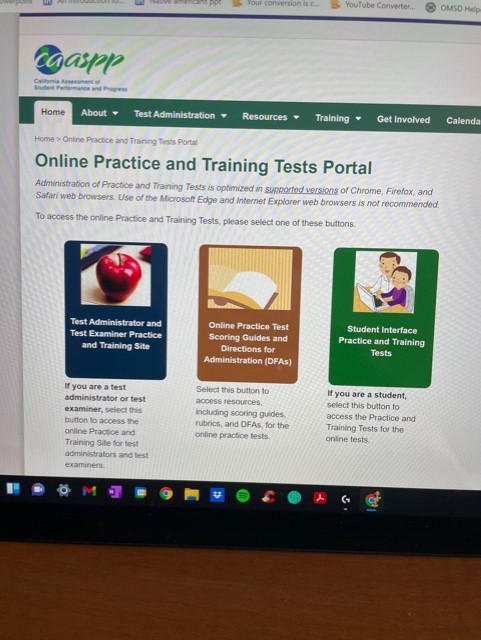

In the caaspp website teachers can review tests 

and set students up with practice test opportunities.


  1. Mindfulness and Testing


Slowing students down to breathe and focus on clarity of thought is the first step to effective test-taking skills. It also replicates needed life skills. From driver’s tests to college exams to employment tests, much of what we do in life is dependent on effective test-taking skills. Practice breathing and focusing on the question or the topic. Practice will assist students with more effective management of their emotions. Controlled breathing is a good base of ensuring heart-rate and oxygen to the brain. As a daily specific practice before practice testing, we are setting students up with a natural association of calming and test-taking strategies. Practice videos are available in our SEL toolkit, or simply click this link here.

  1. What is the question asking?


Really? Yes, really. So often in their anxiety or eagerness to quickly complete the test students forget to go slowly and really look at all the keywords of the test. Just as we expect our students to circle, box, or highlight answers, it is equally important to circle, box, or highlight key words and compare answers to the questions. While several words are bolded and underlined by caaspp, students can practice using the mousepad to highlight additional question details. An additional effective test-taking strategy is to look at the questions before reading the passages, when allowed.


Have students practice using their mouse or keypads to 

highlight key words in questions and in the text.


  1. What tools do I use?

Chances are if your students aren’t using tools, they really are not answering to the best of their abilities.  Simple things like thinking maps on paper or using an allowed 100’s or multiplication table can make the difference between making senseless errors and demonstrating true abilities. Do not assume that months of “Read, Draw, Write” or “STAR” note-taking means they will automatically use these tools in a testing environment. When you practice pre-testing observe: do your students use the tools, or do they know how to make their own? If pencil and paper are allowed for scratch paper do they know that they can draw a simple number line to add and subtract? Having students practicing these skills prior to assessment not only means that they have strategies for test-taking, but they are able to practice problem solving skills for daily assignments. Sometimes a little explicit instruction is just the boost your student needs.

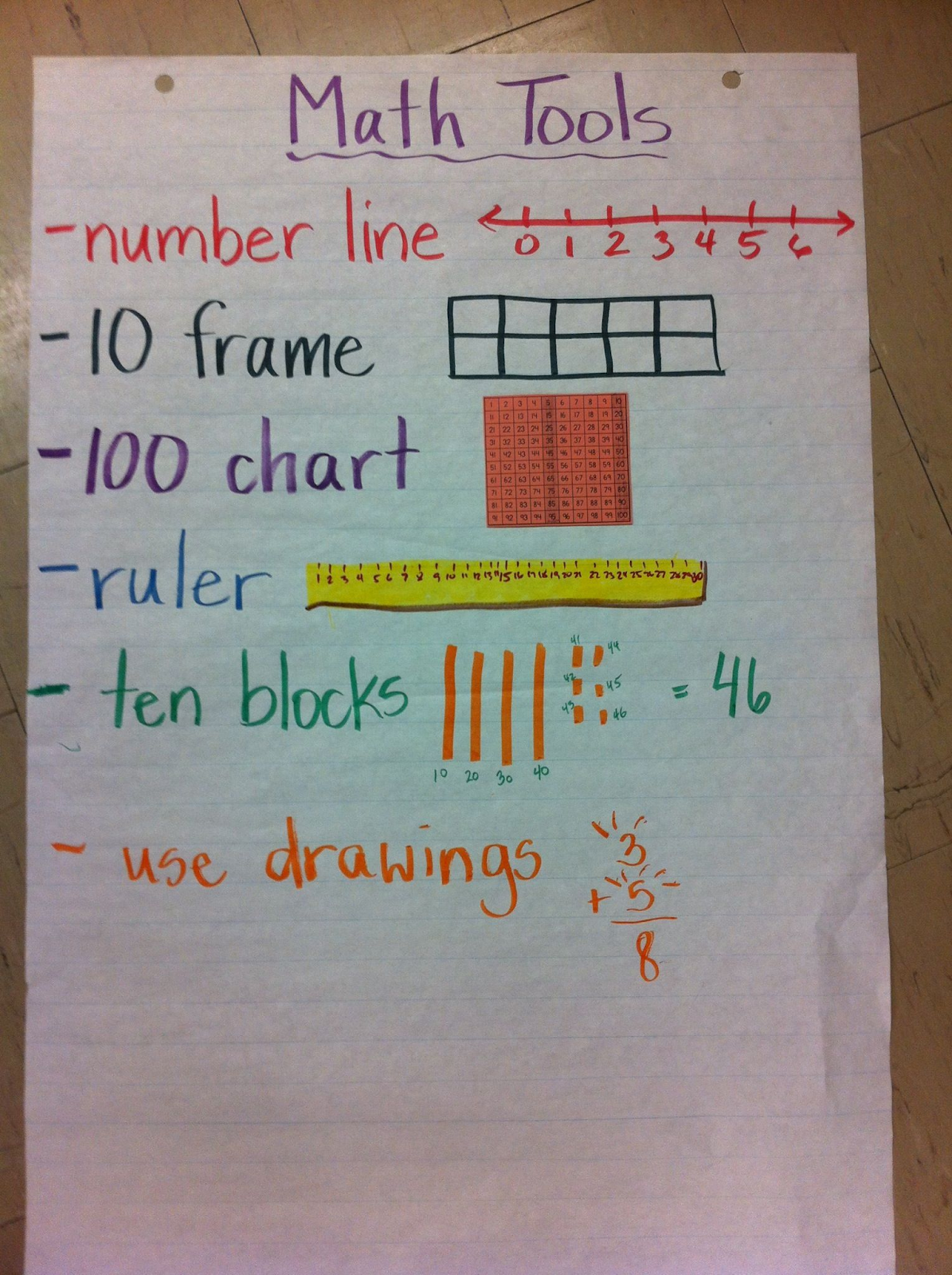

If digital tools are not available, have students practice creating their own.

Practice using pre-writing strategies they have been practicing.


Until next time, wishing you the best and may your students’ testing odds ever be in their favor…


Like what you read? Join me in upcoming blog posts where I continue to put these strategies into place and share resources!


Friday, January 28, 2022

Springing into Action: Maximizing Spring Growth

By Heather Pfrunder, M.A.Ed, SDC Teacher and Education Specialist

Jan 28, 2022


Post Winter Break is always the most exciting time of the year.   Students are in the FLOW of learning; all the pesky practices of getting used to the routines are out of the way and we simply get down to the business of learning.  It’s the time where we often see the bigger payouts for our efforts and strategies. It is also the time that can quickly get sandwiched between assessments and special projects.  However, careful attention to student progress monitoring can be the difference between meeting student goals/standards and leaving learning roll-over for summer school or the following fall. So, let’s get to it in three steps!  The following link is the organizer I have created for use.  Classroom Monitoring Worksheet How to use it is below.

**(Note: you will need to make your own copy of this document to edit it).


Step 1: Survey Student Skills

The first step seems the most challenging, but simply look at assessments and class work.  Summarize what you see and what you know from interacting with them.  Cover each basic aspect, where are they at? What objectives are they working on?  The sample I chose from my classroom is as follows: ELA: Phonics (or spelling), Sight Words (or Latin Roots), Reading Comprehension, and Writing.  For Math: Algorithms, Measurements & Graphs, Fractions & Decimals, Geometry, and Word Problems.  This may look different for your grade level or your teaching subject. Tweak what you need adjusted to match state standards and goals from your class/subject.


Step Two: Re-Organize Your Intervention Groups.

Students grow and their needs shift through the year.  Being responsive to that means that you are placing them in a place where they can collaboratively work and grow.  In the image above I have separated my students to look at what work I need them to accomplish.  However, knowing that some students may have difficulty interacting with particular individuals means my students will be regrouped differently despite ability - thus the penciled info!  Revisions are in progress!


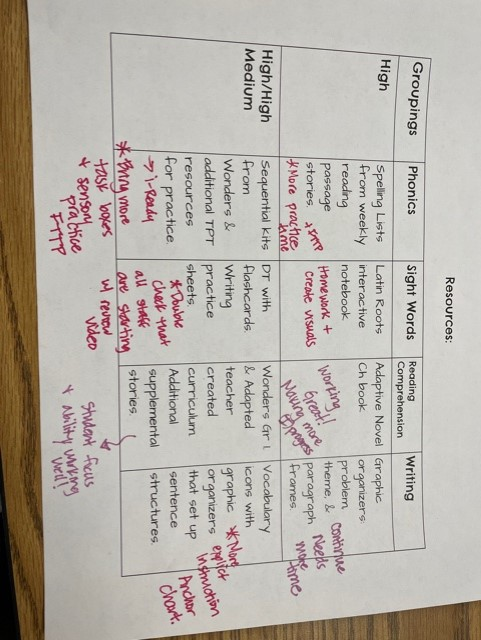
Step Three: List and Review Your Resources

Listing out your current resources helps you to frame that every need is covered.


 The important part is reviewing what is working and what is not.  What could use more attention?  Why?  More interactive lessons?  More practice?  A different program or strategy?  Maybe time needs to be shifted to a particular skill.  Here I have added notes about more intervention time with Fast Track To Phonics, videos, revised anchor charts, homework opportunities, and notes to myself of what is working great (i.e. consistent progress at an appropriate pace). Now, it’s lesson planning time. 


Wishing you and your students AMAZING Spring Growth!!


Like what you read? Join me in upcoming blog posts where I continue to put these strategies into place and share resources!

Friday, December 13, 2019

Children CAN Read: Building Relationships through Reading

Children CAN Read:  

Building Relationships Through Reading

by: Ashley Ewert


From the beginning of the school year we, as teachers, build relationships with students using a variety of models and strategies. Have you ever thought how you can build a relationship with a student over a simple book? We encourage parents to read to their children every night, we even assign reading homework to students to encourage reading outside the classroom. Parents who read bedtime storied to their children build relationships and take adventures through the stories they read each night. So, as teachers, let's take that same that same idea and build relationships and take adventures through stories we read to the students in the classroom. Great teaching practice involves encouragement at all levels of reading abilities. Giving students the confidence that they can read at any level will help build positive relationships with the students. Reading can be a powerful way to help build acceptance, understanding and social emotional needs. 


Ways  to Encourage Reading 

Reading development can be similar to language development. When do children learn to communicate? Is their first form of communication crying or saying words? Reading development is very similar. Some believe that reading begins when children learn to read sentences in a book and others believe that reading begins when children point and read pictures in a book. There are so many modalities of reading that reading development can really begin with at a very young age. I have always encouraged my preschool students that they can read. They can read pictures in a book. They can read words and letters in a book. They can also read by re-telling the story after it has been read to them. Encouraging students that they can read gives them motivation and helps to establish and build relationships in the classroom between students and teachers. 

"A person is a person no matter how small" - Dr. Seuss, Horton Hears a Who!

Student & Teacher Reading Connections- 

Reading is often thought of as a self contained act. Meaning that many children read silently alone. This does not have to be the case. Teachers can build connections through reading when reading aloud or pulling a small reading groups. Reading in small groups allows opportunities to meet student's social emotional needs thus allowing teachers to build and make connections with students. I enjoy adding additional reading materials to my Language arts block during the holidays. When I have read holiday books as a whole group read aloud I often place the books in the classroom library for students to choose when they have a library center rotation. During the library center rotation I am sure to provide the students with staff support so they can have the opportunity to read with an adult individually or as a small group. reading can be fun. Reading can be adventurous. Reading can build connections, relationships, acceptance and foster social emotional needs. 

"You are braver than you believe, stronger than you seem, and smarter than you think." - A.A. Milne


"To teach is to touch a life forever." - Anonymous 

Ashley Ewert

Thursday, October 31, 2019

Genius Hour-Independent Study


When I was GATE trained, we were taught an engagement strategy called Independent Study, also known as Genius Hour.  The students choose what topic they are going to educate themselves on, and the teacher guides and facilitates their learning. Facilitating learning was a very new concept to me because, as a teacher, I always thought that I was to be the person who delivered the information to students, not the guide. A couple of my colleagues talked about how they were using the strategy in their classrooms, so I decided to give it a try with the GATE clustered classes. 

            When I initially tried Genius Hour, I let students pick whatever topic they wanted, had them research, and present. Some of the students would do a good job, but others were not producing the highest quality of work. This year, with a little more research, I found a way to help the students give more focus so that they are getting what they needed out of the independent study. I found a great resource on Teachers Pay Teachers that will guide students through the process as well as keep them accountable.  

Building a Wordle

   The Wordle will allow students to brainstorm their interests, and a way to help them choose their focus. They will be able to see all of the people and activities that interest them. For our district, the website Wordle does not work on school computers, but I did find an alternative through Google Apps Add-ons. The Add-On is called Word Cloud Generator. Here is an example that I made and will be showing my students.  

Brainstorming

Next, the students will decide what topic with a specific question they would like to learn more about. I will allow the students to use the computers to do some research on
 different areas of interest. During this time, I talk to the students about credible websites, such as .edu, .org, .net, and .com. In addition, if a website has an author attached to the article, that is always a good sign. TED is also a great place to find information, and it is nice because it allows the students to use different types of resources for their research. I feel that teaching the students how to research is so important, especially in technology-driven learning environments.  


Monitoring Progress

In the past, I believe this is where I fell short, so I am going to build in meeting times once-twice a week. I want to make sure that students are progressing on their learning and offer up any support that they may need. First, the students use the KWHLAQ chart once they have a question. This is a new step for me, but I believe this will help students see where they need to go with their research. It will also allow them to ask the right questions when using computers. 
After completing the KWHLAQ chart, they are ready to propose their questions.  Just another step added to ensure students are supported throughout the process and making sure they are being guided in their learning.  
            Once the students are officially researching their questions, I want to make sure they are logging their findings. After each research session, students must fill out their log, which will include their websites and what they learned. This step will especially be important because it will show me if they truly understand what they are reading and if it enhances their learning. I will have them do this on a Google Doc so that they can hyperlink the web addresses.  

The Final Product

            The final product will be entirely up to them, as long as it can be presented to the class. In the past, many students felt the most comfortable with a Google Slides presentation or a video. Which is fine, but I want them to find different ways to show information. Promoting creativity is so important. We will have a conversation on different modes of informing an audience.  As a group, we will then create a Choice Board so that the students will have access to the list of ideas. 

            How am I going to incorporate this into an already packed schedule? I thought UA (Universal Access) might be the best place for Genius Hour. Independent learning is perfect for GATE students, and it is an exciting way to challenge them.  Genius Hour can be altered in many different ways to fit your classroom environment and students. 


Diana Eberle


Monday, September 30, 2019

GATE Strategy-Concentric Circles


 Concentric Circles is a GATE strategy I wanted to explore with my students this year. In my last blog, I explained what Concentric Circle are, and how it can help students go deeper into concepts, and it allows students to collaborate. Both times the students worked with the circles they use their Language Arts anthology, however, it can be used in any content area.  It was definitely a learning experience for the whole class, including myself.  

What Worked


      Concentric Circles allowed the students to be somewhat creative while learning the standard or just looking at the impact, a person has had on the world. First of all, this is a great and engaging activity.


It was noisy, but if someone came into my room the students would not have noticed, and they were all crowded around their work (That is how I assess engagement). It was fun to watch them in action. Another aspect that worked was keeping is simple. The first time the students worked on concentric circles, they were given parameters of finding an example of figurative language, which would be their focus, and we picked one depth and complexity icon to use in all the circles. Keeping the activity simple at first was important, and I am really glad I did because it allowed the students to get familiar with what was being asked of them. I kept the example projected on the Smartboard, so students could reference it throughout the activity. The second time they were assigned the circles I asked them to use their personal experiences and opinions. Again it would help them get familiar and would allow them to start making deeper connections, which is my overall goal. Lastly, student groupings were also kept on the smaller side; no more than four people in a group. They all have to write their ideas onto the circles and collaborate on their focus, which is the center circle. So anywhere between 2-4 students will work best for this activity. Overall, keep the parameters simple at first, and keep the groups on the small.  
 
Adjustments 

            With anything, adjustments need to be made, so that it can work for the students. 
This group of students is extremely artistic, and I needed to change the look of the circles. Instead of being drawn circles on a piece of paper I had the students cut colored pieces of paper and layer them any way they wanted. The kids responded to this change. However, the option to draw the circles will still be offered to the groups. The next adjustment I will be making is which students are in the groups. They need to heterogeneous yet harmonious. I want the kids to be at different levels academically, so they can build on each other’s ideas, but personality-wise they should be compatible. Some of the groups were great together, but others would argue because of personality clashing. Some of the passive students in the group would let the stronger personalities take over. With that being said, when building these groups it will be done very purposely. These changes should help the activity more smoothly.  


Look-Fors

The biggest Look For is student conservation. Listening to their conservation will help me to understand where their ideas are heading, but also make sure they write down their good ideas and coach them when they are unsure. I also listen when they misunderstand the instructions, and make clarifications. This happened with one group where they forgot they needed a continual reference to their center circle. They were treating the circles more like a GATE frame, but the mistake allowed me to clarify with them and remind the class. The next time I will take anecdotal notes and share what was said, and use that information to run a Socratic Seminar.

Concentric Circles are a worthwhile GATE strategy to try out in your classroom. It can be used in any content area, and it offers so much for the students. The kids will work collaboratively, learn how to have productive and engaging conversations, and look at different parts of life or curriculum with more depth. Again, I highly recommend this strategy in any classroom. 

Diana Eberle


Wednesday, September 4, 2019

Forever in the Middle: Building Classroom Community


Building a Classroom Community


Welcome back to school, teachers!  One of the things I work hard to build and maintain in my classroom is a safe community environment where students feel welcome.  Creating a classroom that feels like a community only takes a few quick and easy steps.

Step 1:  Create a welcoming environment
Teachers are pros at decorating but setting up a welcoming environment really means nothing more than creating an organized and clean space with a few decorative details.  It's not necessary to go over the top with decorating.  If you walk into your own classroom and are able to feel more relaxed or happy, then you've accomplished this first step.

Step 2: Show your students you enjoy their company
I know the old mantra is "don't smile until Christmas," but I never was any good at following that. Having fun with the kids and being cheerful has always worked out better for me.  One new approach I tried out this year and am really enjoying is my Roll Call Question.  Each day, students have a question they are asked such as, "what is your favorite color?" or  "would you rather live without music or TV?" The possibilities are really endless with these.  Then I use my equity cards to call each student and instead of responding with "here," they answer the question. It takes less than 90 seconds each period and students get to know each other a little more as a bonus.

Now, three weeks into the school year, they look forward to the question and I've even had kids suggest the next day's question.  I've been extremely impressed with what effect this has had on the classroom community and it's always fun to see what they say to some of our crazy questions like, "is cereal soup?"

Step 3: Teach classroom structures
We all know that kids crave structure and usually do better in environments where they know what to expect.  This is why teaching classroom structures is a great way to build community.  Some structures to teach are: entering and exiting the classroom, passing out or handing in assignments, moving around the classroom, restroom and drinking fountain procedures, and student versus teacher areas.  Once these have been mastered, give your students jobs within the class to help things run smoothly. Sharing the responsibilities gives them a purpose within the group.

Other ways I build community:

This year I am exploring using flexible seating and I have seen great success with my students. The freedom to "choose where you learn best" allows my students to really take charge of their own success and learn how to make good choices in where they sit and who they sit with. Also, they get to feel more grownup as they see that I trust them to make these choices.

Another feature of my classroom is our class pet, Claire.  She is a two month old bearded dragon and the students love having her in the room. As she gets older and larger, she will be able to be out more as I teach but for now she is in her cage most of the time. Since she is growing and will be nearly full grown by the end of the school year, we even do a weekly measurement of her length to see how much she has grown.  She also has an Instagram account (@foxywaterclaire) because every class pet needs an Instagram, right?

Whatever approach you take to build your classroom community, the most important thing is to make sure that however you do it, make it genuine.  Kids are extremely perceptive and appreciate honesty as well as respect.
Until next time, keep the magic alive.

Kandyce Valverde

Let me know how you build relationships and community in your classroom in the comments below!

Follow what my class is up to on my teacher Twitter @valverderules

Monday, September 2, 2019

GATE Strategies in the Classroom


    Each year I like to start with a focus in hopes of seeing improvement in my teaching.  In years past, Literature Circles, writing, and Socratic Seminar have been focus areas in the classroom. It seems when I have an area of teaching to analyze it helps not only myself but the students too.  This year I’d like to look at my GATE strategies, and how students are being served to the best of my teaching ability. This school year I shifted from a being a middle school Language Arts teacher, but to a self-contained 5th-grade GATE class, so this focus is going to be helpful for my class.  The goal is to dig deeper into novelty, acceleration, depth, and complexity.  I want to offer my students a truly GATE education as well as teaching the 5th grade standards. I found this website during GATE strategy research, and it has a lot of helpful information. For someone who is just starting this could be a helpful place to start; however, I recommend being trained, so you can ensure you are using the prompts correctly and effectively.   Our district is offering training sessions this January, and I would highly recommend it because when a teacher can interact with the strategies the more comfortable it is when using them in the classroom.       
    

 One strategy I am excited to use is Concentric Circles.  As I read more about the activity, it is a way to include acceleration, depth, complexity, and novelty.  My group of students this year are 
not only GATE students but high achievers, so challenging and keeping them engaged throughout the day can be a struggle.  The unfamiliarity of Concentric Circles paired with how the strategy pushes the kids to go deeper into the content will offer the productive struggle that is appropriate for the students.  The way the strategy works: the content or focus goes in the middle circle, then the surrounding circles are linked to the topic, but students will go into more depth and detail with the use of Depth and Complexity prompts. The students will be asked to record their findings within the circle.  The pictures show several ways to use Concentric Circles during classroom instruction.  Afterward, I would like for students to write a short response showing what they learned about the content. 


  The overall plan is to try a variety of GATE strategies, and then share my experience, mistakes, successes, and student products.  Next time, I will be sharing out about how the students responded to learning through the use of Concentric Circles.

Monday, August 26, 2019

My Journey into Conscious Discipline

An Introduction to Conscious Discipline

    Over the years and among the many teacher blogs I read,  I have heard similar positive comments coming from a movement called Conscious Discipline.  A desperate teacher would post a question regarding a particularly difficult behavior issue in class, and many of the suggestions repeated those two words.  After the past few years dealing with  extreme cases of difficult behavior issues in my own class, I was becoming that desperate teacher.  I knew these students needed  more than  I knew what  to give them to self-regulate in a classroom setting.  I  decided to  check it out.

     With a professional development stipend, I purchased the online course for Conscious Discipline. It includes the book, a video series, and a 1-year  subscription to extra content  online.

Discipline isn't something you do to children, it's something you develop within them. -Dr. Becky A. Bailey


        The first thing I learned was that this journey into Conscious Discipline is a transformational change that requires us to change our mindset as well as our skill set (p. 25).  It was reassuring to me to read that this whole process would take about three years, as I generally get overwhelmed with change (don’t we all?!).  There was relief to read that in Year 1, I should keep the system I have in place (currently-a clip chart), but also practice the new skills I am learning in this process.
       Connection is key in building relationships.  My goal is to facilitate more intentional face-to-face moments with and among my students.  This includes eye-contact, physical contact (high-five, touch thumbs, etc...), presence, and playful situations.  I will conduct this at least one time per hour of the school day. I will set a timer to remind me, but I am hopeful that this will occur in natural transitions in order to form a habit.  We do have a morning meeting each day where each student is greeted by name face-to-face by at least one other student. I also personally greet each student as they walk in the door first thing.
       Next month, I will start becoming "Brain Smart" as I delve into Chapter 2 while adding more of the rituals from Chapter 1.  Check the link in the title if you are interested in taking this journey with me!
   
Happy Teaching!
Erin Grebel

Thursday, May 9, 2019

Come One, Come All!

Come One, Come All! It's Open House Season

So, it pretty much goes a little like this: First, I stress about opening up the year with my new batch of students. Next, I worry about testing and making sure I covered ALL of the standards necessary to ensure my student's success on the state test... then, just when I think my stress level has maxed out... Open House comes skipping around the corner and reminds me that it is GAME TIME! Yes, this is when my anxiety level peaks.

It's Just One Day

Look, I completely understand the argument that many will make. It's only one day?... Why stress over a one-hour showcase? But, truth be told, this one day out of the year is truly important to both my students and me. We work really hard all year to master our goal standards. So, on this one day, we get to, in essence, "show-off" all the goals we have met in the most creative way possible. I like to see it as the Met Gala of the year and everyone comes wearing (showcasing) their very best. 

"Put your heart, mind, and soul into even your smallest acts. This is the secret of success." - Swami Sivananda  

Put YOUR Best Foot Forward

Here are some tips on how to ensure your students (and you) are successful and showcase their very best on this one night:

1. Be Creative: There are so many standards-based projects out there that are fun to do and full of opportunities for our students to be creative. Search the web for these resources, and you are sure to find something that fits your timeline and budget. An excellent resource for projects is a website like Teachers Pay Teachers,  that allow you to filter classroom goodies by grade, subject, and even budget. 

2. Plan Ahead: Start planning your projects throughout the year- not right before Open House (I am completely guilty of that.) If you get a bit done as you complete a unit of study, you will have plenty to showcase for our parents at the end of the year.

3. Only the Best: Accept only the best that each student can give you and nothing less. This may not look the same for every student, but you know your students better than anyone else, and you can see when they have put forth their best effort. Show them the following video, Austin's Butterfly- Building Excellence in Student's Work, and perhaps it will motivate them and remind them of the true potential that lies within every one of them.

And now, as I part ways with you (our readers), I give you some photos of our 2019 Open House Exhibit. Feel free to leave all the lovely comments you wish for our kiddos to read and enjoy, as we celebrate their hard work.

Putting her best foot forward, 
Yvonne Milian 

Aztec Civilization Report

Ancient Civilization Biography
 Earth's Biomes
 Novel/Film Critique 
 Personal Narrative 
 Poetry
 Ancient Civilization Report Card 
 Ancient Civilization 3-D Model (Scarab Beetle- Ancient Egypt)
 Math- Fish Tanks Volume/ Surface Area


Most Viewed Posts