Showing posts with label Kagan structures. Show all posts

Thursday, December 30, 2021

Trouble-Shooting Kagan: Getting Cooperative Learning to be Cooperative

By Heather Pfrunder, M.A.Ed          SDC Teacher and Education Specialist

December 30, 2021


Watching Kagan strategies in action one can’t help but be excited at the level of student engagement.  Student responses which exude inactive reflection and minimal regurgitation transform into animated critical thinking.  The brain science and research behind Kagan strategies is impressive and exciting: it takes in account the varied ways our brain is engaged and uses structures and systems to ensure optimal learning.  Through the practice of collaborative learning, the brain simultaneously is engaged in multiple parts. The social structures form an emotionally safe learning environment, often while nourishing the brain through motion. You could spend a college semester learning all the facets to Kagan and the brain research behind each minute component for it’s cooperative learning structures. However, teachers with fledgling Kagan experience often are encouraged to simply “start with the Robins.” Kinda Techy Teachers on TPT has a great free resource to access visual explanations and how to use the top 5 Robin Structures.


 Click Here for a Free Resource!
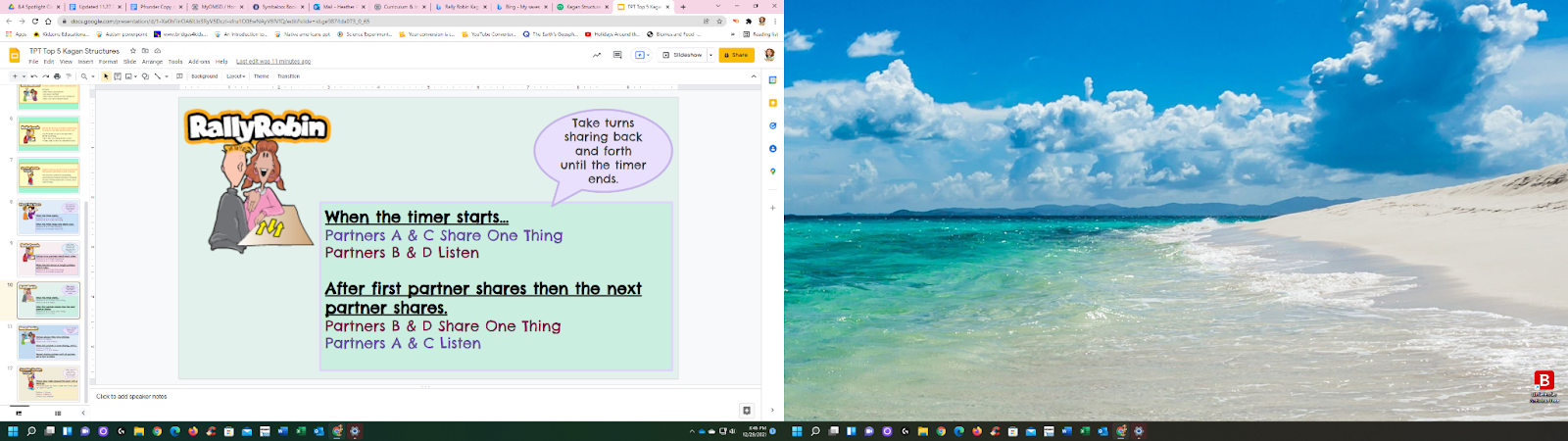

Example of a “Robin” Structure in the free TPT

Resource linked above.


This way teachers and students learn some of the basic structures and can apply them to any subject matter.  It is not the content that is being changed, rather the format of the lesson.  For many teachers the quick diagram of expectations found in the Kagan flip book is simple enough to function for many of their students.
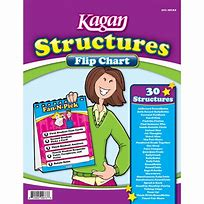


Flip Book page example.


Colleague Randi Muehlen describes many wonderful ways to implement Kagan in her post Kids Love to Talk. However, if we are teaching ALL students, and “all means all,” chances are you have had a student (or three) who are challenged to cooperatively work in cooperative learning groups. In reflection, this challenge happens for several reasons: social skill deficits, academic skill deficits, or a combination of both represented by cognition challenges. So here we go again, my teacher friends!  A list of shortcuts, tips, and printable visual aids to address Kagan challenges is headed your way!  Because honestly, the learning pay-off is so very worth it!



1.Social Skills: In trouble shooting social skills challenges (i.e. silliness, off-task behavior, bullying, shyness…) there are commonalities among strategies to address the different kinds of social skill deficits. Modeling, praise, team reflection, and purposeful team role assignments can shape mal-adaptive behaviors into behaviors that are productive and helpful team-building.  To address the needs of all students you may find yourself rotating between strategies to give all unique students a chance to exercise growth in an area of social skills development. Chapter 11 of the Kagan book outlines Social Skills challenges, solutions, and suggested structures and feedback.  Here is a condensed and shortened list of challenges and solutions for your reference:

 Kagan Social Skills Solutions. Click here!

Social skills are a major component to cooperative learning.  However, often they are a way to cover up another challenge: academic skill deficits.


2.Academic Skill Deficit: In this area there are two key take-aways to address supporting students that may need more scaffolding in order to actively participate with their peers. The first is relatively simple: do your students understand the concepts that they are learning?  Are they able to use key vocabulary in discussions?  For students with unique learning needs this may mean that they may need to use notes with how-to steps and examples or simple vocabulary sheets with visuals and/or sentence frames.  Below are some examples of content vocabulary.


Top: More descriptive vocabulary with visuals to aid in conversation

 for mid-need learners -found on TPT American Revolution Word Vocab.


Bottom: Simple sorting and matching vocabulary for collaboration activities 

for higher-need/less verbal learners - found on TPT water cycle bingo.


The second scaffold has to do with grouping and “Positive Interdependence.” (This is the “P” in the Kagan acronym “PIES” standing for Positive Interdependence, Individual Accountability, Equal Participation, and Simultaneous Interaction.)  How we set up individuals in groups can either benefit or challenge academic growth. Strong interdependence means that each member of the group is needed for the task to be completed.  This takes careful structuring of both the task instructions (ensuring that each member of the group is building on each other’s contributions) and the careful structuring of groups.  For example, the highest achieving learner typically should not be paired with the lowest achieving learner.  Instead, group your students into 4 groups: high, high-medium, medium-low, and low.  Keep teams within 1-2 levels within their range and assign roles based on strengths and/or needs.  Number and group roles or strengths within numbers 1-4, so that you can make instructional decisions which will work for both the individual and the team.  If individual growth is not happening at the rate you were hoping for and you have adjusted strategies based on challenges, it may be time to mix up groups.
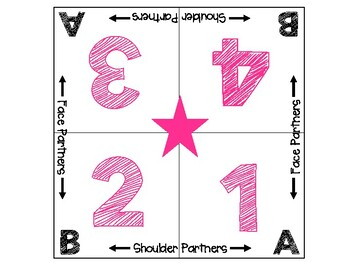
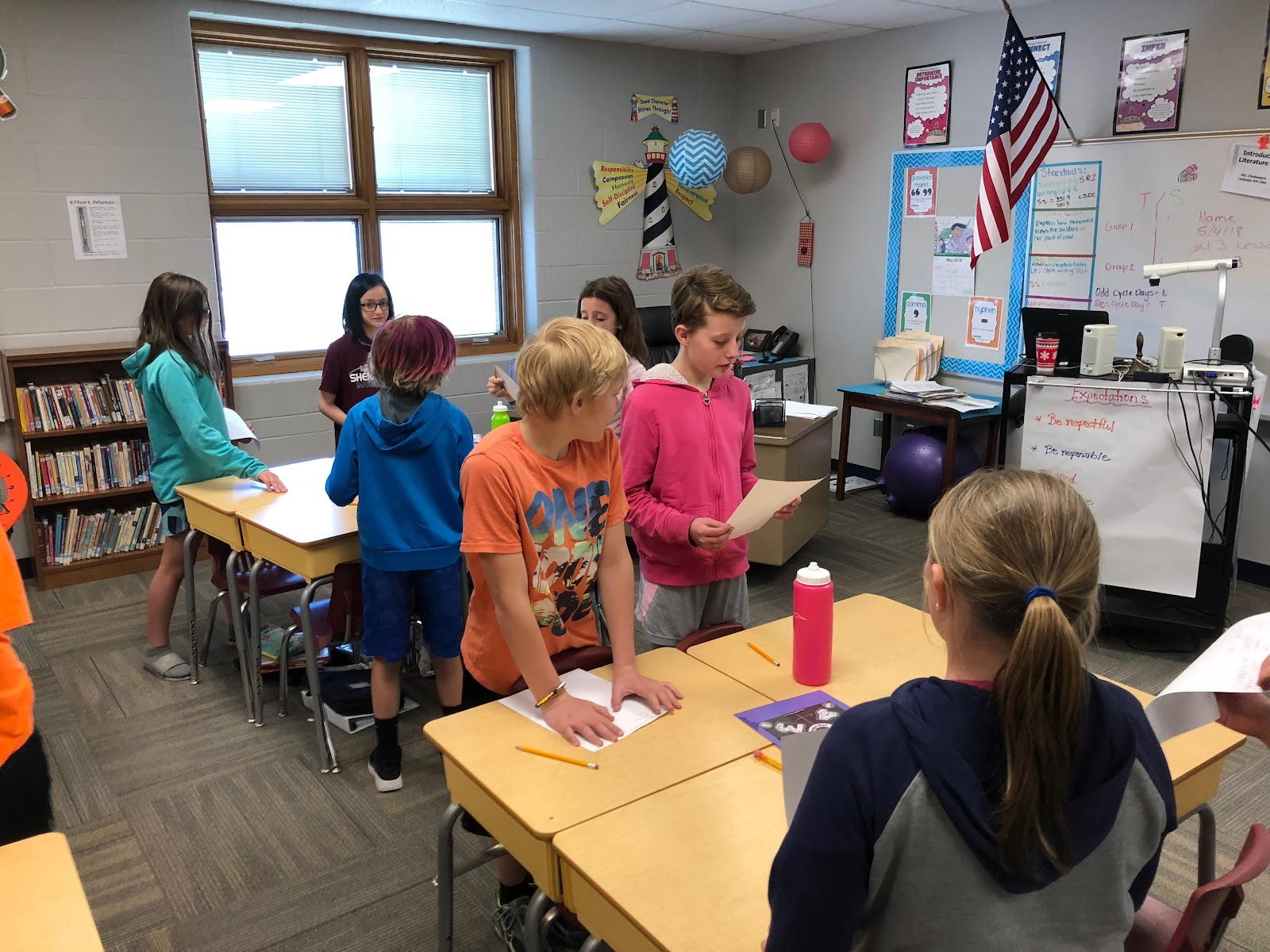
Left: Colorful Crayon Creations has this Kagan structure mat free.  

Right: Students pictured here are working in Kagan Groups. 

Their roles correspond with their numbers.


Kagan Mat Free! Click here!


3.Cognition Challenges:  As a teacher who is charged with the teaching of students with unique learning needs, Kagan can seem daunting.  It is skill upon skill that needs to be taught before groups even come close to true cooperative learning.  For this I have found that starting with simple social skills activities paired with specific structures and visuals create better successes. Think about some of our SEL lessons where we practice celebrating and sharing as individuals.  A simple practice of “Find Someone Who…” is a fun way to practice communication skills (click the link below for the resource from True Little Teacher on TPT).  I would initially have students practice this while seated with a “Face Partner,” but would work towards having students walk and find a friend within a specified area of the classroom (painters tape on the floor is fantastic for setting visual boundaries).
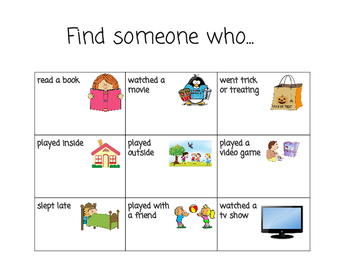
Someone Who Kagan Resource for Unique Learners


Other additional resources for Kagan really have to do with setting expectations and teaching the specific structures.  What does expected cooperative learning look like?  While Kagan uses structures and processes to facilitate learning, it prefers the flexibility of original thought. Afterall, it is the purpose is critical thinking.  However, for learners with higher levels of challenge, processes and expectations need to be specifically outlined for them. To facilitate this I have created a special resource.

Click Here for Adapted Kagan Strategies, Free!!


Being on the look out for what is working (or not) and why is second nature to educators. Simple adjustments will ensure the positive impact of both social and academic learning with Kagan. Until next time, wishing you lots of cooperative learning joy!!


Like what you read? Join me in upcoming blog posts where I continue to put these strategies into place and share resources!


Kagan, S., & Kagan, M. (2015) Kagan Cooperative Learning. Kagan Publishing.

Wednesday, April 1, 2020

Kagan 101: Round Robins

In my previous post, I discussed how incorporating Kagan engagement structures into your classroom can help not only increase the engagement in students, but also give ALL students the opportunity to share their knowledge, and learn from their peers. I always suggest starting out with cooperative learning to begin with the basics. In my opinion, Round Robins as a wonderful place to start dipping your toes. Round Robins are quick, efficient, and there are a few varieties to help meet your needs.

Round Robins

Round Robins are a great and easy way to start Kagan Structures in your classroom. Any time you pose an open-ended question a Round Robin can be used. The reason Round Robins are so great is that they give ALL students a chance to share their thoughts or ideas. We are NOT just calling on ONE student, we are allowing ALL students to respond within a lesson.

The steps to a Round Robin:

  1. Teacher poses an open-ended question
  2. Students are given think time
  3. Teacher selects the student to start (#1-4)
  4. Students take turns in number order sharing their idea
The steps to this structure are super easy! But there are some important things to note. The question should be open-ended for students to take time to share the same idea over and over (there's a different structure for that). Think time is important, depending on the question I would say 20-30 seconds of think time is enough to actively think about what they want to share. Always remind students that think time is QUIET, they should be thinking about their response NOT just sitting. You may need to model think time a few times, by thinking aloud for the class. To select the student that starts you can do it with a tool (for example, you can use a die), and just choose randomly. Just make sure your students' desks are numbered 1-4, and that all students understand what number they are. When students are sharing I always have them stand, it really helps the teacher see who is sharing and monitor the groups. 

Variety of Round Robins

Every time a teacher asks an open-ended question there are a lot of different expectations. Based on those expectations there are different Round Robins that a teacher can choose from. The first basic Round Robin is a Single Round Robin, this is where students share one time with their table group. If there are multiple things you want students to discuss or you want students to be able to add on to each others' ideas, you would use a Continuous Round Robin, this is where the students continue to share with their table group until the teacher calls "Stop". If the question can result in a long response you can always use a Timed Round Robin, each student is given the same amount of time to share. This student continues his or her idea until the timer goes off and then it's the next person's turn. This is also a great way to help make all the tables end at the same time, so tables aren't waiting around for others to finish. 

Why Not?

So next time you are asking students questions, ANY questions, have them respond in their table group with each other, so that all students have the opportunity to share their ideas. Just keep in mind PIES should be in place. I hope you find it beneficial and super easy to incorporate into your classroom. 

Thursday, December 12, 2019

Integrating Depth of Complexity Gate Frames in Math

As December is upon us, so are these three words: deadlines, drowsiness, and decisions. One thing that probably does not change is the running to-do list that seems to pop into your head as your in bed. Don't forget tomorrow you have yard duty. I have to get to work early to make copies of my math assignment. Jacob, Darren, and Julie were absent, so I need to make sure they make up their test. Remember to switch my ELA and math times because students need to leave for band practice during my regular ELA block.  With extra holiday activities and chronic absenteeism, where do you find time to teach and make sure that everyone is on the same page? How do you alter your instruction to present the material in a way so they won't forget it in over the break and without coming up with something new every single time? Little did I know that the solution was one frame, a soft whiteboard, a dry erase marker, and a dry eraser. Yes! That's pretty much it. Embedding Depth of Complexity frames during my math instruction provides a solid structure for students to further their understanding of a math concept and manipulate it in many different ways. It also offers an opportunity to review previous lessons quickly. The best way for students to find the value in these frames is by using them consistently. 

1 DOK frame, 5 skills captured, ALL minds learning
"Remember, yesterday, we learned about inequalities with rational numbers and how to order them, right?" A sea of wide eyes stare back at me, a few nods, and some furrowed eyebrows expressing confusion look back at me. Alright, let me do a quick 5-minute review, and then we will be good to go. I glance at the clock, and somehow 5 minutes turned into 10 minutes, and part of me questions how valuable it was that time and if I will be able to reach today's learning target because of it. Instead of thinking of what I covered, I think about what didn't I cover! I gave simple problems that I could create on the top of my head within a quick second. I didn't check to make sure they could explain and reason their answer using vocabulary, make them represent with a number line, or have them create a situation. To top it all off, the students who didn't need the review are now bored and off task. Its times like these when I wonder how can I be prepared for these hiccups without taking time out of my day to create a review I may or may not need. That's when I realized I needed something that I could have them take out on the spot to review. Something that required students to enhance their ability to follow written directions and me to pinpoint skills for one given math concept-a depth of complexity gate frame with a few icons did the trick. I didn't realize how much one little paper could allow me to focus on the problematic math skills but also be able to walk around and pinpoint the areas of weakness of strength within a second. With embedding these frames, I could complete
maybe three problems. Now, this may not sound like a lot. Still, within these three problems, students created a real-word problem, used and internalized academic vocabulary, explained the reasoning of their answer, provided their solution in an equation, and, last but not least, provided a drawing. Now I am not saying that the second I introduce them to a new gate frame, they will meet my expectations, so when I provide them with a new one, we complete one together on the smartboard. I then give an example they can complete on their own. I've learned that sometimes, students need to feel as if they can do it. It doesn't matter that they have seen the directions one hundred times; the fear of not visually seeing your expectations can hinder them more than anything. The way I see it, if a student is willing to use my example to benefit their own understanding, then we are all winning and the ability to understand another's thinking has been internalized.  

The begining .. but definitely not the end
So as all great things, the start of something new starts with the creativity of the teacher, however once you have created it, it can be used for years to come.


  1. Pinpoint what math concepts students struggle retaining or are vital in knowing throughout the movule. Ex. Double digit multiplication
  2. On a document edit the gate frame using icons and list components that are necessary for that skill. For example, in fourth grade for multiplication the strategies would be place value chart, area model, partial products, and algorithm form so those would complete your gate frame. **Lets say there are different components of one skill-integers/rational numbers then create multiple frames for that skill in scaffolds as seen in the photos. 
  3. Print a copy for each student on cardstock and pass them out to place in a soft whiteboard (White cardstock on one side and red cardstock on the other). Students will slip the frame on the top. When it is time for a new one they will leave the previous ones and add to it. This helps review any strategies on a drop of a hat. 
  4. Use as a quick warmup (fluency) for a lesson or to introduce a topic or to review a series of strategies within a topic/Module. 
  5. Provide an example for students if necessary for the first time. Then only circle one or two portions of the gate frame. Continue adding portions until students understand or have been taught all portions of the frame.  
  6. Put on a timer and allow students to complete independently while walking around the room and monitoring and assisting where needed
  7. Pull students together and review their soft whiteboards visually and continue with following problems.
Taking it further

Accoutability: 
  • Check one student's board if everything is correct and have them check their tables to determine their answers. Have them explain to a student if they do not understand. 
  • Count it as an exit ticket
  • If a student is really struggling with a portion of the frame, check the students by staying "yes" provide another problem for them to do, but doon't allow the struggling students to move on. Allow them more time to continue with the problem they are on. 
  • Let students know that they will share their answer to a class under the document camera and another student will be referring to the frame as they are talking about it. 
Collaboration/: 
  • In pairs, divide the portions of the gate frame between the two-meaning each student has to complete two portions and then when they come together they will have to determine if their answer is correct and if they can support it with numerous methods. 
  • Allow students to complete one whole gate frame as a team switching up the portion of they gate frame. 
Kagan:
  • After completion of the gate frame allow students to discuss their answer with others, especially if a challeging problem or a skill students struggle with. Students can complete with a mix pair share, complete as a team almost as a jigsaw rotation


Regardless of when you decide to implement gate frames within the school year, the impact they can make is tremendous. Remember there is no right or wrong way to create a frame. I encourage you to create one for an upcoming module or even a past one that you feel students may forget.  


Lively Teaching,

Miss Magana


Thursday, October 31, 2019

Kids Love to Talk

Image result for math talk quotes
Kids Love to Talk
As teachers, we often say things like "My class is so chatty" or "My class won't stop talking." Let's face it- Kids love to talk! Do you want to hear a secret? I love it! I adore listening to my students talk. The things that come out of their mouths can be downright hilarious. If you listen close enough, you'll notice kids have such a unique angle on everything. So how can we use this love for communicating to improve learning in our classrooms? We do this by making talk a regular and welcomed part of our daily routine. If you know me, you know I love Kagan. I've entirely engrossed my self in learning, teaching, and maintaining Kagan structures in my classroom. I mainly focus on these structures during Language Arts. But, math has become my new Kagan obsession. I recently attended a two-day Elementary Kagan Math training, and it was fabulous!  So I am here to report on what I learned and how I will incorporate it into my math block. 


Do you want to meet mathematical challenges by teaching for understanding?

Would you like your students to boost communication as they explain their mathematical thinking? 

As I began to organize my thoughts to write this blog, I was a little overwhelmed. I learned over 20+ different Kagan structures to use during math instruction at the training. I left full of knowledge but a little scatterbrained on which structures to adopt first and which to put on the backburner. So I am going only to give you a few that I already am or plan on incorporating into each part of my Eureka math lessons.  

Who's ready to create a room full of individuals with different backgrounds and experiences who become a caring community of active learners?


Just because it's how my mind works, I organized this section by Eureka Math lesson areas. Just a note, many of these structures can be used in multiple parts of a lesson.

Fluency
There are so many structures you can use for fluency activities. Here are a few.  

  • Team Line Ups-Participants line up according to some pre-established criteria. Line ups can be used to make smaller teams (fold the line to make face partners, shoulder partners, count off by 4's, etc.) and can be used to promote communication and develop concepts. 
    • Each student is given a number, and they line up in number order, by 2's. 5's or 10's (skip counting).
    • Each student is given a shape, and they line up by the number of sides.
    • Each student is given a fact to solve, and they line up according to the product.  
    • Line up according to a fraction or rounded number.
    • Each student has a length of string and line up according to the length.
    • Estimation of items in a jar
  • Rally Robin- You can use the line up to have students talk in pairs or work with a shoulder or face partner at their table. When they Rally Robin, they speak back and forth by alternating oral responses. Students can...
    • skip count
    • count forwards or backward
    • tell how many ways to make a number (5+5=10, 4+6=10, etc..)
    • name two dimensional or 3-dimensional shapes
  • Rally Table- You can use the line up to have students work in pairs or work with their face or shoulder partner at their table. Rally Table is students working in pairs; students take turns generating written responses or solving problems. Students take turns passing a paper and pencil (whiteboard), each writing one answer or making a contribution. This can be used in many ways...
    • fact practice (+,-, x, /)-Sprints
    • 100 chart
    • filling in a place value chart
    • finding 1 more, 1 less, 10 more, 10 less
  • Quiz-Quiz-Trade Students quiz a partner, get quizzed by a partner and then trade cards to repeat the process with a new partner.
    • fact practice (+,-, x, /)
    • missing numbers
    • rounding
    • finding 1 more, 1 less, 10 more, 10 less, 100 more, 100 less
  • Rally Coach-Students sit in pairs. Students share a paper and pencil. A solves, B coaches, and praises. Then they switch. This works well with quick one answer problems.
    • Sprints
Application Problem (Word Problem)-There are many structures you can use for an application problem. Here are a few. 
  • Round Robin- (team speaking) Students go around the table speaking - in teams, students take turns responding orally, solving a problem, breaking a problem down step-by-step 
    • 1. Teacher assigns a topic or question with multiple possible answers 
    • 2. In teams, students respond orally, each, in turn, taking about the same amount of time. (30 seconds each) 
      • Variations: 
        • All Write Round Robin: each student records each other student's answer on their own paper. 
        • All Write Consensus: after reaching consensus, each student records each other student's answer on their own paper. 
        • Think-Write-RoundRobin: students think about their response, then independently write it down before the RoundRobin 
        • Single Round Robin: the team does just one round of sharing, each teammate getting one turn. 
        • Continuous Round Robin: each student adds to the discussion/list. It goes around many times. 
        • Timed Round Robin: each student shares in turn for a specified time. 
  • Instant Star -Students are randomly called to stand and share with their teammates. I like to use this strategy for students to orally tell their team how they would solve the problem before they solve it.  
    • Teacher asks a question. 
    • Teacher calls for think time. 
    • Teacher randomly calls a number. 
    • The student on each team with that number stands and shares her/his thought or answer with teammates. 
    • For high consensus questions, teammates praise or coach, if needed. For low consensus questions, teammates praise the thinking that went into the answer.
  • Rally Table- Students working in pairs/teams; students take turns generating written responses or solving problems. Students take turns passing a paper and pencil (whiteboard), each writing one answer or making a contribution.
Concept DevelopmentA majority of the time, I bring my students to the rug with the manipulatives required. My students always sit next to their shoulder partner on the rug. Students usually bring whiteboards to the rug for concept development.
  • Think Pair Share- A problem is posed, students think alone about the problem for a specified amount of time, then form pairs to discuss the question and share it with the class.
    • This structure is useful when introducing or reviewing a topic.  
    • This structure also gauges how much students already know or need to know about what you are teaching that day. 
  • Sage and Scribe-This structure helps me to know if my students are ready to be released to begin their Problem set. I pose a question to see if each partner can use math academic language to tell their partner how to solve a problem. It's interesting to hear one partner explain it and see how the other partner interprets it.  
    • Shoulder partners work together for about 5 minutes. 
    • Partner A tells Partner B what to do. B does what A says. 
    • Switch roles

Problem SetI choose these structures based on students' ability of the skill. This determines if they will work in teams, pairs or solo. This is also the time I can pull a small group of students who need some extra assistance.  


  • Team-Pair-Solo-Students solve problems first as a team, then with a pair and finally solo. If students struggle with teams, we stick to teams and keep trying. Just as with a team, if they struggle in pairs, we skip solo.  
  • Rally TableStudents working in pairs, students take turns generating written responses or solving problems. Students take turns passing a paper and pencil, each writing one answer or making a contribution. This works well for multi-step problems. Rally table is fantastic for kids who are unsure because they can do one small step and then pass the paper. 
  • Rally Coach-Students sit in pairs. Students share a paper and pencil. A solves, B coaches, and praises. Then they switch. This works well with quick one answer problems.
I have my work cut out for me.  I've been using some of these structures regularly, have introduced a few new structures and need to teach the rest.  I believe at getting really good at a few and then adding more.  It's a work in progress but we are having fun along the way!  


Positively Teaching,  
Randi Muehlen

Most Viewed Posts