Showing posts with label Kagan. Show all posts

Thursday, December 30, 2021

Trouble-Shooting Kagan: Getting Cooperative Learning to be Cooperative

By Heather Pfrunder, M.A.Ed          SDC Teacher and Education Specialist

December 30, 2021


Watching Kagan strategies in action one can’t help but be excited at the level of student engagement.  Student responses which exude inactive reflection and minimal regurgitation transform into animated critical thinking.  The brain science and research behind Kagan strategies is impressive and exciting: it takes in account the varied ways our brain is engaged and uses structures and systems to ensure optimal learning.  Through the practice of collaborative learning, the brain simultaneously is engaged in multiple parts. The social structures form an emotionally safe learning environment, often while nourishing the brain through motion. You could spend a college semester learning all the facets to Kagan and the brain research behind each minute component for it’s cooperative learning structures. However, teachers with fledgling Kagan experience often are encouraged to simply “start with the Robins.” Kinda Techy Teachers on TPT has a great free resource to access visual explanations and how to use the top 5 Robin Structures.


 Click Here for a Free Resource!
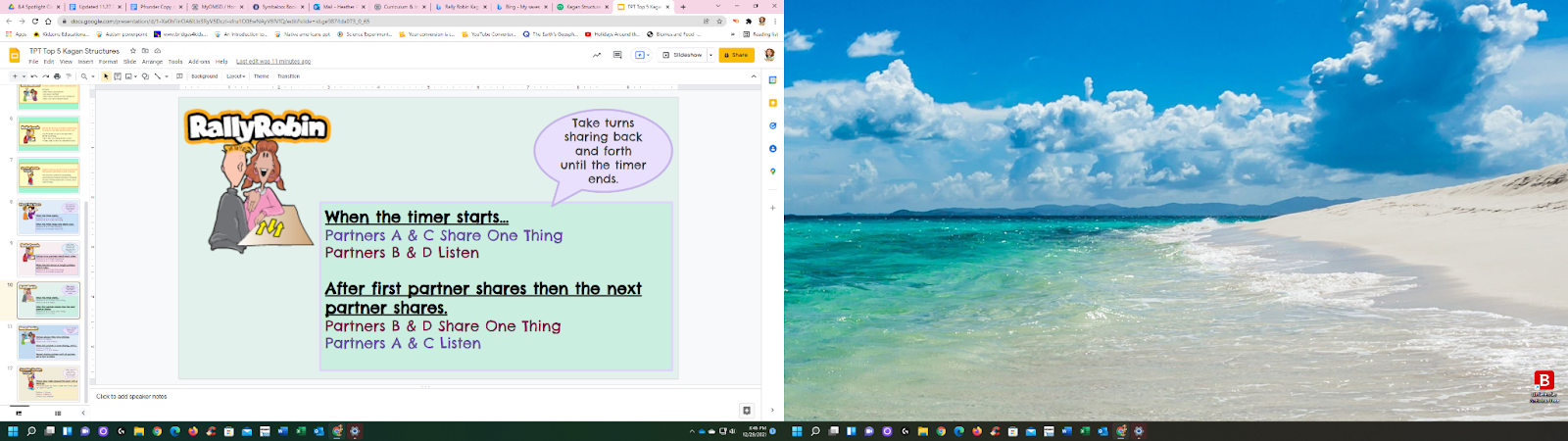

Example of a “Robin” Structure in the free TPT

Resource linked above.


This way teachers and students learn some of the basic structures and can apply them to any subject matter.  It is not the content that is being changed, rather the format of the lesson.  For many teachers the quick diagram of expectations found in the Kagan flip book is simple enough to function for many of their students.
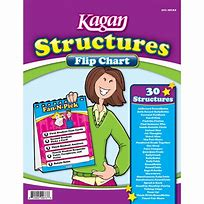


Flip Book page example.


Colleague Randi Muehlen describes many wonderful ways to implement Kagan in her post Kids Love to Talk. However, if we are teaching ALL students, and “all means all,” chances are you have had a student (or three) who are challenged to cooperatively work in cooperative learning groups. In reflection, this challenge happens for several reasons: social skill deficits, academic skill deficits, or a combination of both represented by cognition challenges. So here we go again, my teacher friends!  A list of shortcuts, tips, and printable visual aids to address Kagan challenges is headed your way!  Because honestly, the learning pay-off is so very worth it!


1.Social Skills: In trouble shooting social skills challenges (i.e. silliness, off-task behavior, bullying, shyness…) there are commonalities among strategies to address the different kinds of social skill deficits. Modeling, praise, team reflection, and purposeful team role assignments can shape mal-adaptive behaviors into behaviors that are productive and helpful team-building.  To address the needs of all students you may find yourself rotating between strategies to give all unique students a chance to exercise growth in an area of social skills development. Chapter 11 of the Kagan book outlines Social Skills challenges, solutions, and suggested structures and feedback.  Here is a condensed and shortened list of challenges and solutions for your reference:

 Kagan Social Skills Solutions. Click here!

Social skills are a major component to cooperative learning.  However, often they are a way to cover up another challenge: academic skill deficits.


2.Academic Skill Deficit: In this area there are two key take-aways to address supporting students that may need more scaffolding in order to actively participate with their peers. The first is relatively simple: do your students understand the concepts that they are learning?  Are they able to use key vocabulary in discussions?  For students with unique learning needs this may mean that they may need to use notes with how-to steps and examples or simple vocabulary sheets with visuals and/or sentence frames.  Below are some examples of content vocabulary.


Top: More descriptive vocabulary with visuals to aid in conversation

 for mid-need learners -found on TPT American Revolution Word Vocab.


Bottom: Simple sorting and matching vocabulary for collaboration activities 

for higher-need/less verbal learners - found on TPT water cycle bingo.


The second scaffold has to do with grouping and “Positive Interdependence.” (This is the “P” in the Kagan acronym “PIES” standing for Positive Interdependence, Individual Accountability, Equal Participation, and Simultaneous Interaction.)  How we set up individuals in groups can either benefit or challenge academic growth. Strong interdependence means that each member of the group is needed for the task to be completed.  This takes careful structuring of both the task instructions (ensuring that each member of the group is building on each other’s contributions) and the careful structuring of groups.  For example, the highest achieving learner typically should not be paired with the lowest achieving learner.  Instead, group your students into 4 groups: high, high-medium, medium-low, and low.  Keep teams within 1-2 levels within their range and assign roles based on strengths and/or needs.  Number and group roles or strengths within numbers 1-4, so that you can make instructional decisions which will work for both the individual and the team.  If individual growth is not happening at the rate you were hoping for and you have adjusted strategies based on challenges, it may be time to mix up groups.
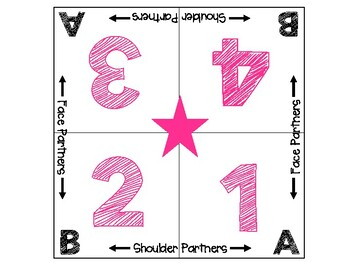
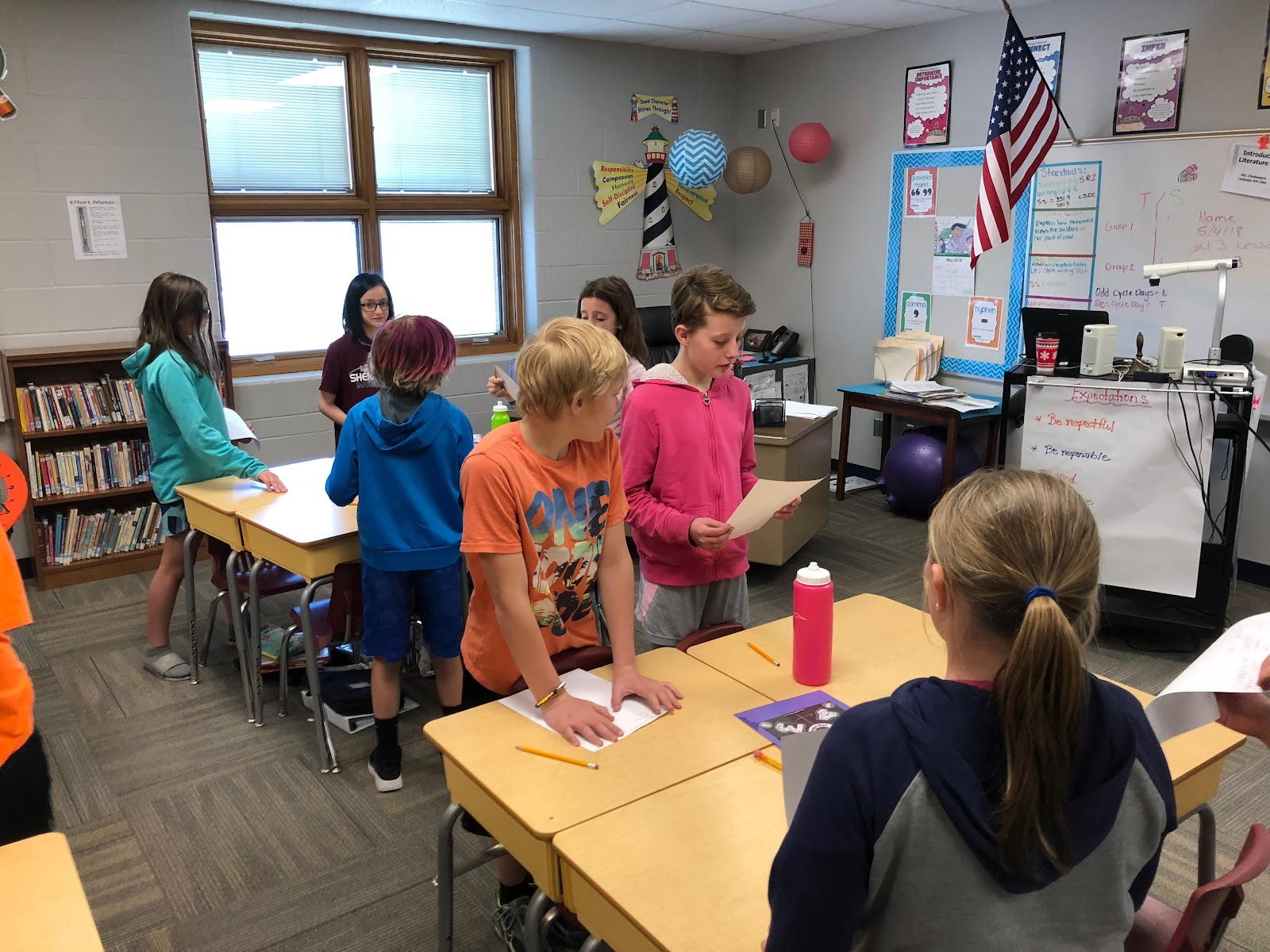
Left: Colorful Crayon Creations has this Kagan structure mat free.  

Right: Students pictured here are working in Kagan Groups. 

Their roles correspond with their numbers.


Kagan Mat Free! Click here!


3.Cognition Challenges:  As a teacher who is charged with the teaching of students with unique learning needs, Kagan can seem daunting.  It is skill upon skill that needs to be taught before groups even come close to true cooperative learning.  For this I have found that starting with simple social skills activities paired with specific structures and visuals create better successes. Think about some of our SEL lessons where we practice celebrating and sharing as individuals.  A simple practice of “Find Someone Who…” is a fun way to practice communication skills (click the link below for the resource from True Little Teacher on TPT).  I would initially have students practice this while seated with a “Face Partner,” but would work towards having students walk and find a friend within a specified area of the classroom (painters tape on the floor is fantastic for setting visual boundaries).
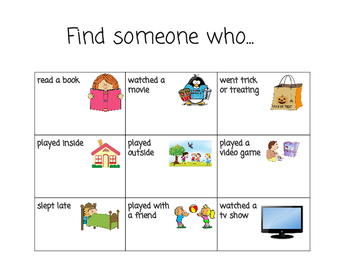
Someone Who Kagan Resource for Unique Learners


Other additional resources for Kagan really have to do with setting expectations and teaching the specific structures.  What does expected cooperative learning look like?  While Kagan uses structures and processes to facilitate learning, it prefers the flexibility of original thought. Afterall, it is the purpose is critical thinking.  However, for learners with higher levels of challenge, processes and expectations need to be specifically outlined for them. To facilitate this I have created a special resource.

Click Here for Adapted Kagan Strategies, Free!!


Being on the look out for what is working (or not) and why is second nature to educators. Simple adjustments will ensure the positive impact of both social and academic learning with Kagan. Until next time, wishing you lots of cooperative learning joy!!


Like what you read? Join me in upcoming blog posts where I continue to put these strategies into place and share resources!


Kagan, S., & Kagan, M. (2015) Kagan Cooperative Learning. Kagan Publishing.

Tuesday, September 28, 2021

What does that word mean?

Vocabulary is one of my favorite things to teach. It is also so very important. Vocabulary is an essential aspect of reading comprehension. If students do not know what the words mean, they cannot understand what they are reading. Unfortunately, many of our students struggle with oral language skills. This is due to many reasons, but all in all, most kiddos tend to be lacking in oral language development and vocabulary. 

So, what can we do?

As teachers, we need to be intentional about teaching vocabulary. We have to take the time to teach vocabulary to our students. We cannot just rely on discussing words that we may come across in our read-aloud. While it is essential to discuss unknown words while reading, we also need to explicitly teach vocabulary words to our students daily. Primary students learning academic vocabulary show more significant benefits than starting later when they can already recognize and read the words. It gives me the impression that there is urgent importance to learning words orally to then read and understand them later. To teach big words correctly, it’s vital that we teach them in developmentally appropriate ways to build schema. 

I've developed a well-balanced system that quickly builds my primary students' oral vocabulary.  I'm excited to share all of this with you in this post so that hopefully, you can use ideas that work best for you and your classroom.


Introducing the word
When I teach vocabulary, I often have the kids engage by providing several different versions of a word.

1. Dictionary definition
2. Comparison (it is like____, but different because______.
3. Real-life examples
4. Graphic version (drawings, pictures, representations)
5. Acting it out


Students need “kid-friendly” definitions of vocabulary words. Did you ever have to look up words in a dictionary and write the definition? I know I remember doing that (not in 1st grade, of course). While I know that learning dictionary skills are fundamental, this is not an effective way of teaching new vocabulary to primary students. An example, if I look up the definition of the word physical, it says, “relating to the body as opposed to the mind.” For a first-grader, this definition would only lead to looking up the words relating and opposed. Students need us to provide them with definitions that they are going to understand.

My students sit on the rug next to their Kagan shoulder partner.  

1. The word is presented on the Smartboard (Wonders Vocabulary words) with visuals and student-friendly definitions.

2. Students repeat me as I read the definition and example.  A relatable gesture that I make up that makes sense to kinesthetic learners is added most of the time.

3. A question for students to answer using the word in context- An example, I would ask my students some questions for the word "distinguish": What's one way to distinguish your left hand from your right hand? I give them think time and then have them A/B partners talk about their ideas. As I bring them back- students volunteer their thoughts. I'll then give them my answer/example: I show them to make an L-shape with their pointer fingers and thumbs. The left hand always makes an L, while the right hand makes a backward L.  How can we distinguish whether someone is happy? Sad? (facial expressions are essential for the image)
What distinguishes Mama Bear's chair from Papa Bear's chair? (one is soft and one is hard)
How do you distinguish between yourself and a friend? (personalities, physical characteristics, etc.) Students are given think time for each question and partnered to discuss their responses and then share with the whole class.  

4. Students must have texts read to them to discuss and play with the words.  I love to use the Interactive Read-Aloud Cards that are included in Wonders. All of the vocabulary words are included with examples in the text and relatable real-life examples and questions. These stories are fun and easy to understand. Also, they align with your Essential Question and Genre for the week. 

Please see video below of me teaching a vocabulary word. 


Emergent readers

The vocabulary words I am teaching are for oral comprehension. I want students to listen for the words in context that support where they are developmentally. I also want students to understand the new vocabulary and use it while communicating in class and at home. Nothing makes me happier than when a parent expresses how much their child's vocabulary has grown by the end of first grade. To make this happen, students need multiple exposures to learn new words. It can take a student numerous exposures to learn a new word depending on their previous vocabulary knowledge. We cannot mention a word once and expect students to understand and use the word. It is not enough that kids learn the meaning of the word, but they have to learn to use the vocabulary while speaking. Our daily instruction should create opportunities for kids to use words in all of these ways. For instance, the quick vocabulary conversation described earlier can be done with kids working together to come up with those multiple examples using definitions. This kind of cooperation requires that kids talk with each other about the words. An activity I use is to assign a different word to each group to discuss, illustrate or act out and then have them come together as a whole class to teach each other the word and what they discussed. This emphasizes collaboration while speaking and listening and is a great way to review more than one word at a time. I also reward kids for using the studied vocabulary words while they are speaking. 


Don't Forget to Review.  
It can be challenging to retain vocabulary if you are not given opportunities to use it. We may teach vocabulary because certain words will be included in the texts we were reading that week, but then students might not see them again for a long time. There are many ways to continuously review vocabulary, such as having one day a week when you only work with words that have been taught in the past or making a visible list of vocabulary words and using them as necessary.  


Teach Vocabulary All Day Long
To help develop word mindfulness with our students it is important to stop and identify unknown words from all subjects.  When students become comfortable expressing their lack of knowledge of particular words, they will be more likely to resolve those gaps when reading and comprehending. Students become motivated and confident if they know they can stop me at anytime and ask what a word means.  One of our class mottos is to “Always ask Questions!” In with that being said- What questions do you have? Feel free to email me with any questions ! 


I hope you found this helpful and gets you thinking about how to include academic vocabulary into your everyday teaching.


Positively Teaching,

Randi Muehlen

@positively_teaching

Tuesday, August 24, 2021

Growth Mindset: Successful Students with Jot Thoughts


During the first few weeks back to school, it's so important to build a sense of community and belonging amongst your students.  You want them to feel that your classrom is a safe place to learn and share.  Through all the team building and classroom building activities that I engage my students in the first few weeks, I think it's equally important to place an emphasis on Growth Mindset.  We know that your mindset can change or determine your outcome and success, and that's so very true for our students as well!

Being as though we are an AVID school for many years now, one of the first activities we do at the start of the year is something called the "Successful Student." For this activity, students will brainstorm words that show what it means to be a successful student.  I copy the outline of a person onto cardstock and here they decorate the person to look like themselves and fill the poster with words that describe being a successful student.


I incorporated Growth Mindset into this activity by asing them to think of things they feel they're not good at "yet" or things they want to become better at as a studnet this year.


I used a collaboratve learning Kagan strategy called "Jot Thoughts" to help guide and facilitate discussions about growth mindset and what it means to be a successful student.  You can see the pictures I've included of this Jot Thoughts strategy as my students engaging in these discussions the first week of school!  You can also see the photos of the finished product of the "Successful Students."

This "Successful Student" activity is just one example of a very simple way to use collaborate learning (Kagan- Jot Thoughts), and Growth Mindset to help students engage in positive thinking. It's also a super fun activity, helps them to learn how to work together, and not to mention they look super cute up on the wall!

Collaboratively Learning,

Copy of pic- Megan Brown.jpg

Tuesday, March 16, 2021

How-To: A Quick Guide to Using Nearpod and Great Minds In-Sync (Eureka Math) Platforms

 I'm sure at this point, a year into the pandemic, you have watched a lot of "how-to" videos and learned many many different platforms.  I just thought I'd take a minute to share with you how I use the platforms Nearpod, and Great Minds In-Sync(Eureka Math) in my virtual classroom.  So this more of how I specifially use the platforms throughout my virtual instruction, and less of a how to get started type of a thing!

Nearpod

Nearpod is a digitial platfrom that allows you to make any of your lessons interactive.  You can use any lessons you have already created (ppt, google slides, word, even YouTube vids!) and make them interactive.  You can also create lessons through Nearpod.  It really increases student engagement, especially through the use of Collaborate boards, or the Draw It board feature (like a digital whiteboard).  

I create Collaborate boards across the curriculum.  I make them for Socio-Emotional Learning (morning circle discussions).  I make them for most componenets of a Eureka Math lesson: Application Problem, Student Debrief, and Exit Tickets.  I also create them for ELA to use with our Wonders curriculum for the "Making Connections" questions that are throughout the anthology stories.  I also create them with the vocab skills in mind, such as: similes, metaphors, greek roots etc.  

Additionally I often create a collaborate board for a digital version of the Kagan strategy, Jot Thoughts.  This is a strategy traditionally done in the classroom where kids work in table groups with sticky notes.  So instead, this is done with digital sticky notes on the collaborate board. Watch the video below to see a more detailed explanation of this strategy as well as examples of the above mentioned ways I use Nearpod.


Great Minds In-Sync (Eureka Math)
Great Minds is the parent company to Eureka Math.  They have created a full digital, interactive version of the Eureka Math Curriculum called "In-Sync."  This platform has been a life-saver as they have high quality engaging lesson videos.  These encompass the full concept development component of a Eureka math lesson.  Also, all student pages: Sprints, problem sets, succeed pages, etc are included as writeable PDFs, which make it really easy to use with google classroom.  Watch my video below where I talk more about how I specifically use the different features within the In-Sync site.

If you have ever considered using either of these platforms: Nearpod or In-Sync, but weren't really sure how exactly to implement in your virtual classroom, I hope this helped! Both of these platforms have been a life-saver for online learning and have really helped me boost engagment with my virtual lessons.

Virtually Learning,

Copy of pic- Megan Brown.jpg


Sunday, February 21, 2021

Virtual Class Building & Team Building

 In pre-pandemic times, we know the importance of cooperative learning structures and cooperative grouping.  We know that that these routines keep students engaged and optimize their learning.  We know it is essential to teach kids how to work together to achieve a common goal, and to learn from one another, while building relationships.  The question is, how has this been working with online learning?  For many of us who are simply struggling to survive this pandemic and new world of online learning, it may be something that has been forgotten, or just plain difficult to achieve.

I believe that now more than ever, it's so important to ensure that we are implementing team building and class building exercises even into our online learning.  Children are being isolated from their peers and have minimal social interaction.  Not only do we know that collaborative learning structures help students learn more efficiently, it's also essential right now to focus on helping students to have that peer interaction with one another. And as Kagan has taught us so well, cooperative/collaborative learning only takes place once effective team building/building relationships has occurred.  The students need to know each other and feel comfortable with each other in order for them to effectively open up and work together.  

So that leads us to this important question, HOW can we implement team building exercises through virtual/online learning??  I know that team bulidng and class building has really been a struggle through virtual instruction.   I am going to give a few ideas here in this blog, that will hopefully help you out, if you're looking for some new ideas!

Class Building

First you want to start by building relationships with the class as a whole.  You want to get to know each of them as much as you want them to know each other.  This can be done through something as simple as a morning circle.  I teach 5th grade and we start every morning on zoom with our morining circle question.  Usually, you will want to start with questions that will be fun and engaging to the kids.  I often use the "would you rather" question prompts.  The kids LOVE these.  Here is one great resource I found that has a very conclusive list of "would you rather" questions for kids:

Click here to access a list of conversatons starters for kids!

I conduct these questions in a variety of ways:

1)  Type the question in the chat, they can send their response to me privately or to everyone.  I can further this discussion by asking for students to raise their hand and elaborate or share their responses.  I can also use the spinner to call on students at random after they've been given time to respond.  Additionally I can call on a student to share and then ask them to call on the next student to share, etc.  Once they get a little more comfortable with each other, I'll often throw them into quick random breakout rooms in pairs or groups to discuss the question as well.

2)I often use Nearpod which is an interactive white board site.  Here I will send students the link, which will take them to the Nearpod board with the question displayed.  They then type their answer on their virtual sticky note and everyone can read everyone elses responses. I read them aloud as they post them, and elevate or highlight any of participular interest, thus sparking further discussion.

These questions help to bring about a positive attitude when starting the day.  The students really look forward to them and will start to engage in the dialogue voluntarily after a while.  At this point in the year we have all learned so much about each other, things we like or don't like.  I often see students referring to something another student likes in the chat.  It's really cute. Morning circle questions are fun, simple, and a great way to build your class community and sense of belonging.  Below is a video of my students engaging in one using Nearpod.


Team Building
Once you have spent a bit of time building relationships with your class a whole, you can move into team building.  You first want to establish norms for the breakout rooms so that students know what is expected.  Then you always want to start with fun, non-academic tasks.  The purpose of this again is to help students build relationships and get to know each other so that when it comes time to now complete academic tasks as a group, they will feel comfortable talking and sharing with one another. 

One GREAT way to do this through virtual instruction is through the use of "virtual escape rooms." You don't need to make them yourself, there are TONS out there already created.  I have purchased a few off of Teachers Pay Teachers.  The purpose of these activites is that students have to talk and work together in order to complete the tasks in the escape room to move onto the next room.  The goal is to be the group who finishes first.  The kids absolutely love these- they love anything that's a race right? They really have a lot of fun doing them.  Below You can watch a video of my students working to complete an escape room project.


Kagan recommends doing 1 non-academic team building activity once a week just to help students continue to build those relationships.  That's not always possible, not even in the classroom.  If I can do a non-academic team building activity once every couple weeks I feel pretty good about that.  My kids work collaboratively to complete academic tasks on a daily basis through breakout rooms.  I have really seen them grow in the way they talk to each other, feel comfortable with each other, etc.  I definitely attribute this to the time we spend class building and team building- building relationships with one another.  

I hope this helps you get started, or further supports you in building relationships with students!

Virtually Learning,

Copy of pic- Megan Brown.jpg


Wednesday, November 4, 2020

Zoom Breakout Rooms for Collaboration

I personally feel like the ONE worst aspect of online learning is that the kids are missing the social interaction and collaborative learning structures they so desperately need.  As we know, students learn the best when they are working collaboratively in highly structured groups.  This has been especially hard for me as a teacher, because I live and breath Kagan cooperative learning structures in my classroom on a daily basis and have truly seen the growth in my students both academically and socially over the years that I have implemented Kagan into my classroom.


So today I'm going to talk about Breakout Rooms on Zoom! It doesn't fully replace in person collaboration of course, but it's a really good option to support our kiddos talk time, during this period of online learning. Let's get started!

How to Train Your Students on Breakout Rooms

Well just like with live in-classroom instruction, you can't just throw kids into groups and expect them to work together successfully.  You want start with some fun, non-academic teaam building activites that they can do in their groups to get to know each other.  This is important for helping them build relationships with one another so that they will feel comfortable talking and sharing with each other.  I would suggest starting small and having them work with pairs for a while before moving into largers groups. Also modeling how to discuss with a partner and providing them with response frames/stems will help them verbalize their thoughts into words.

Next, you want to set clear expections so they know what is expected of them.  I display this slide every day before our first breakout room of the day (they need lots of reminders.. lol)

Most importantly, once you send them to their Breakout Rooms, you want to pop in and out of as many rooms as possible and help reinforce those breakout room expectations.  Once they know you'll always be popping in to check on them, they are much more likely to do what they are supposed to do! This is also a great way for you to observe your students and evaluate their strenths and weaknesses.

Tips and Tricks!
So now how do you go about setting up these Breakout Rooms?? 


So once youre logged into your Zoom meeting with your class, you want to click the  breakout room button on the bottom of your Zoom toolbar (be sure you have enabled this option in your Zoom settings).  Now, you can select to create the groups automatically or manually. If you want them in pairs and you have 28 students, you will select to create 14 groups.  If you want them in groups of 4 you would select to make 7 groups. 

As it sounds, "automatically" means it will randomly group the students together, whereas "manually" allows you to group them as you'd like. I would suggest selecting manually and creating your groups intentinally and specificially.  However, there is often a time and place for the automatic option as well.  Once my kids are all logged onto Zoom in the morning, while they are working on iReady, discussing the morning circle topic, or another independent task, I quickly create those breakout rooms manually and then they are set for the day! As kids join or leave the meeting, you can choose to swap or move kids to other rooms, rearranging as you see fit!

Under the "Options" dropdown, when you select the time for the Breakout Room, I would aim to keep it around 5-8 minutes or so, just having them discuss one or just a couple of questions.  As mentioned before, always making sure you are popping in and out of the Breakout Rooms to support, and reinforce your rules.  You can also adjust the amount of time you want them to have once the timer is up.  I usually set mine for 15 seconds so that we don't have to wait for kiddos to be dumped back into the main room.  I do however "broadcast" a message warning them how much time they have left. 

You can end the breakout rooms at any time as well, you just click the red button that says "close all rooms." You do not have to wait until the timer is up.  Likewise when the timer is up for the Breakout Rooms, a notification will pop up asking you if you want to end them or keep them open.  So they don't have to automatically end just becasue the time is up.  You have control over that. Aditionally, if there are kids who you dont want to put in a breakout room, you just simply don't assign them to a room and they will then remain in the main room with you.
I hold the kids accountable by letting them know I'll use the random selector to have them share out after they've had the time to discuss the question in their breakout rooms.  Also, usually whatever they are working on with their partner/group in the breakout room is something they are also typing and submitting to me in some form or another.  This ensures that I can monitor they are all working and participating.


If the students have a question while in their Breakout Room, they have the option to click "ask for help."  This picture to the left shows you what it looks from from the students view of the Breakout Room.  


You will then get a notification that looks like this image below here.        


So these are the basics to help you get started setting up Zoom Breakout Rooms with your students.  I truly feel that students need this interaction with one another for so many different reasons.  They really need the social interaction with each other.  Our English Learners as well as ALL learners need to get their "talk time" in throughout the day.  Research has also proven that kids learn better when they are working collaboratively with their peers.  The Breakout Rooms option in Zoom really does provide us with that missing piece of social interaction and collaboration that these kids are so vitally missing with online instruction! I hope this helps!

Virtually Learning,

Most Viewed Posts