Showing posts with label Reading Comprehension Strategies. Show all posts

Friday, March 17, 2023

Literature Circles: Paper Trays and Protocols

This is the third in a series of blog posts about Literature Circles. You can find the other posts on my Spotlight webpage. My previous submission covered how my Literature Circle students select the books they will read during a three-week cycle and how they create schedules of which pages they will read each night and which roles they will be responsible for during each of the seven meetings they will hold with their group members during that time. I will now turn to how I distribute and collect the work the students do for their various roles and how the Literature Circle meetings are organized and managed.


The Organization of Digital and Paper Resources

As I have discussed in previous posts, there are four distinct roles that students perform during a Lit Circle meeting. From suite to suite and meeting to meeting, roles can vary, so students need to be provided with instructions for their particular roles for each meeting. I do this in two ways. First, I provide instructions for each role in a posting about the upcoming meeting on Google Classroom. In addition to these instructions, students are given access to digital versions of the thinking map jobs that are to be completed for each role. Often, there are also sample maps and other resources included in this space to help them complete their jobs (You can see examples of all of this in the image below). Posting the job sheets and resources digitally ensures that students have access to them even if they are absent or have misplaced their paper copies.


Due to the fact that many students do not have consistent access to computers or printers when they are not at school, I also provide each student with a paper copy of the instructions for their particular job. In the back of my classroom, there is a table with various stacks of paper trays atop it. One set of trays contains all of these instructions, along with any other necessary resources (such as tips on how to identify major events in a narrative). 


On the first day of a new Literature Circle cycle, students go back to grab these resources one job at a time. The same routine is followed at the end of each meeting because each student will perform a different role at the following meeting two days later (and because at least two of the Thinking Map jobs change for each meeting).


Meeting Protocols

One of my first priorities at the beginning of each school year is to teach my Literature Circle students how to transition to and operate within a meeting. This might sound like simple stuff, but, as I always tell my kids, if the meetings don’t look and sound right, they probably aren’t going to function well. In fact, I often spend the first three-week cycle of Literature Circles solely focusing on the procedures and protocols discussed below, and I use fishbowls to teach and reteach them throughout the year.


On the day I announce which books students will be reading, I also provide each group with a number. These group numbers correspond to numbers I have written on little stickers on the ceiling above various open spaces around my classroom. I have made sure each open space is far enough away from the other meeting locations to allow each group to have a private conversation. Students are instructed to walk to their designated meeting spot and locate a nearby chair (as opposed to dragging their own chairs across the room).

Once all the group members have arrived, the student fulfilling the Discussion Leader role (a job that involves writing questions based on the six levels of Bloom’s Taxonomy) checks to make sure that everyone has come prepared with their books and completed Thinking Map jobs. The Discussion Leader then reviews the SOLAR protocols. SOLAR is an acronym that stands for:

S- Square off: Sitting in a square (meaning the feet of each chair touch the feet of the chairs on either side of it)

O- Open: Bodies facing each other (meaning each student should face the student across from them with their shoulders equidistant from the shoulders of the kids on either side)

L- Lean: Leaning in (I like to use a yardstick to show them how much closer they are to each other when they lean in instead of leaning back. This makes it much easier to use private voices.)

A- Attend to others: Pay attention

R- Respond: One at a time


Once everyone is sitting properly with their books and work in hand, the meeting begins with the Summary Specialist performing their role (I have already discussed this role in detail in a previous blog post). The logic behind beginning with the Summary Specialist is that it helps to make sure everyone agrees on the major events they have read about in the preceding two days before diving into the finer points of the story. As is the case with all of the other roles, the Summary Specialist’s job is not to simply read the contents of their completed thinking map to the group. Instead, they are expected to elicit a summary from the other three group members. I have included Reciprocal Teaching Protocols at the bottom of each set of instructions so that students can rehearse what they will say when it is their turn to be the “teacher” (You can see an example in the following image). 

Once the Summary Specialist has completed their role, the Discussion Leader takes their turn, followed by the Thinking Map Strategy and Thinking Map Skill students. When the meeting has come to an end (I usually allot about 20-25 minutes depending on the circumstances), the Discussion Leader collects everyone’s work and puts it in a paper tray labeled with their corresponding group number. Students then take turns walking over to the paper tray table to grab their job sheets for the next meeting (assuming the completed meeting was not the last one in the cycle). 


The contents of the various Thinking Map jobs students do to prepare for their Literature roles will be discussed in future blog posts. Please check back frequently for updates!


Writing Every Day,

Eric Lovein

Thursday, March 31, 2022

Thinking Maps for Fictional Narrative Reading Strategies: Summarizing Flow Maps

If you have been kind enough to read my rather wonky blog posts up to this point, I feel like you deserve something more practical for a change. This is the first in a series of posts about how to teach fictional narrative reading strategies with Thinking Maps. I hope you will find it immediately useful. For your convenience, I have included all of the resources discussed in this post on my Spotlight Teacher webpage. Just look for the section entitled “Summarizing Resources” at the bottom of the page. 

I have been using Literature Circles in my classroom for about twenty years. After all that time, the basic structure has not changed much: four students sitting in a circle, observing cooperative learning protocols, and using reciprocal teaching strategies to discuss the various jobs they have done in response to the book they are reading. What has changed quite drastically is the nature of those jobs; this is in large part thanks to Thinking Maps. 


The current version of my Literature Circles routine involves students reading self-selected novels (from a limited set) for three weeks at a time and meeting every other day to discuss the novel and reciprocally teach one of the four, distinct Thinking-Maps-based reading strategy or skill jobs each student has worked on for the previous couple of days. The four jobs are as follows:

  • Summary Specialist (Exactly what it sounds like)
  • Discussion Leader (Students write questions based on the levels of Bloom’s Taxonomy)
  • Thinking Map Strategy (One of the four reading strategies not addressed by the first two jobs)
  • Thinking Map Skill (A map designed for the analysis of a literary element or device)

Let’s take a look at the first job, Summary Specialist, and the Thinking Maps associated with it.


One day, about five years ago, I was trying to explain the concept of “summarizing major events in a narrative” to my Language Arts class. I would guess that, by that point, I had attempted to convey the same information to about twenty different groups of students over the course of my career. As usual, the discussion was centered around the question of how they were supposed to determine whether an event qualified as “major” and therefore needed to be placed in a box on a digital Summary Specialist flow map. I found myself saying the same unconvincing things about how major events were “important” and that the story wouldn’t make sense without them. This was about as helpful to my kids as asking them if a particular verb conjugation “sounded right.” I began mumbling to myself about how there had to be a better way to explain all of this and made a mental note to research the subject later in the day.

Goodness knows I prefer to let other people do my work for me when possible, but after extensive internet research, I determined that no one had created the resource I was hoping to find, so I decided to make it myself. What I had been looking for was a list of the types of events that could be considered “major” in a narrative. Here is what I eventually came up with:


As you can see, I identified eight categories of major events, as well as prompt questions to help students better understand what each category entails. My technique for developing this tool was to stare off into space for about an hour while trying to imagine every possible important thing that could happen in a story, so it is completely conceivable that I missed something obvious (Please drop any suggestions you have in the comments below!). Regardless of whether it is perfect, this resource has proved quite useful to both me and my students over the last few years.


Applications

Before assigning any Thinking Map strategy or skill activity as a Literature Circle job, I teach it whole-group with a shared piece of literature. I begin with a Focussed Instruction lesson on the strategy or skill and then model how the particular map activity should be completed. I use Google Classroom to assign each student their own copy of the Thinking Map and include instructions and a sample map that I’ve filled out using an anchor text (usually a picture book). Students use the map to analyze specific pages in the novel or selection we are reading together as a class.


Most of the time, the Summary Specialist job involves a “Flow Map of Major Events” like this one (I have included the instructions page and sample map as well):


                                                                                Click on the images to view larger versions


This is a straightforward activity that requires students to sequence the major events of an assigned piece of reading. Notice there are no small boxes below the large boxes; this is because I want them to focus on the most important information. As I intimated above, before I created the “Identifying Major Events in a Narrative” handout, my students struggled mightily with differentiating between major events and details. The handout provides them with a set of signposts they can use to make such distinctions with more confidence. Above each box is a space for them to specify what type of major event they have identified. I find it useful to require students to classify each event because it helps them internalize the signposts. I reinforce this during Shared Reading by frequently asking students what type of major event we have just encountered.


Teaching Story Elements with the “Types of Major Events” Handout

Another benefit of using the “Identifying Major Events in a Narrative” handout is that it helps me teach literary elements such as character, setting, and plot. The character-related prompts encourage students to differentiate between major and minor characters and consider the feelings and thoughts of the protagonists. The setting prompts remind them to pay attention to where characters are in space and time and how the setting affects the narrative. Obviously, the last four types of major events all deal with plot. Using this tool to summarize stories on a regular basis makes students more aware of devices such as foreshadowing and backstory and drives home the crucial role of conflict in a narrative.


Scaling The Summary

Of course, if students are reading a picture book or a short story, they can summarize the entire narrative in a single Flow Map; I often employ the “Dramatic Structure Flow Map” I shared in a previous blog post for this purpose. When summarizing a novel for Literature Circles, students are often working with a series of pages from the middle of the book (based on a three-week reading schedule they have created on Google Drawings). In this case, it is important for them to remember to “scale” their summary. By this I mean that the importance they place on certain events within a relatively short span of pages will be different than it would be if they were summarizing the entire novel. To help explain this concept to the students, I created the handout below.


Variations of the Flow Map (Summarizing and Synthesizing)

One of the many great ideas in the Thinking Maps manual Comprehension Strategies for Constructing Meaning is the “Summarizing and Synthesizing Parallel Flow Maps.” Here, the top Flow Map is used to summarize the story as usual. A second, parallel Flow Map is employed to analyze the events through a particular lens. I use these maps to add a layer of focus and rigor to the Summary Specialist job. I have developed suites of jobs for Literature Circles that all focus on a single literary element such as character or plot or a series of related elements and/or devices such as setting/atmosphere/mood. The advantage of these suites is that they allow all of the students in a group to contemplate various aspects of the same element. The Summary Specialist analyzes how the major events impact the characters, the Discussion Leader asks character-centered questions, etc. Below is the version of this map combination I use for the Character Suite.


                                                   Click on the image to view larger version


Taking the Maps to Writing

As usual, the maps discussed above are great for planning writing. Obviously, these particular maps can easily be turned into written summaries. The “Summarizing and Synthesizing Parallel Flow Maps'' activity allows kids to add commentary to their summaries, which adds a higher DOK level to the assignment. 


I am a fifth grade teacher, so the resources I create and use are geared toward upper-grade students. I do, however, think it’s possible to modify the above maps and handouts so they are more appropriate for younger students. I hope you found something you can use in this post! Please leave any comments, questions, or suggestions below.


Writing Every Day,

Eric Lovein


PS: Check out my video on Circle Maps!:

https://www.youtube.com/watch?v=vuQ9RkXXZcI


Friday, March 4, 2022

Don't Forget about Independent READING!

Who doesn't want to create a classroom of lifelong readers? Our most important responsibility is to teach ALL students how to read. Students need guided reading but it is crucial that they also get independent reading in all grades. Many studies have proven a link between time spent reading and reading achievement. The more children read, the better their fluency, vocabulary, and comprehension. I understand that some worry that it is a waste of instructional time and fear that our struggling readers aren't reading and only need small group instruction. Yes! I believe in the power of small group instruction- it works! But, I also see value in independent reading. Independent reading is a time students can practice and apply a wide variety of reading skills within the text. This practice helps students build strong habits that will support them in and out of the classroom.  


What are the benefits of Independent Reading?

What is independent reading?

Independent reading can simply be defined as students reading on their own. Students choose to read materials they want to read for pleasure or gain information about a particular topic.  
Independent reading is where “the train meets the track.” It’s an opportunity for students to practice all that has been taught during phonics and guided reading. Independent reading improves comprehension and helps students develop their vocabulary. Also, independent reading can improve fluency by allowing students time to practice reading the skills they have learned. 

As a first-grade teacher, I teach reading instruction using the "I do, We do, You do" model. This means direct instruction of skills and plenty of practice applying these skills. Independent reading offers the opportunity to practice and apply the skills you have taught them independently. Application at its finest! We all know that some will struggle. We must find ways to support them. Some oppose independent reading for our lower readers. But, why can't these students practice independent reading after they've been exposed to text in reading instruction or a small group? We need to give all students the chance to apply the skills we've taught them. Independent reading gives students time to practice the "I do".

The most important benefit of independent reading is developing a child's love for reading. I understand that having a student read independently will not necessarily foster a love for reading right away, but perseverance and motivation will. Students become motivated to read when they start feeling successful and confident. If we surround students with books that reflect their interests, it will motivate them to improve their reading. My students are excited to read books that they connect with or relate to. These connections help improve their comprehension. This independent reading time gives students time to explore topics they enjoy or maybe they've never learned about. It leaves them excited to learn and read more.


How can I keep my students accountable during 
Independent Reading Time? 

1. Explicitly Teach Procedures and Routines for Independent Reading- 
As with all things in our classrooms, we must teach our students what we expect. 
I teach independent reading strategies just as I teach my students to write a paragraph or solve a math problem. I show them what I expect and have them practice it.
  • “Today, I’m going to teach you how to _______. Watch while I ______.”
  • I demonstrate the desired behavior. (Example: sitting at a desk with eyes on the book.)
  • I call on students to model the desired behavior.
  • I asked the students to comment on what they were doing.
  • I invite a student to demonstrate what NOT to do.
  • I invite one last student to model proper expectations again. (Ending on a positive note.)

Break things down into Minilessons-
I don’t model everything all at once when I model independent reading. I break it into different minilessons:
  • How to choose books that are best for them
  • How to treat books respectfully
  • How to begin reading during independent reading time
  • How to create a story from the pictures (for Kindergarteners who cannot yet decode)
  • How to learn from the photographs of nonfiction
  • How to retell a story you know
  • How to gain information from the pictures and text features in books
  • How to show respect to your reading partners
  • What to do if a reading partner is bothering you
  • How to keep your books in a bag or box
  • How to use the classroom library
  • How to choose books that you enjoy reading
  • How to reread books for fun
  • What to do when finished

For several weeks, I teach quick lessons almost every day that focuses on one of these aspects, and then students practice reading independently. Remember, even after your students understand what to do, continue to reinforce your expectations each day. Yes, daily! Every day before they have their independent reading time, review a few routines and expectations. 


2Allow Students choice, BUT Provide Guidance- 

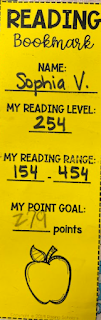
It's important to allow students to select their own books based on their Lexile if they have one. Our students in the First Grade Benchmark and Challenge Universal Access groups have a Lexile. I have books for students who score a number and BR. I provide my strategic and intensive students a choice of select BR books and phonics-based readers based on their ability. If you are using decodable passages for instruction, you can include copies of those passages as a choice. This ensures students have texts that help them feel successful applying the skills you have taught them. Eventually, my students will select books from the classroom library to match their Lexile score. In the beginning, I provide them with books to choose from. They still have a choice, but I give myself time to thoroughly teach them how to use the classroom library.


3Promote different ways of Reading-

Our students must view themselves as readers, even if they aren't reading words yet! I take time to teach students different ways to read a book, including

  • Reading the pictures and making up a story. 
  • Retelling a story, I already know- I read TONS of repetitive books and familiar fairy tales in 1st grade so that students can pretend-read these same books to themselves.
  • Learn from the pictures or photos- There is so much that students can learn from looking at the images in informational text!


4. Gradually Build Stamina-

As you already know, it's so important to start out small in the beginning. I usually give my first graders only 3 minutes of independent reading time initially. Every week, we add on a minute until we reach our ultimate independent reading time goal. I usually stop at 15 minutes in first grade. Stamina building can start at the beginning of the year, yet remember you still have an entire school year ahead of you. As your students grow and change, you will extend the amount of time that they read independently. From a worrier who wants to get everything done ASAP, I'm telling you to grant yourself some grace if your students are not quite where you would like them to be even after weeks of practice.


5. Track and Celebrate Progress-

You might create a bar graph to chart how many minutes students read independently daily. This is an excellent tool for students to visually see their progress.


6. Motivate students with sharing time- 

At the end of independent reading, I allow a few minutes of sharing time. During share time, students can share a favorite picture or part of a book with a partner or share something that they wrote on a sticky note. It can be hard to carve out share time, but I think it's so helpful in motivating students to stay on track during independent reading. It also creates opportunities to make comments like, "I hope you are finding something interesting to share with your partner!" when you notice an off-task student. Start simple at first. 


7. Provide Positive Reinforcement- 

I'm constantly pointing out students' excellent behavior, including during independent reading time. Students read independently, observe behaviors, and take notes of great things you see them doing. You never want to interrupt your students' actual reading time. But as students are getting started, I say things like: "I see Charlie already opened his book and is reading—wow!" or "Ryan has a book and is ready to start." After independent reading time, I name a few students and the positive reading behaviors displayed during independent reading time. I also love to take photos/videos of students who are following my expectations and show them after independent reading time is over!


8. Treat independent reading as something to value-

We have to teach routines and expectations to help our students build stamina. However, we also have to encourage our students to WANT to develop their reading stamina in the first place! Before I ever begin teaching expectations for independent reading, I take time to tell my students why I love reading, ask them what they love about reading, and build excitement for all of the wonderful stories we will read during the school year.


I hope that what I've shared will help you feel confident about the choice to give your students independent reading time each day. Protecting this time is a meaningful way to support your students' love for learning and build strong reading habits that they will carry with them forever.


Positively Teaching,

Randi Muehlen

Tuesday, January 11, 2022

The Meta-Cognitive Frames of Reference: Taking Thinking Maps to the Next Level (Part 2- The Blue Frame)

Before proceeding with this blog post, I would like to quickly address a possible misunderstanding. While it might seem to the reader that I believe the mere use of Thinking Maps will cure all that ails us in public education, nothing could be farther from the truth. Instead, I see Thinking Maps as blank canvases on which to neatly and efficiently bring together a diverse set of pedagogical theories and techniques. It just so happens that some of the many “paints” that can be applied to these canvases are the Meta-Cognitive Frames of Reference questions, which were, of course, developed by the Thinking Maps company (Sorry about the lame extended metaphor!). Eventually, this blog will delve into many non-Thinking Map ideas such as Gradual Release of Responsibility, Historical Thinking, Bloom’s Taxonomy, Collaborative Structures, Intellectual Virtues, and Literature Circles. My point is that Thinking Maps, when used to their fullest potential, allow me to layer some or all of these wonderful tools into a single, easily digestible graphic. Okay, on with my discussion of the Blue Frame!

Whereas the Green Frame of Reference asks students to consider the relatively straightforward question of where they got their information, the Blue Frame involves the much more cognitively challenging issue of what is (potentially) influencing that information. The implications of this question are powerful and far-reaching. It is one thing to know information came from a particular book; it is another thing entirely to understand how the information in the book has been influenced by its author’s point of view and the social and historical contexts in which it was produced.


The Blue Frame: What is influencing the information?

To paraphrase Dani Rojas, The Blue Frame is LIFE! 

My guess is, if you ask the average (cool) teacher about her hopes for her students, you won’t hear much about scores, grades, or points. Instead, you will likely hear terms like empathy, perspicaciousness (assuming said cool teacher has a sweet vocabulary), lifelong learning, social and emotional intelligence, cultural sensitivity, and so on. It is my fervent belief that the Blue Frame is one of the most potent tools at your disposal in the struggle to achieve these noble goals. Oh, and it will also, magically, improve your students’ scores, grades, and points simultaneously. I am so certain of this point, that I suggest you start worrying less about how to incorporate the Blue Frame into your curriculum and more about how to incorporate your curriculum into the Blue Frame. Put another way, if you can teach your students to consistently identify and consider the points of view of themselves and others, recognize bias, distinguish between types of sources of information, and perceive the influence of historical and social issues on those sources, you have won my friend!


Point of View

As with the other frames, the Blue Frame is divided into two main guiding questions, the first of which is:

Is a specific point of view influencing the information in your map?

As I glance around my classroom, I see the term “Point of View,” or its synonym “Perspective,” just about everywhere. Here is proof:


The reasons for the ubiquity of these terms should be obvious, but in case they are not, here are a few (or more!) to ponder:

  • In literary analysis, students need to learn to discern the points of view of characters, narrators, authors, and themselves as readers. Point of View is similarly important when analyzing informational texts; Wonders frequently asks students to identify authors’ viewpoints.

  • Although many sources refer to it as Opinion Writing, the truth is that, when students are asked to “Explain Why with Reasons” in the upper grades, it is almost always Point of View Writing they are being prompted to do; the difference, according to WFTB, is that Opinion Writing is more open-ended, whereas Point of View writing requires students to choose one of a limited number of stances (usually two or three).

  • I am a huge fan of the Stanford History Education Group’s Read Like a Historian program. The purpose of the program is to teach students to source, contextualize, corroborate, and close read primary and secondary sources. All of these thinking skills require students to consider points of view, as well as literally all of the other Blue Frame questions.

  • Merriam-Webster defines Empathy as: “the action of understanding, being aware of, being sensitive to, and vicariously experiencing the feelings, thoughts, and experience of another of either the past or present without having the feelings, thoughts, and experience fully communicated in an objectively explicit manner.” In other words, empathy is all about understanding the points of view of others. Given the power and importance of this SEL skill, shouldn’t we take every opportunity available to practice it with our students? 

  • Jason Baehr, a philosophy professor at Loyola Marymount, identifies Open-Mindedness as one of the nine intellectual virtues that will improve students’ thinking in all areas of study. He describes this virtue as: “An ability to think outside the box. Gives a fair and honest hearing to competing perspectives.”

  • The frequent consideration of Point of View has crucial metacognitive benefits. From a Bloom’s Taxonomy perspective, discerning the points of view of others requires analysis/inference skills, while determining one’s own point of view is a matter of judgment/evaluation. Before determining a point of view, a student should compare and contrast the available options (Double Bubble) before supporting their chosen point of view with reasons (Left-Sided Partial Multi-Flow).


Bias/Primary and Secondary Sources

The two follow-up questions on the Point of View side of the Blue Frame are:

Is there a specific point of view influencing the content/ideas in your map? Is that point of view biased?

and

Is the information in your map influenced by a primary or secondary source?

The importance of teaching kids about Bias deserves its own blog post. Being keenly aware of bias will, of course, make kids better consumers of social media, news, books, textbooks, websites, and the like, but it will also cause them to be more intellectually humble and honest with themselves. The ability to distinguish between primary and secondary sources is a foundational skill in Social Studies and supports the analysis of bias because each type of source has its own implicit biases.


Historical or Social Issues

The guiding question on the other side of the Blue Frame is:

Are there any historical or social issues influencing the information in your map?

The supporting questions are:

Does a specific time period influence your thinking about the information in your map?

and 

Are there any cultural beliefs that are influencing your thinking?

I find these questions particularly helpful in Social Studies, but they are also quite relevant in literary analysis. When reading historical fiction, or any story written some time ago, students should consider how differences in technology, language, and social/cultural norms affect the narrative. It is also always important to be aware of the historical, social, and cultural circumstances in which an author wrote a novel or story. The same can be said for informational text as well.


Uses and Examples

I believe that, like the other frames, the Blue Frame questions were originally intended to help students reflect on the thinking they have done in the maps. The Bubble Map below, in which I ask students to consider their own biases regarding a character, provides an example.


Adding a Blue Frame question at the bottom of a map like this can help you increase rigor, review concepts and skills, and/or connect the map to other parts of the curriculum.


As I suggested above, the Blue Frame questions are often grade level standards in and of themselves. Whether they are or not, I think it makes sense to teach them explicitly as frequently as possible. As an illustration, here is a map I recently created to help students analyze author’s viewpoint in informational text:


Notice that, in both sample maps above, I used blue font to emphasize that certain questions and prompts pertain to this Frame.


The goal for all of the Frames of Reference questions should be for kids to apply them to their thinking without being prompted to do so. Incorporating them into assignments and/or making them the focus of assignments will help you achieve this goal. I realize this is all a lot to digest, but I hope you have found it helpful and enlightening. Next time, I will review the third and final frame: Red!


Here are the links to my other two posts about the Frames, along with one about the importance of Thinking Maps:

Green Frame: https://spotlightclassrooms.blogspot.com/2021/12/the-meta-cognitive-frames-of-reference.html


Red Frame: https://spotlightclassrooms.blogspot.com/2022/02/the-meta-cognitive-frames-of-reference.html


What's So Great About Thinking Maps?: https://spotlightclassrooms.blogspot.com/2021/10/whats-so-great-about-thinking-maps.html


Always Writing,

Eric Lovein


PS: Check out my post about Summarizing Flow Maps!: https://spotlightclassrooms.blogspot.com/2022/03/thinking-maps-for-fictional-narrative.html


...and my video on Circle Maps!:

https://www.youtube.com/watch?v=vuQ9RkXXZcI


Most Viewed Posts